
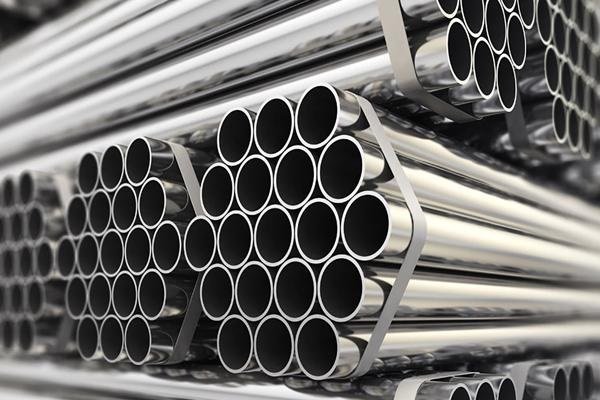
1. What Are the Main Types of Stainless Steel?
Stainless steel is available in several material families, each offering different levels of corrosion resistance, mechanical strength, hardness, and weldability. The selection of a suitable stainless steel grade depends on the operating environment, service temperature, mechanical loads, and fabrication requirements.
Stainless steels are generally classified into five main families according to their metallurgical structure and alloy composition:
- Austenitic stainless steel
- Ferritic stainless steel
- Martensitic stainless steel
- Duplex stainless steel
- Precipitation-hardening stainless steel
These families are not interchangeable. For example, austenitic grades are widely used in food processing and chemical equipment, while duplex stainless steels are often selected for applications requiring both high strength and resistance to chloride-induced corrosion.
Understanding the differences between these five families helps engineers and buyers select suitable materials for stainless steel pipes, tubes, pressure equipment, and industrial piping systems.
2. Five Main Types of Stainless Steel
2.1 Austenitic Stainless Steel
Austenitic stainless steel is the most widely used stainless steel family. It contains chromium and nickel, with some grades also containing molybdenum, nitrogen, or manganese to improve specific properties.
Its face-centred cubic (FCC) crystal structure provides good ductility, formability, and toughness. Austenitic stainless steels also offer good weldability and corrosion resistance in many industrial environments.
Common grades include:
- 304: General-purpose stainless steel with good corrosion resistance and formability.
- 304L: Low-carbon version of 304, commonly selected for welded components.
- 316: Contains molybdenum, providing improved resistance to chloride-related corrosion compared with 304 in many environments.
- 316L: Low-carbon version of 316, widely used in welded piping and chemical processing equipment.
- 321: Titanium-stabilised grade designed to reduce susceptibility to sensitisation during certain thermal exposures.
- 310S: High-chromium and high-nickel grade used in elevated-temperature environments.
Key properties:
- Good general corrosion resistance
- Excellent formability and weldability
- Good toughness at low temperatures
- Generally non-magnetic in the annealed condition
- Cannot normally be hardened by conventional quenching and tempering
Cold working can introduce some magnetic response in certain austenitic grades.
Typical applications:
- Chemical processing equipment
- Food and beverage processing
- Pharmaceutical manufacturing
- Heat exchangers
- Industrial piping systems
- Architectural components
For stainless steel pipes, 304 and 316L are among the most frequently specified grades. However, 316L should not automatically be considered suitable for all seawater or highly concentrated chloride environments. More corrosion-resistant alloys may be required.
2.2 Ferritic Stainless Steel
Ferritic stainless steel contains chromium as its primary alloying element and generally has a lower nickel content than austenitic stainless steel.
Its body-centred cubic (BCC) crystal structure gives it magnetic properties. Ferritic grades provide moderate to good corrosion resistance, depending on chromium content and other alloying additions.
Common grades include:
- 409: Commonly used in automotive exhaust systems.
- 430: A widely used grade for household appliances and architectural applications.
- 439: A stabilised ferritic grade with improved resistance to certain forms of corrosion.
- 444: A higher-alloy ferritic grade offering improved resistance to pitting and crevice corrosion.
Key properties:
- Magnetic
- Generally lower nickel content
- Good resistance to stress corrosion cracking
- Moderate to good corrosion resistance
- Limited hardenability by conventional heat treatment
- Formability and weldability depend on the specific grade and section thickness
Typical applications:
- Automotive exhaust systems
- Household appliances
- Architectural panels
- Industrial equipment
- Heat exchanger components
Ferritic stainless steel can be an economical alternative to austenitic stainless steel in applications where extreme corrosion resistance and high ductility are not required.
2.3 Martensitic Stainless Steel
Martensitic stainless steel contains chromium and relatively higher carbon levels than most ferritic grades. It can be hardened through heat treatment, making it suitable for applications requiring high hardness, strength, and wear resistance.
Its body-centred tetragonal (BCT) martensitic structure develops through appropriate heat treatment.
Common grades include:
- 410: A general-purpose martensitic stainless steel offering moderate corrosion resistance and good hardenability.
- 420: Provides higher hardness and is commonly used in cutting and wear-resistant applications.
- 431: Offers a combination of high strength and improved corrosion resistance compared with some conventional martensitic grades.
- 440C: A high-carbon grade known for its high hardness and wear resistance.
Key properties:
- High hardness after heat treatment
- Good wear resistance
- Magnetic
- Strength can be adjusted through heat treatment
- Generally lower corrosion resistance than 304 and 316
- Welding requires careful procedure control
Typical applications:
- Industrial blades
- Valves and pump components
- Mechanical shafts
- Fasteners
- Turbine components
- Cutting tools
Martensitic stainless steel is generally selected for mechanical performance rather than maximum corrosion resistance.
2.4 Duplex Stainless Steel
Duplex stainless steel combines approximately equal proportions of austenite and ferrite in its microstructure.
This two-phase structure provides a combination of relatively high mechanical strength and good corrosion resistance. Many duplex grades also offer improved resistance to chloride-induced stress corrosion cracking compared with conventional austenitic grades.
Common grades include:
- 2304: A lean duplex grade with lower alloy content than standard 2205.
- 2205: The most widely used standard duplex stainless steel.
- 2507: A super duplex grade designed for more demanding corrosive environments.
- Zeron 100: A super duplex grade used in specialised industrial applications.
Key properties:
- Higher yield strength than conventional austenitic grades such as 304 and 316L
- Good resistance to chloride stress corrosion cracking
- Good resistance to pitting and crevice corrosion
- Magnetic due to its ferritic phase
- Requires careful control of welding and heat treatment
Typical applications:
- Offshore oil and gas facilities
- Seawater piping systems
- Chemical processing plants
- Desalination equipment
- Heat exchangers
- Marine engineering
Duplex stainless steel is particularly useful when conventional austenitic stainless steel does not provide sufficient mechanical strength or corrosion resistance.
However, duplex grades have specific temperature limitations. Incorrect heat treatment or prolonged exposure to unsuitable temperatures can affect their microstructure and mechanical properties.
2.5 Precipitation-Hardening Stainless Steel
Precipitation-hardening stainless steel, also known as PH stainless steel, is designed to achieve high strength through controlled heat treatment.
The material develops increased strength through the formation of fine precipitates within its metallic matrix during ageing.
Common grades include:
- 17-4PH (UNS S17400): A widely used precipitation-hardening stainless steel.
- 15-5PH (UNS S15500): Offers high strength and good toughness.
- 17-7PH (UNS S17700): Used in applications requiring high strength and spring properties.
Key properties:
- High strength after appropriate ageing treatment
- Good dimensional stability during certain heat treatment processes
- Moderate to good corrosion resistance, depending on grade and condition
- Suitable for precision-engineered components
- Mechanical properties depend strongly on heat treatment condition
Typical applications:
- Aerospace components
- High-performance mechanical equipment
- Pump shafts
- Valve components
- Industrial fasteners
- Precision engineering parts
Precipitation-hardening stainless steel is generally selected for components requiring a combination of high strength and corrosion resistance rather than for ordinary industrial piping.
3. Comparison of the Five Types of Stainless Steel
The following table summarises the main differences between the five stainless steel families.
| Stainless steel family | Common grades | Main characteristics | Typical applications |
|---|---|---|---|
| Austenitic | 304, 304L, 316, 316L | Good corrosion resistance, ductility and weldability | Chemical plants, food processing, piping |
| Ferritic | 409, 430, 444 | Magnetic, moderate to good corrosion resistance | Automotive, appliances, heat exchangers |
| Martensitic | 410, 420, 431, 440C | High hardness and strength after heat treatment | Valves, shafts, cutting tools |
| Duplex | 2304, 2205, 2507 | High strength and chloride corrosion resistance | Offshore, marine, chemical processing |
| Precipitation-hardening | 17-4PH, 15-5PH, 17-7PH | High strength through ageing treatment | Aerospace, precision components |
The table provides a general comparison. Actual performance varies with chemical composition, product form, manufacturing process, heat treatment condition, and service environment.
4. What Is the Difference Between 304, 316, 430, 410, and 2205 Stainless Steel?
These five grades represent different stainless steel families and are commonly encountered in industrial material selection.
304 vs. 316 Stainless Steel
Both grades belong to the austenitic family. The main compositional difference is that 316 contains molybdenum, which generally improves resistance to pitting and crevice corrosion in chloride-containing environments.
304 is widely used for general industrial and architectural applications. 316 is often preferred for chemical processing, marine-related equipment, and piping exposed to more aggressive environments.
304 vs. 430 Stainless Steel
304 is austenitic and generally non-magnetic in the annealed condition. 430 is ferritic and magnetic.
304 normally offers better overall corrosion resistance and formability. 430 is often selected when moderate corrosion resistance and lower material cost are sufficient.
316 vs. 2205 Stainless Steel
316 is a conventional austenitic grade, while 2205 is a duplex grade.
2205 generally provides higher yield strength and better resistance to chloride stress corrosion cracking. However, its welding procedures and temperature limitations require more careful control.
410 vs. 304 Stainless Steel
410 is a martensitic grade that can be hardened through heat treatment. It is commonly used for components requiring strength and wear resistance.
304 is generally selected when corrosion resistance, ductility, and weldability are more important than high hardness.
The correct selection depends on the required mechanical properties and operating conditions, not simply on the nominal alloy designation.
5. How to Choose the Right Type of Stainless Steel?
Selecting a stainless steel grade requires more than comparing chromium or nickel content. Engineers should evaluate the complete operating environment and manufacturing requirements.
The following factors are particularly important.
1. Corrosion environment
Identify the chemical composition of the process medium, including chlorides, acids, alkalis, and other potentially corrosive substances.
For example, 316L may be suitable for many chemical processing applications, while duplex 2205 or higher-alloy materials may be necessary for more aggressive chloride environments.
2. Operating temperature
Temperature affects corrosion behaviour, mechanical strength, oxidation resistance, and microstructural stability.
Grades such as 310S are commonly considered for elevated-temperature applications, while suitable austenitic grades are frequently used in cryogenic environments.
3. Mechanical requirements
Consider yield strength, tensile strength, hardness, impact toughness, and fatigue resistance.
Duplex stainless steel may be preferred where higher yield strength is required. Martensitic or precipitation-hardening grades may be suitable for components requiring high hardness or strength.
4. Welding and fabrication
The selected grade should be compatible with the required welding process, forming operations, machining requirements, and heat treatment procedures.
For welded piping systems, low-carbon grades such as 304L and 316L are commonly specified to reduce the risk of sensitisation under appropriate fabrication conditions.
5. Applicable standards and product specifications
Material selection should also consider the relevant product standards, dimensional requirements, manufacturing method, inspection requirements, and delivery condition.
For stainless steel pipes and tubes, commonly referenced standards include ASTM A312 for seamless, welded, and heavily cold-worked austenitic stainless steel pipes, and ASTM A269 for general-service seamless and welded austenitic stainless steel tubing.
The applicable standard should always be checked against the actual product form and intended service.
6. Common Applications of Different Stainless Steel Grades
Different stainless steel families are used across a wide range of industrial sectors.
| Industry | Commonly considered grades | Typical applications |
|---|---|---|
| Chemical processing | 316L, 2205, 2507 | Process piping and equipment |
| Food and beverage | 304, 316L | Processing lines and storage equipment |
| Oil and gas | 316L, 2205, 2507 | Corrosion-resistant piping and components |
| Marine engineering | 316L, 2205, 2507 | Seawater systems and offshore equipment |
| Power generation | 304H, 316H, 321H, 310S | High-temperature equipment |
| Automotive | 409, 430, 441 | Exhaust systems |
| Aerospace | 15-5PH, 17-4PH | High-strength precision components |
These are typical material associations, not universal specifications. Final selection must account for the actual service conditions, design codes, and project requirements.
7. Stainless Steel Pipes: Which Material Should You Choose?
For stainless steel pipe procurement, material selection should be based on the intended application rather than grade popularity alone.
The following guidelines provide a starting point:
- 304 / 304L: General-purpose industrial piping, architectural applications, and food processing.
- 316 / 316L: Chemical processing and applications requiring improved resistance to chloride-related corrosion compared with 304.
- 321: Applications involving certain elevated-temperature service conditions.
- 310S: High-temperature oxidation-resistant applications.
- 2205: Piping systems requiring higher strength and improved resistance to chloride stress corrosion cracking.
- 2507: More demanding corrosive environments where super duplex properties are required.
Buyers should confirm the required pipe manufacturing method, outside diameter, wall thickness, length, heat treatment condition, testing requirements, and applicable material standard before placing an order.
A material grade alone does not establish whether a pipe is suitable for a particular application.
8. Frequently Asked Questions
How many main types of stainless steel are there?
There are five commonly recognised stainless steel families: austenitic, ferritic, martensitic, duplex, and precipitation-hardening stainless steel.
Which type of stainless steel is most commonly used?
Austenitic stainless steel is the most widely used family. Grades 304 and 316 are among the most common industrial grades.
Which stainless steel grades are magnetic?
Ferritic, martensitic, and duplex stainless steels are generally magnetic. Precipitation-hardening grades are also generally magnetic. Annealed austenitic grades are usually non-magnetic, although cold working can introduce magnetic behaviour.
What is the difference between 304 and 316 stainless steel?
316 contains molybdenum, which generally improves resistance to pitting and crevice corrosion in chloride-containing environments. 304 is a widely used general-purpose grade.
Is duplex stainless steel stronger than 316L?
Duplex 2205 generally has a higher yield strength than annealed 316L. It also offers improved resistance to chloride stress corrosion cracking. The appropriate choice depends on the service environment and fabrication requirements.
Which stainless steel is suitable for high-temperature applications?
Grades such as 310S, 321H, and 316H are used in different elevated-temperature applications. The correct choice depends on temperature, atmosphere, mechanical loading, and design requirements.
9. Conclusion
The five main stainless steel families offer different combinations of corrosion resistance, strength, hardness, ductility, and fabrication characteristics.
Austenitic grades such as 304 and 316L are widely used in industrial piping. Ferritic grades provide cost-effective solutions for applications requiring moderate corrosion resistance. Martensitic grades are selected for hardness and wear resistance, while duplex grades offer high strength and improved resistance to chloride-related corrosion. Precipitation-hardening grades are used where high mechanical strength is required.
For stainless steel pipe applications, the final material selection should be based on operating conditions, applicable standards, manufacturing requirements, and inspection specifications.
Looking for stainless steel pipes for your project?
When selecting stainless steel pipes, provide the required grade, pipe dimensions, manufacturing method, applicable standard, and operating conditions. These details help determine the appropriate material and product specification for your application.