


Clad Pipe
High Strength & Corrosion Resistant Pipe Solution
Clad pipe is a bimetallic pipe product composed of a carbon steel or low-alloy steel pressure-bearing layer and a corrosion-resistant alloy layer. Its key advantage is that the base pipe provides mechanical strength and pressure capacity, while the media-contacting CRA corrosion-resistant alloy layer provides long-term protection against CO₂, H₂S, chloride ions, brine, and acidic service environments.
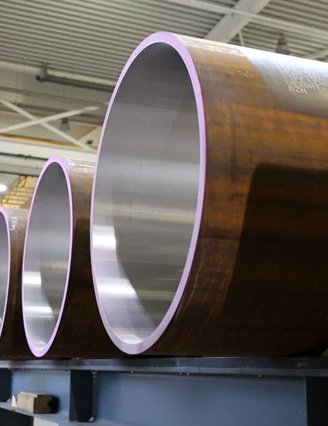
Product Overview
Designed for oil and gas transmission, offshore engineering, chemical processing, energy systems, and corrosive fluid transport.
Key Advantages
Combining the mechanical strength of carbon steel with the corrosion resistance of premium alloy materials.
Excellent Corrosion Resistance
The internal CRA layer can be selected from 316L, duplex stainless steel, Alloy 625, Alloy 825, C276, and other materials according to service conditions. It is suitable for CO₂, H₂S, chloride-rich brine, seawater, and other corrosive environments.
High Structural Strength
The carbon steel or low-alloy steel base pipe carries the main pressure and structural loads, meeting the requirements of long-distance pipelines, high-pressure systems, subsea pipelines, risers, and process piping.
Optimized Total Cost
Premium alloy is used only on the critical corrosion-exposed surface, avoiding the high cost of solid alloy pipe and providing substantial material savings for large-scale pipeline projects.
Suitable for Harsh Service Conditions
Clad pipe can be applied in sour gas, wet CO₂, seawater injection, chloride-containing brine, chemical media, high-temperature and high-pressure service, and offshore environments.
Flexible Product Forms
Depending on project requirements, metallurgically bonded clad pipe, mechanically lined pipe, or weld overlay pipe can be supplied, together with elbows, tees, reducers, flanges, and fittings.
Engineering-Ready Supply
Products can be supplied in accordance with API, ASME, ASTM, DNV, ISO, and project-specific standards, including material selection, dimensional control, NDT, and quality documentation.
Main Product Types
Available in different bonding methods and structural forms to meet diverse engineering requirements.
| Product Type | Structural Features | Typical Applications | Main Advantages |
|---|---|---|---|
| Metallurgically Bonded Clad Pipe CRA Clad Pipe |
The CRA layer and carbon steel substrate are metallurgically bonded through hot rolling, explosive bonding, co-extrusion, or weld overlay processes. | High-pressure, high-temperature, highly corrosive, sour service, subsea pipeline, and critical production pipeline applications. | High bonding strength, excellent resistance to delamination, and high long-term reliability. |
| Mechanically Lined Pipe MLP |
A CRA liner pipe is inserted into a carbon steel outer pipe and tightly fitted through hydraulic expansion or mechanical expansion. | Long-distance transmission lines, subsea pipelines, CO₂ pipelines, brine service, and water injection systems. | High material utilization, lower cost, and suitability for large-scale production. |
| Weld Overlay Pipe | A corrosion-resistant alloy layer is deposited onto the internal surface of the carbon steel pipe by automated welding. | Fittings, flanges, elbows, valves, pressure-vessel connections, and localized corrosion-resistant sections. | High process flexibility and excellent suitability for complex geometries and localized reinforcement. |
Common Material Combinations
Material selection can be customized according to corrosion media, pressure rating, temperature, design life, and project standards.
Base Pipe Materials
- API 5L Grade B, X42, X52, X60, X65, X70, X80
- ASTM A106 Grade B
- ASTM A333 Grade 6
- Carbon steel, low-temperature carbon steel, and low-alloy steel
- PSL1 / PSL2 and sour-service grades available upon project requirements
CRA Layer Materials
- Austenitic stainless steel: 304L, 316L, 317L
- Duplex stainless steel: 2205, 2507
- High-alloy stainless steel: 904L, 6Mo, 254SMO
- Nickel-based alloys: Alloy 625, Alloy 825, C276
- Special materials: Monel 400, titanium alloy, copper-nickel alloy, and others
Technical Parameters
The following information is for preliminary engineering selection. Final specifications shall be subject to project datasheets and purchase orders.
| Item | Reference Range / Description | Remarks |
|---|---|---|
| Outside Diameter | Available from small-bore process piping to large-diameter transmission pipelines. Common range: approximately 1″–84″, or customized upon request. | Available sizes may vary depending on manufacturing process and production capability. |
| Pipe Length | Common single-joint lengths include 6 m, 12 m, or 12.3 m. | Length can be determined according to transportation, installation, and welding requirements. |
| CRA Layer Thickness | Typical CRA layer thickness is 1.5–3 mm, with increased thickness available according to corrosion allowance and design life. | Thickness varies among mechanically lined, metallurgically clad, and weld overlay solutions. |
| Base Pipe Wall Thickness | Calculated according to pressure rating, pipe diameter, temperature, installation method, and applicable design codes. | The carbon steel layer carries the primary pressure load. |
| End Preparation | Plain end, beveled end, welded end, or machined according to customer drawings. | Suitable for field girth welding and connection with fittings. |
| Applicable Standards | API 5LD, API 5L, ISO 3183, DNV-ST-F101, ASME, ASTM, and other project specifications. | Final standard selection depends on industry requirements and client specifications. |
Manufacturing Process
Full-process control from material selection to inspection and documentation ensures reliable clad quality.
Material Selection
Select base pipe and CRA materials according to media corrosivity, pressure, temperature, and design life.
Surface Preparation
Clean, grind, pickle, or blast the base material and alloy layer to improve bonding quality.
Cladding Formation
Form the clad layer through hot roll bonding, explosive bonding, mechanical expansion, or internal weld overlay.
Welding & Machining
Complete longitudinal welding, girth welding, end beveling, and dimensional correction to ensure assembly accuracy.
Non-Destructive Testing
Perform UT, RT, PT, ET, dimensional inspection, bond integrity inspection, and internal surface continuity inspection.
Documentation Delivery
Provide material certificates, inspection reports, hydrostatic test reports, and full quality traceability records.
Inspection & Quality Control
Ensuring clad layer continuity, bonding integrity, dimensional accuracy, and long-term service reliability.
Ultrasonic Testing
Used to inspect welds, bond integrity, laminations, unbonded areas, and wall-thickness uniformity.
Radiographic Testing
Used to detect internal weld defects in longitudinal welds, girth welds, and critical welded areas.
Liquid Penetrant Testing
Used to inspect surface defects, cracks, pores, and surface continuity of CRA or weld overlay layers.
Hydrostatic Testing
Verifies pipe pressure-bearing capacity and sealing performance to meet project design pressure requirements.
Internal Surface Inspection
Checks CRA layer thickness, continuity, surface quality, and the absence of exposed carbon steel areas.
Quality Traceability
Establishes complete traceability for heat numbers, material certificates, welding records, inspection reports, and dimensional records.
Application Fields
Suitable for engineering systems requiring corrosion resistance, pressure capacity, and long-term operational reliability.
Subsea pipelines, sour gas transmission, oil and gas gathering, production flowlines, risers, and wellhead connection lines.
Seawater injection, offshore platforms, deepwater pipelines, subsea production systems, and brine transportation systems.
Corrosive chemical transportation, acid and alkaline media piping, reactor connections, and heat-exchange systems.
CCUS / CCS CO₂ transportation, geothermal systems, wastewater treatment, and high-salinity wastewater pipelines.
Cooling water systems, flue gas desulfurization and denitrification systems, circulating water systems, and corrosive service piping.
Intake, discharge, brine, and process piping systems in high-chloride environments.
Transportation of slurry, pickling solutions, tailings, and process fluids containing abrasive or corrosive media.
Materials, dimensions, end preparation, and inspection plans can be customized according to drawings, operating data, and project standards.
Selection Guidelines
Clad pipe selection should consider media composition, pressure, temperature, installation method, design life, and economic efficiency.
Required Operating Data
- Media composition: CO₂, H₂S, chloride ions, water content, pH value, and other corrosive components
- Design pressure, design temperature, flow velocity, and erosion conditions
- External environment: onshore, subsea, seawater, buried service, or offshore platform area
- Design life, corrosion allowance, and maintenance interval
- Applicable standards, inspection level, and quality documentation requirements
Recommended Selection Approach
- For highly corrosive, high-pressure, and high-temperature critical pipelines: metallurgically bonded clad pipe is recommended.
- For long-distance, large-diameter, cost-sensitive projects: mechanically lined pipe may be considered.
- For complex fittings or localized corrosion-resistant areas: internal weld overlay solutions may be selected.
- For H₂S-containing sour service: material selection should consider NACE / ISO 15156 requirements.
- For subsea or fatigue-sensitive pipelines: installation method and fatigue performance should be evaluated.