
When purchasing seamless steel pipes, checking the material grade and price is only the beginning. Two pipes with the same nominal diameter and wall thickness can differ in dimensional accuracy, mechanical properties, surface condition, and overall reliability.
These differences often come from the quality of the raw material, the manufacturing process, heat treatment, and inspection procedures.
Seamless steel pipes are widely used in oil and gas, power generation, chemical processing, mechanical engineering, and other applications where reliable tubular products are required. Although they do not have a longitudinal welded seam, they can still develop defects during manufacturing or processing.
So, what determines seamless steel pipe quality? Which manufacturing stages have the greatest influence? And how can buyers identify a reliable product before it reaches the project site?
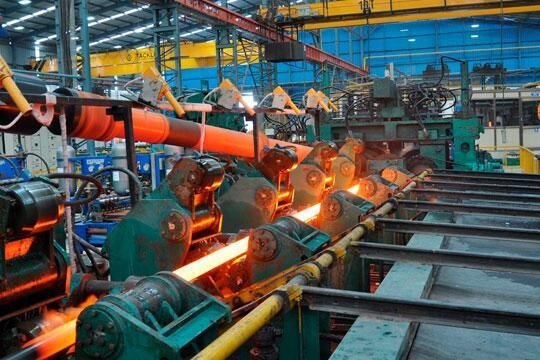
This guide explains the key factors affecting seamless steel pipe quality, how manufacturers control them, and what you should check before placing an order.
1. Raw Material Quality: Where Pipe Quality Begins
The quality of a seamless steel pipe starts with the steel used to manufacture it.
Seamless pipes are commonly produced from solid steel billets or other suitable solid feedstock. The material is heated and processed through piercing, rolling, sizing, and other operations to form a hollow pipe.
If the starting material contains unacceptable internal discontinuities, chemical segregation, or other imperfections, those problems may persist or develop further during processing.
Chemical Composition
Chemical composition influences strength, hardness, ductility, weldability, hardenability, and resistance to certain service environments.
Depending on the grade, important elements may include carbon, manganese, chromium, molybdenum, nickel, and other alloying elements.
The required composition is defined by the applicable material specification. A pipe intended for high-temperature service, for example, may have different chemical requirements from a general-purpose mechanical tube.
For buyers, the essential check is whether the actual material chemistry complies with the ordered grade and standard.
Steel Cleanliness and Internal Soundness
Nonmetallic inclusions, segregation, and internal discontinuities can affect mechanical properties and may contribute to cracking or other defects under certain conditions.
Steelmaking controls and suitable billet inspection help reduce these risks. The required inspection scope depends on the product specification and intended application.
Why Material Traceability Matters
A material test certificate should be traceable to the relevant heat or batch and the finished product, as required by the applicable specification.
Traceability helps establish whether the supplied pipe corresponds to the ordered grade and whether the associated test results are relevant to the delivered material.
What buyers should check: Material grade, chemical composition, mechanical properties, certificate traceability, and any additional material-quality requirements stated in the purchase order.
2. Manufacturing Process: How the Pipe Is Formed
The manufacturing process is one of the main factors affecting seamless steel pipe quality.
Unlike welded pipe, seamless pipe is produced by forming a hollow section from solid material. The process typically involves heating the billet, piercing it, rolling the hollow shell, and controlling its final dimensions.
Different production routes and equipment can affect wall-thickness uniformity, concentricity, surface condition, and dimensional tolerances.
Billet Heating
The billet must be heated to a suitable temperature range for the intended piercing and rolling operations.
Insufficient or nonuniform heating can make deformation more difficult and contribute to process instability. Excessive heating or unsuitable temperature control may lead to undesirable grain growth, oxidation, or other material-quality problems.
The appropriate heating conditions depend on the steel grade, billet dimensions, furnace design, and production route.
Piercing and Rolling
During piercing, the heated billet is transformed into a hollow shell. The shell then undergoes rolling and elongation to approach the required pipe dimensions.
Process control is important because the deformation conditions influence the distribution of material around the circumference and along the length.
Poorly controlled piercing or rolling may contribute to wall-thickness variation, eccentricity, surface defects, or other dimensional deviations.
Sizing and Finishing
After rolling, the pipe may undergo sizing, reducing, straightening, cooling, and other finishing operations.
These stages help establish the final outside diameter, wall thickness, straightness, and dimensional consistency.
For buyers: A manufacturer’s equipment and process controls matter, but the finished product must still be verified against the specified dimensional and quality requirements.
3. Wall Thickness and Dimensional Accuracy
Dimensional accuracy is critical because the pipe must fit the intended system and provide the required mechanical performance.
A pipe can meet its nominal outside diameter while still having unacceptable wall-thickness variation or other dimensional deviations.
Wall-Thickness Uniformity
Wall thickness affects pressure capacity, structural performance, weight, and corrosion allowance where applicable.
Excessively thin regions may reduce the available structural margin. Significant variations can also complicate fabrication, machining, and installation.
Wall-thickness variation can arise from the billet condition, piercing alignment, rolling conditions, tooling, and subsequent processing.
Outside Diameter and Ovality
Outside diameter determines how the pipe fits with couplings, fittings, supports, and other components.
Ovality refers to the difference between the maximum and minimum measured diameters of a pipe cross-section. Excessive ovality can create problems during assembly, machining, and installation.
Straightness and Length
Straightness affects handling, alignment, and fabrication. Length tolerances are also important when pipes must fit predetermined installation or machining requirements.
The acceptable limits for these dimensions depend on the applicable product standard, grade, manufacturing route, and purchase specification.
What buyers should request: Dimensional inspection results for outside diameter, wall thickness, ovality, straightness, length, and any additional dimensions specified in the contract.
4. Heat Treatment: Achieving the Required Mechanical Properties
Heat treatment can significantly influence the mechanical properties and microstructure of seamless steel pipe.
Depending on the grade and product specification, the pipe may be supplied in an as-rolled, normalized, normalized-and-tempered, quenched-and-tempered, or other specified condition.
Not every seamless pipe requires the same heat-treatment process. The required condition must be established by the applicable standard and purchase specification.
Why Does Heat Treatment Matter?
Heat treatment changes the steel’s microstructure and can adjust the balance between strength, hardness, ductility, and toughness.
For example, quenching and tempering may be used for certain grades to achieve a specified combination of strength and toughness. Normalizing may be used to refine or homogenize the microstructure for suitable steel grades.
The resulting properties depend on the steel composition, heating temperature, holding time, cooling rate, section thickness, and process uniformity.
What Happens When Heat Treatment Is Poorly Controlled?
Potential problems include inconsistent hardness, inadequate strength or toughness, excessive grain growth, and variations in mechanical properties.
These issues may affect the pipe’s suitability for the intended service even when its external dimensions appear acceptable.
What Should Buyers Check?
Where heat treatment is required, confirm the specified delivery condition and review the relevant process records and mechanical test results.
For demanding applications, verify that the material properties satisfy the required combination of yield strength, tensile strength, elongation, impact toughness, hardness, or other specified characteristics.
A heat-treatment certificate alone is not a substitute for verifying the finished product against the required acceptance criteria.
5. Surface Quality and Common Seamless Pipe Defects
Seamless pipes do not have a longitudinal weld seam, but they can still contain surface and internal defects.
Some defects originate in the starting material, while others develop during heating, piercing, rolling, sizing, heat treatment, or finishing.
Common Surface Defects
Surface imperfections may include:
- Scratches and handling damage
- Seams or laps
- Scales and surface irregularities
- Local cracks or other discontinuities
- Grinding marks or areas affected by surface repair
The significance of a surface indication depends on its type, depth, dimensions, location, and the applicable acceptance criteria.
Common Internal Defects
Depending on the material and manufacturing route, internal concerns may include inclusions, internal discontinuities, segregation-related issues, or other imperfections.
Not every internal indication is unacceptable. Its significance must be evaluated against the relevant specification and service requirements.
Why Visual Inspection Is Not Enough
Visual inspection is useful for identifying accessible surface defects, but it cannot establish that the entire pipe is free from internal imperfections.
Where required, manufacturers use appropriate non-destructive testing and other examinations to evaluate product quality.
For buyers, the important question is whether the supplier has an inspection plan appropriate to the pipe type, material, dimensions, and intended application.
6. Non-Destructive Testing and Quality Inspection
Inspection and testing help verify that the finished seamless pipe meets the specified requirements.
The applicable standard determines which tests are mandatory. Additional tests may be required by the purchaser for particular service conditions or project risks.
Ultrasonic Testing (UT)
Ultrasonic testing uses sound waves to identify and evaluate certain internal discontinuities.
Its effectiveness depends on the inspection procedure, calibration, equipment configuration, defect orientation, and the properties of the material.
Eddy Current Testing (ECT)
Eddy current testing uses electromagnetic induction to detect certain surface and near-surface discontinuities in electrically conductive materials.
Its capabilities differ from ultrasonic testing, and it should only be used where the method is suitable for the specified product and defect types.
Magnetic Particle Testing (MT)
Magnetic particle testing can identify certain surface and near-surface discontinuities in ferromagnetic materials.
It is useful for suitable materials and inspection locations but does not replace methods needed to assess deeper internal imperfections.
Hydrostatic Testing
Hydrostatic testing evaluates the pipe’s ability to withstand the specified internal test pressure under controlled conditions.
Where required, it helps verify pressure integrity. However, it does not replace dimensional inspection, material verification, or other specified examinations.
Mechanical and Chemical Testing
Depending on the grade and product standard, testing may include chemical analysis, tensile testing, impact testing, hardness measurements, and other specified examinations.
Each test evaluates different characteristics. No single test proves every aspect of product quality.
For buyers: Confirm the inspection methods, required coverage, acceptance criteria, and documentation package before production begins.
7. Steel Grade and Compliance with Applicable Standards
Even a well-manufactured pipe may be unsuitable if its grade or product specification does not match the application.
Seamless steel pipes are supplied under different standards depending on their intended use.
Examples include:
- ASTM A106/A106M: Seamless carbon steel pipe for high-temperature service within the standard’s scope.
- ASTM A53/A53M: Specified black and hot-dipped zinc-coated welded and seamless steel pipe.
- ASTM A335/A335M: Seamless ferritic alloy-steel pipe for high-temperature service within its specified scope.
- API Specification 5L: Line pipe for petroleum and natural gas industries.
- ASTM A519/A519M: Seamless carbon and alloy steel mechanical tubing.
These standards cover different product types and requirements. They are not interchangeable simply because a product is described as seamless steel pipe.
Why Does the Standard Matter?
The applicable standard defines requirements relevant to the product, such as material composition, mechanical properties, dimensions, manufacturing condition, inspection, testing, and marking.
Project specifications may add requirements beyond the base standard.
Before purchasing, confirm the exact standard and edition, grade, outside diameter, wall thickness, delivery condition, inspection scope, and any supplementary requirements.
A supplier should be able to confirm whether its product and manufacturing process meet the complete specification.
8. Operating Conditions: Will the Pipe Perform in Service?
Pipe quality cannot be evaluated independently of the intended application.
A pipe that performs well in one environment may be unsuitable for another because the operating conditions impose different demands on the material.
Pressure and Temperature
Pressure-containing applications require appropriate design calculations based on the applicable code, dimensions, material properties, temperature, and other relevant factors.
The fact that a pipe is seamless does not automatically make it suitable for high pressure.
Corrosion and Chemical Exposure
Carbon steel pipes may require corrosion allowances, coatings, linings, inhibitors, or other protection measures depending on the environment.
For corrosive service, the material and protection system should be selected based on the actual fluid chemistry, temperature, pressure, and expected service life.
Cyclic Loads and Impact
Applications involving fluctuating pressure, vibration, mechanical impact, or low-temperature exposure may require additional consideration of fatigue resistance, toughness, or other material properties.
The relevant requirements should be established before the pipe is purchased.
The key point: Product quality means more than meeting dimensional tolerances. The pipe must also be suitable for its specified service conditions.
9. Supplier Quality Control and Manufacturing Capability
Two suppliers may offer pipes with the same nominal grade and dimensions, but their process controls, inspection systems, traceability, and documentation may differ.
Supplier evaluation should therefore focus on demonstrated manufacturing capability and conformity to the purchase specification.
What Should You Look For?
Consider whether the supplier can:
- Manufacture the required grade and dimensions
- Maintain consistent wall thickness and dimensional tolerances
- Control heat treatment where required
- Identify and evaluate manufacturing defects
- Perform the specified inspections and tests
- Maintain material and product traceability
- Provide complete and consistent quality documentation
- Meet the required delivery schedule
Production equipment, process monitoring, qualified inspection personnel, and a documented quality-management system can all contribute to consistent product quality.
However, certifications or equipment lists alone do not prove that a particular shipment meets its requirements. The delivered product and its inspection records must still be verified.
10. How to Choose High-Quality Seamless Steel Pipe: A Buyer’s Checklist
Before placing an order, use the following checklist to reduce the risk of receiving pipe that does not meet your requirements.
1. Confirm the specification. Identify the exact standard, edition, steel grade, and any supplementary requirements.
2. Define the dimensions. Specify outside diameter, wall thickness, length, tolerances, and end preparation.
3. Confirm the delivery condition. State the required heat-treatment condition or other material condition where applicable.
4. Define the service environment. Provide design pressure, temperature, fluid chemistry, corrosion risks, and other relevant operating conditions.
5. Specify inspection and testing. Identify required chemical and mechanical tests, dimensional checks, non-destructive examination, hydrostatic testing, and acceptance criteria.
6. Verify traceability. Ensure that material certificates and inspection records can be linked to the supplied product as required.
7. Compare quotations on the same basis. Check that grade, dimensions, manufacturing condition, inspection scope, packaging, and delivery terms are comparable.
8. Review total cost. Include transportation, machining, coating, installation, maintenance, and expected service life where relevant.
This approach helps avoid a common procurement mistake: comparing prices for products that are not technically equivalent.
11. Frequently Asked Questions About Seamless Steel Pipe Quality
What is the most important factor affecting seamless steel pipe quality?
There is no single factor that determines quality. Raw material condition, manufacturing control, dimensional accuracy, heat treatment, inspection, and compliance with the specified standard all contribute to the finished product.
Are seamless steel pipes always better than welded pipes?
No. Seamless and welded pipes have different manufacturing characteristics and may be suitable for different applications. The best choice depends on the applicable design code, dimensions, material properties, service conditions, and project specification.
Can seamless steel pipes have internal defects?
Yes. Although seamless pipes do not have a longitudinal welded seam, they can still contain internal discontinuities or defects originating in the material or manufacturing process. Appropriate inspection is needed where required by the product specification.
Does heat treatment improve every seamless steel pipe?
Not automatically. Heat treatment is used when required to achieve the specified properties or delivery condition. An unsuitable treatment can impair performance, and not every grade or product requires the same process.
Which tests should be required for seamless steel pipes?
The required tests depend on the applicable standard, material grade, dimensions, and intended application. They may include chemical analysis, tensile testing, impact testing, hardness testing, dimensional inspection, non-destructive testing, and hydrostatic testing where specified.
How can I verify the quality of a seamless steel pipe supplier?
Review the supplier’s ability to meet the exact specification, manufacturing controls, inspection procedures, traceability system, and quality documentation. Where required, arrange independent inspection and confirm acceptance criteria before production.
Conclusion: Seamless Steel Pipe Quality Depends on the Entire Production Chain
The quality of seamless steel pipe is shaped by the entire production process, from the starting material to final inspection.
Steel chemistry, billet quality, piercing and rolling, dimensional control, heat treatment, surface condition, and testing all influence whether the finished pipe meets the required specification.
For buyers, the most reliable approach is to define the application clearly, specify the appropriate standard and grade, and verify that the delivered product meets the agreed technical and inspection requirements.
A seamless pipe should not be selected simply because it has no welded seam. It should be selected because its material properties, dimensions, manufacturing quality, and inspection records are appropriate for the intended service.
Looking for Reliable Seamless Steel Pipe?
Whether you need seamless pipe for oil and gas, power generation, chemical processing, or mechanical engineering, the right product starts with a clear specification.
Share your required grade, dimensions, applicable standard, delivery condition, quantity, and operating conditions with our team.
Contact us to discuss your requirements and request a quotation.