
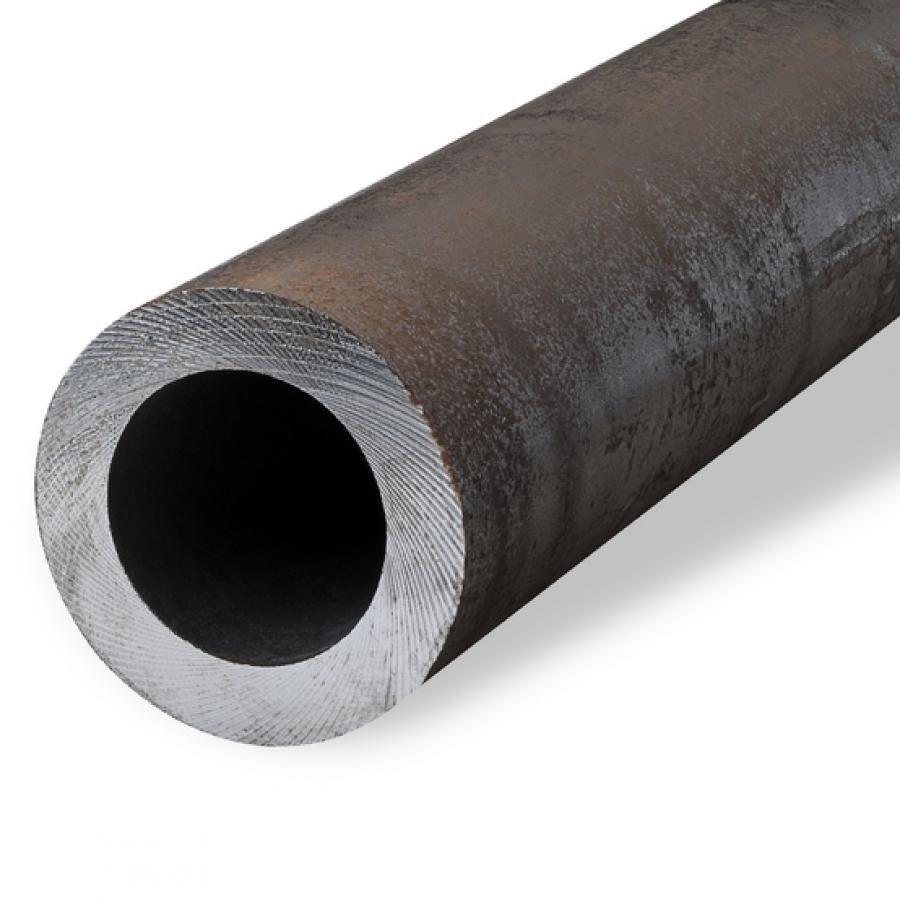
1. What Is the Difference Between Thick Wall and Thin Wall Steel Pipes?
Thick wall and thin wall steel pipes are classified according to their wall thickness relative to their outside diameter. Both are widely used in industrial piping, mechanical engineering, construction and energy projects, but their dimensional characteristics and performance requirements are different.
A thick wall steel pipe has a relatively large wall thickness compared with its outside diameter. It is commonly selected for applications requiring greater structural rigidity, resistance to mechanical loads or additional wall thickness for pressure design and corrosion allowance.
A thin wall steel pipe has a relatively small wall thickness compared with its outside diameter. It is often used where weight reduction, material efficiency and adequate flow capacity are important.
The main differences can be summarised as follows:
- Wall thickness: Thick wall pipes have a greater wall thickness relative to their outside diameter.
- Weight: Thick wall pipes generally weigh more per meter.
- Internal diameter: For the same outside diameter, a thicker wall produces a smaller internal diameter.
- Structural behaviour: Wall thickness influences resistance to internal pressure, external pressure, bending and local deformation.
- Cost: Thick wall pipes generally require more raw material and have a higher material cost.
- Applications: Thick wall pipes are commonly used in heavy-duty mechanical and industrial applications, while thin wall pipes are frequently used in lightweight structures, heat exchangers and precision tubing.
There is no single universal wall thickness that separates all thick wall and thin wall steel pipes. Classification depends on pipe diameter, dimensional standards, manufacturing requirements and industry practice.
2. What Defines a Thick Wall Steel Pipe?
A thick wall steel pipe is a pipe with a relatively high wall thickness compared with its outside diameter.
The wall thickness-to-diameter ratio is commonly used as a reference when evaluating whether a pipe has a thick or thin wall.
The ratio is expressed as:
D/t = Outside Diameter / Wall Thickness
Where:
- D = Outside diameter of the pipe
- t = Nominal wall thickness
A lower D/t ratio indicates a relatively thicker wall, while a higher D/t ratio indicates a relatively thinner wall.
Some suppliers use a D/t ratio of 20 as a practical classification reference. However, this is not a universal engineering definition or a general requirement in ASTM or ASME pipe specifications.
2.1 Characteristics of Thick Wall Steel Pipes
Thick wall steel pipes have several characteristics that make them suitable for demanding industrial applications.
Greater wall thickness
The additional material provides more metal in the pipe cross-section and can increase resistance to certain mechanical loads.
Higher structural rigidity
For pipes with the same outside diameter and material, a thicker wall generally increases resistance to bending deformation and local damage.
Potentially higher pressure capacity
A greater wall thickness can increase the pressure capacity of a pipe when the material grade, temperature, diameter and design code are considered.
Higher material consumption
Thicker walls require more steel per meter, increasing product weight and material cost.
Reduced internal diameter
For the same outside diameter, increasing wall thickness reduces the internal flow area.
2.2 Common Thick Wall Steel Pipe Materials
Thick wall steel pipes can be manufactured from different steel materials according to the application.
Common material categories include:
- Carbon steel
- Low-alloy steel
- High-strength structural steel
- Stainless steel
- Special alloy steel
Typical material specifications include ASTM A106, ASTM A335, API 5L, ASTM A519 and EN 10297-1, depending on the intended product and service conditions.
3. What Is a Thin Wall Steel Pipe?
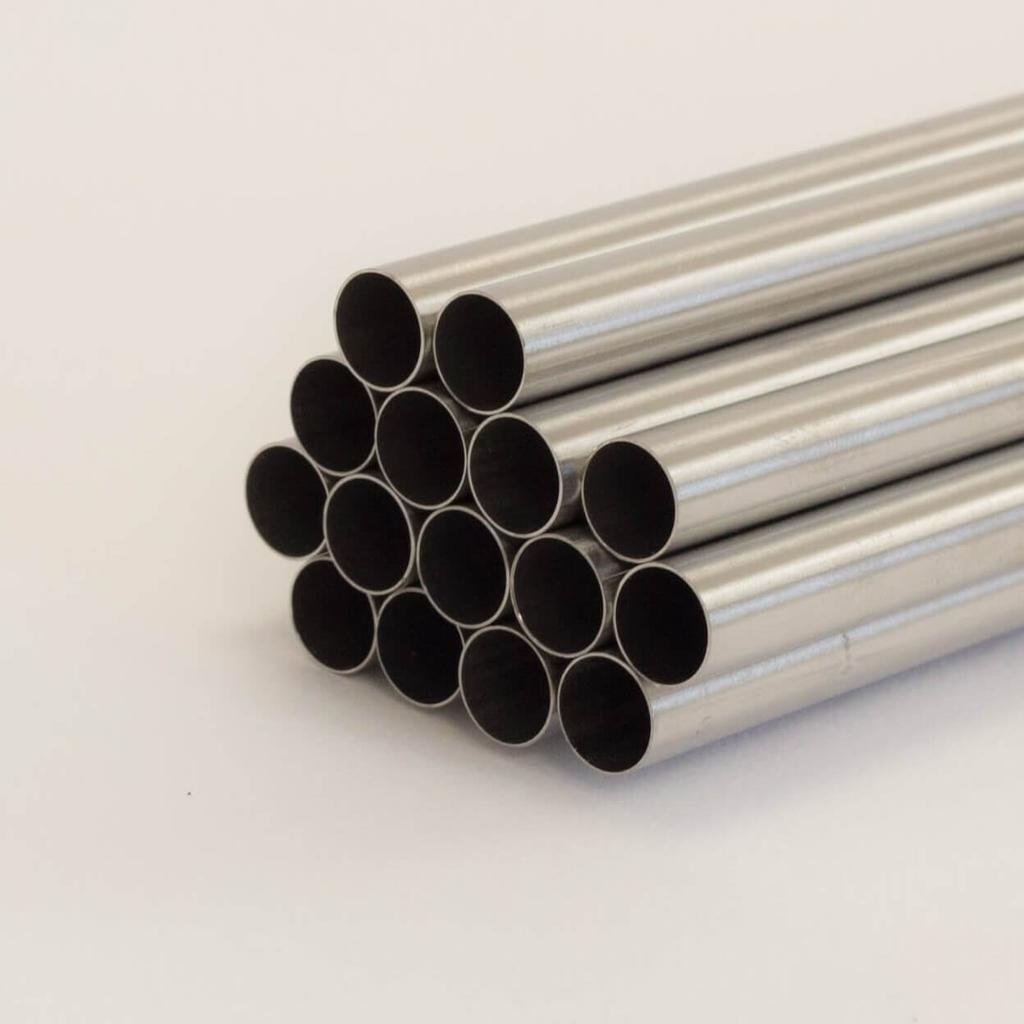
A thin wall steel pipe has a relatively small wall thickness compared with its outside diameter.
It is commonly selected for applications where reducing material consumption and overall component weight is important.
Thin wall pipes are widely used in precision engineering, heat exchangers, automotive manufacturing, furniture structures and selected low-pressure fluid systems.
3.1 Characteristics of Thin Wall Steel Pipes
Lightweight construction
A thinner wall reduces the amount of steel used per meter, making the pipe lighter and easier to handle.
Higher internal flow area
For the same outside diameter, a thinner wall provides a larger internal diameter.
Material efficiency
Thin wall products can reduce raw material consumption when the required structural and operating conditions permit their use.
Dimensional requirements
Thin wall pipes may require careful control of ovality, straightness, wall thickness variation and surface quality.
Greater sensitivity to deformation
Thin wall pipes generally have lower resistance to local denting, flattening and external pressure-induced collapse than comparable thicker-wall pipes.
3.2 Common Thin Wall Steel Pipe Materials
Thin wall steel pipes are available in several material categories, including:
- Carbon steel
- Stainless steel
- Low-alloy steel
- Aluminium and other non-ferrous materials
Common steel product categories include cold drawn precision steel tubes, stainless steel heat exchanger tubes and thin wall welded tubing.
4. Thick Wall vs Thin Wall Steel Pipe: Main Differences
The following table summarises the main differences between the two types.
| Comparison | Thick Wall Steel Pipe | Thin Wall Steel Pipe |
|---|---|---|
| Wall thickness | Relatively large | Relatively small |
| D/t ratio | Lower | Higher |
| Weight per meter | Higher | Lower |
| Internal diameter | Smaller for the same OD | Larger for the same OD |
| Material consumption | Higher | Lower |
| Structural rigidity | Generally higher | Generally lower |
| Resistance to local deformation | Generally better | Generally lower |
| External pressure resistance | Generally better, subject to design | More sensitive to collapse |
| Manufacturing control | Requires control of wall thickness and concentricity | Requires close control of thin-wall dimensional variation |
| Typical applications | Heavy-duty mechanical parts and selected pressure systems | Heat exchangers, precision tubing and lightweight structures |
These are general comparisons. Actual performance depends on material grade, diameter, manufacturing process, dimensional tolerances and operating conditions.
5. How Does Wall Thickness Affect Steel Pipe Performance?
Wall thickness is one of the most important parameters in steel pipe design.
It influences pressure resistance, mechanical strength, internal flow area, pipe weight and structural behaviour.
5.1 Internal Pressure Resistance
When a steel pipe carries pressurised fluid, internal pressure generates circumferential stress, also known as hoop stress, in the pipe wall.
For a thin-walled cylindrical pipe, a simplified hoop stress equation is:
σh = P × D / (2t)
Where:
- σh = Circumferential or hoop stress
- P = Internal pressure
- D = Pipe diameter, using the applicable design convention
- t = Wall thickness
For a given pressure and diameter, increasing wall thickness reduces the calculated hoop stress under this simplified relationship.
However, this equation is based on thin-wall assumptions and should not be applied indiscriminately to thick-wall cylinders.
For thick-wall pipes, radial stress and the variation of circumferential stress through the wall become important. Thick-cylinder analysis, such as Lamé’s equations, may be required.
Final pressure design must follow the applicable piping or pipeline design code.
5.2 External Pressure and Collapse Resistance
Steel pipes may also experience external pressure, particularly in offshore pipelines, subsea installations and buried systems.
Thin wall pipes are generally more sensitive to external pressure-induced buckling and collapse.
The collapse resistance depends on several factors:
- Outside diameter
- Wall thickness
- D/t ratio
- Yield strength
- Ovality
- Initial geometric imperfections
- Residual stresses
- Manufacturing method
A thicker wall can improve collapse resistance, but wall thickness alone does not determine the allowable external pressure.
5.3 Bending and Structural Rigidity
Wall thickness affects the cross-sectional moment of inertia of a pipe.
For a circular hollow section:
I = π/64 × (OD⁴ − ID⁴)
Where:
- I = Second moment of area
- OD = Outside diameter
- ID = Inside diameter
For pipes with the same outside diameter, increasing wall thickness increases the moment of inertia and generally improves resistance to bending deformation.
This is important for structural columns, mechanical supports, hydraulic components and load-bearing tubular structures.
5.4 Weight and Material Consumption
The theoretical weight of a steel pipe increases with wall thickness.
A commonly used formula for carbon steel pipes is:
W = (OD − t) × t × 0.02466
Where:
- W = Weight per meter (kg/m)
- OD = Outside diameter (mm)
- t = Wall thickness (mm)
- 0.02466 = Approximate carbon steel weight coefficient
For pipes with identical outside diameters, the thicker-wall pipe will have a higher weight per meter.
This affects transportation, installation, lifting requirements and procurement costs.
6. Thick Wall vs Thin Wall Steel Pipe: Practical Size Comparison
A practical comparison helps explain how wall thickness affects pipe dimensions and weight.
Consider two carbon steel pipes with the same outside diameter but different wall thicknesses.
Example: OD 114.3 mm Steel Pipe
| Parameter | Thin Wall Example | Thick Wall Example |
|---|---|---|
| Outside Diameter | 114.3 mm | 114.3 mm |
| Wall Thickness | 3.05 mm | 10.0 mm |
| Inside Diameter | 108.2 mm | 94.3 mm |
| D/t Ratio | 37.48 | 11.43 |
| Theoretical Weight | 8.36 kg/m | 25.73 kg/m |
Note: These are illustrative dimensional combinations, not a statement that both are standard Schedule sizes.
The comparison demonstrates several important points:
- The outside diameter remains unchanged.
- The thicker wall significantly reduces the internal diameter.
- The thick wall pipe has a lower D/t ratio.
- The thick wall pipe has a substantially higher theoretical weight.
For engineering applications, these dimensional differences must be evaluated alongside flow requirements, pressure design and structural loading.
7. Applications of Thick Wall Steel Pipes
Thick wall steel pipes are widely used in industrial applications requiring additional structural stiffness, mechanical strength or specific pressure-design requirements.
7.1 Oil and Gas Industry
Thick wall pipes are used in selected oil and gas pipeline systems, processing facilities and mechanical components.
Typical applications include:
- High-pressure process piping
- Heavy-duty pipeline components
- Offshore structural systems
- Pipeline connections and fittings
- Selected drilling and production equipment
API 5L line pipe grades are used in pipeline transportation systems. The required wall thickness depends on design pressure, diameter, material grade, installation conditions and applicable pipeline codes.
7.2 Power Generation and Boiler Systems
Thick wall pipes and tubes are used in selected high-temperature and high-pressure systems.
Applications include:
- Steam piping
- Power plant pressure systems
- High-temperature process lines
- Boiler-related piping
- Heat-resistant alloy steel components
Materials such as ASTM A335 P11, P22 and P91 are used in specified high-temperature applications, subject to the relevant product and design requirements.
7.3 Mechanical Engineering
Thick wall seamless tubes are widely used in mechanical manufacturing.
Typical applications include:
- Hydraulic cylinder barrels
- Machine components
- Bearing sleeves
- Heavy equipment parts
- Structural supports
- Precision-machined hollow components
These applications often require good dimensional stability, machinability and resistance to mechanical loads.
7.4 Construction and Structural Engineering
Thick wall steel pipes can be used in load-bearing tubular structures.
Common applications include:
- Structural columns
- Foundation piles
- Bridge supports
- Offshore structures
- Heavy machinery frames
- Industrial equipment supports
For structural applications, the material grade, welding quality, section properties and applicable structural design standard must be considered.
8. Applications of Thin Wall Steel Pipes
Thin wall steel pipes are used in applications where reduced weight, efficient material utilisation and sufficient mechanical performance are important.
8.1 Heat Exchangers
Thin wall tubes are commonly used in heat exchangers because they provide a large heat transfer surface relative to the amount of material used.
Applications include:
- Shell-and-tube heat exchangers
- Condensers
- Industrial cooling systems
- Refrigeration equipment
- Chemical processing equipment
The selected wall thickness must satisfy pressure, corrosion, vibration and mechanical requirements.
8.2 Automotive Manufacturing
Thin wall steel tubes are used in various automotive components where weight reduction and dimensional precision are important.
Examples include:
- Structural tubular components
- Chassis components
- Seat frames
- Exhaust systems
- Mechanical assemblies
Material grade and manufacturing tolerances depend on the component design and forming process.
8.3 Precision Machinery
Cold drawn thin wall steel tubes can provide good dimensional accuracy and surface quality.
They are used in:
- Precision mechanical components
- Hydraulic and pneumatic systems
- Machine frames
- Instrumentation components
- Industrial equipment
8.4 Furniture and Lightweight Structures
Thin wall steel tubes are commonly used in furniture frames, shelving, display structures and general fabricated products.
Their relatively low weight and good formability make them suitable for applications where extreme pressure resistance is not required.
9. How to Choose Between Thick Wall and Thin Wall Steel Pipes
The correct wall thickness should be selected according to the actual operating and design requirements rather than choosing the thickest available pipe.
The following factors should be evaluated.
9.1 Operating Pressure
For pressurised systems, the required minimum wall thickness must be calculated using the applicable design code.
The design should consider:
- Internal design pressure
- Design temperature
- Material allowable stress
- Weld joint factors, where applicable
- Manufacturing wall thickness tolerance
- Corrosion and erosion allowances
A thick wall pipe may be necessary when the design requires a greater minimum wall thickness.
9.2 External Pressure and Mechanical Loads
For buried and subsea pipelines, external pressure and collapse resistance may govern the required wall thickness.
For structural applications, bending, compression, impact and local buckling may be more important than internal pressure.
9.3 Material Grade
Material grade directly influences allowable stress, toughness, weldability and operating temperature limits.
Common steel specifications include:
| Standard | Material Category | Typical Application |
|---|---|---|
| ASTM A106 | Seamless carbon steel pipe | High-temperature service |
| ASTM A335 | Alloy steel pipe | High-temperature service |
| API 5L | Line pipe | Oil and gas transportation |
| ASTM A333 | Low-temperature carbon and alloy steel pipe | Low-temperature service |
| ASTM A519 | Seamless carbon and alloy steel mechanical tubing | Mechanical applications |
| EN 10297-1 | Seamless steel tubes for mechanical and general engineering | Mechanical components |
These standards cover different products and service conditions. They should not be treated as interchangeable.
9.4 Corrosion Allowance
In corrosive environments, designers may include additional wall thickness to account for expected metal loss during the design life.
The corrosion allowance depends on the transported medium, corrosion rate, operating temperature, protective measures and design requirements.
A thicker starting wall may provide additional corrosion allowance, but it does not replace proper corrosion assessment and protection.
9.5 Weight and Installation Cost
Thick wall pipes are heavier and may require additional lifting capacity, stronger supports and higher transportation costs.
Thin wall pipes reduce material weight but must still meet the required structural and operating conditions.
The total project cost should consider material, fabrication, transportation, installation and maintenance.
10. Thick Wall and Thin Wall Pipe Manufacturing Processes
Manufacturing methods influence the available dimensions, dimensional tolerances and final product characteristics.
10.1 Hot-Rolled Seamless Steel Pipes
Hot-rolled seamless pipes are manufactured by heating a solid billet, piercing it and elongating the hollow shell through rolling processes.
This process is widely used for producing medium- and large-diameter seamless pipes, including products with relatively thick walls.
10.2 Cold-Drawn Seamless Steel Tubes
Cold drawing reduces the outside diameter and wall thickness of a tube through a die, often with an internal mandrel.
It is frequently used to produce precision steel tubes with closer dimensional tolerances and improved surface finish.
Cold drawing can also produce certain thick-wall precision tubes, depending on the starting material and reduction schedule. It is therefore incorrect to assume that all thick-wall pipes are hot rolled and all thin-wall pipes are cold drawn.
10.3 Welded Steel Pipes
Welded steel pipes are produced by forming steel strip or plate and joining the edges through a welding process.
Common manufacturing methods include:
- ERW (Electric Resistance Welding)
- LSAW (Longitudinal Submerged Arc Welding)
- SSAW (Spiral Submerged Arc Welding)
These methods can be used for different combinations of pipe diameter and wall thickness.
The suitability of a welded pipe depends on the product specification, weld quality, inspection requirements and application.
11. Frequently Asked Questions
What is considered a thick wall steel pipe?
A thick wall steel pipe has a relatively large wall thickness compared with its outside diameter. Some suppliers use a D/t ratio below 20 as a practical reference, but there is no universal classification threshold covering every pipe standard and application.
What is the difference between thick wall and thin wall steel pipes?
The main difference is the ratio of wall thickness to outside diameter. Thick wall pipes generally have higher weight, greater structural rigidity and smaller internal diameters for the same OD. Thin wall pipes are lighter and provide a larger internal flow area.
Are thick wall steel pipes stronger than thin wall steel pipes?
For pipes with the same outside diameter and material, a thicker wall generally increases resistance to certain mechanical loads and reduces pressure-induced hoop stress. However, actual strength and pressure capacity also depend on material grade, temperature, manufacturing quality and design requirements.
Are thick wall seamless steel pipes suitable for high-pressure applications?
They can be suitable for high-pressure applications when manufactured to the correct specification and selected through an appropriate engineering design process. Wall thickness alone does not establish a pipe’s allowable working pressure.
Are thin wall steel pipes suitable for pressure applications?
Yes. Thin wall pipes can be used in pressure applications if their material, dimensions and design conditions satisfy the applicable code. The term thin wall does not automatically mean low pressure or unsuitable for industrial service.
Which manufacturing process is used for thick wall steel pipes?
Hot rolling is commonly used for many thick wall seamless steel pipes. However, thick wall pipes can also be produced through extrusion, cold drawing and welded manufacturing processes, depending on the required dimensions and material.
Does a thicker wall reduce the internal diameter?
Yes. For a fixed outside diameter, increasing wall thickness reduces the internal diameter according to:
ID = OD − 2 × WT
How do I choose the correct steel pipe wall thickness?
The required wall thickness should be determined from the design pressure, temperature, material properties, corrosion allowance, manufacturing tolerance and applicable design code. Structural and external pressure loads should also be considered where relevant.
12. Conclusion
Thick wall and thin wall steel pipes serve different engineering and industrial requirements.
Thick wall steel pipes are commonly selected for applications requiring greater structural rigidity, mechanical resistance or additional wall thickness for pressure and corrosion design. Thin wall steel pipes are often preferred where weight reduction, material efficiency and internal flow capacity are important.
Neither type is universally better. The correct choice depends on the pipe dimensions, material grade, operating environment, design pressure, mechanical loads and applicable standards.
For industrial procurement, buyers should specify the outside diameter, nominal wall thickness, material grade, manufacturing method and product standard to ensure that the supplied pipe meets the project requirements.
Looking for thick wall seamless steel pipes or precision thin wall steel tubes?
Provide your required outside diameter, wall thickness, material grade, manufacturing method and application conditions to identify the appropriate steel pipe for your project.