
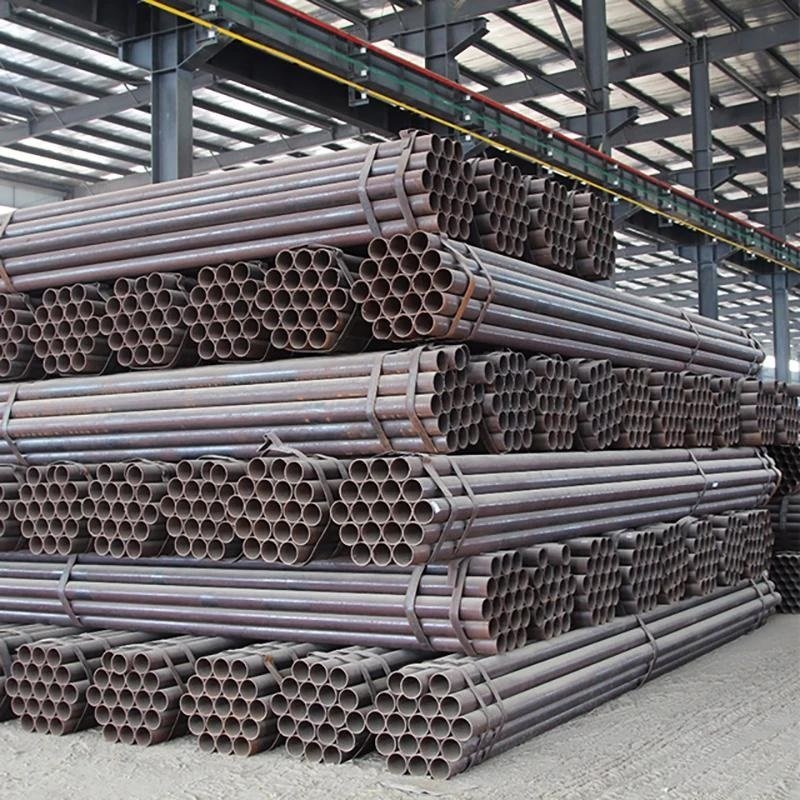
1. Why Is Steel Pipe Weight Calculation Important?
Steel pipe weight is an important consideration in material procurement, transportation, structural design and industrial project planning.
For steel pipe manufacturers, suppliers and buyers, knowing the theoretical weight of a pipe helps estimate material quantities, compare supplier quotations, calculate shipping costs and plan loading operations.
The weight of a steel pipe mainly depends on three factors:
- Outside Diameter (OD)
- Wall Thickness (WT)
- Material Density
For pipes with the same outside diameter, a thicker wall results in a higher weight per meter. Different steel materials also have different densities, which affect the final calculated weight.
In industrial procurement, steel pipe weight is commonly expressed in kilograms per meter (kg/m), kilograms per piece (kg/pc), or metric tons (MT).
Understanding the correct calculation method helps buyers estimate the required steel quantity and avoid errors in purchasing and transportation planning.
2. Steel Pipe Weight Calculation Formula
The theoretical weight of a round steel pipe can be calculated from its cross-sectional area, length and material density.
For carbon steel pipes, a commonly used formula is:
W = (OD − WT) × WT × 0.02466
Where:
- W = Theoretical weight per meter (kg/m)
- OD = Outside diameter (mm)
- WT = Wall thickness (mm)
- 0.02466 = Calculation constant based on a carbon steel density of approximately 7,850 kg/m³
The formula is suitable when OD and WT are expressed in millimetres and the result is required in kilograms per meter.
2.1 How Is the Formula Derived?
The steel material in a round pipe forms an annular cross-section.
Its metal cross-sectional area is calculated by subtracting the internal circular area from the external circular area.
A = π/4 × (OD² − ID²)
The inside diameter is:
ID = OD − 2 × WT
Therefore, the theoretical mass per meter can be calculated using:
W = A × 1,000 × ρ / 1,000,000
Where:
- A = Metal cross-sectional area (mm²)
- ρ = Material density (kg/m³)
- 1,000 = Pipe length in millimetres for one meter
- 1,000,000 = Conversion factor from mm³ to m³
After substituting the inside diameter equation and using a carbon steel density of 7,850 kg/m³, the formula becomes:
W = (OD − WT) × WT × 0.02466
This simplified formula is widely used for estimating the theoretical weight of carbon steel pipes.
3. How to Calculate Steel Pipe Weight: Practical Examples
The following examples demonstrate how to calculate steel pipe weight per meter and total pipe weight.
Example 1: Calculate the Weight of a Carbon Steel Pipe per Meter
Assume a seamless carbon steel pipe has the following dimensions:
- Outside Diameter (OD): 114.3 mm
- Wall Thickness (WT): 6.02 mm
- Material: Carbon Steel
- Density: 7,850 kg/m³
Using the formula:
W = (OD − WT) × WT × 0.02466
Substitute the values:
W = (114.3 − 6.02) × 6.02 × 0.02466
W = 108.28 × 6.02 × 0.02466
W ≈ 16.07 kg/m
Therefore, the theoretical weight of this carbon steel pipe is approximately 16.07 kg per meter.
Example 2: Calculate the Total Weight of a 12-Meter Steel Pipe
Assume the pipe has a theoretical weight of 16.07 kg/m and a standard length of 12 meters.
The total weight is:
Total Weight = Weight per Meter × Pipe Length
Total Weight = 16.07 × 12
Total Weight = 192.84 kg
Therefore, one 12-meter pipe weighs approximately 192.84 kg.
Example 3: Calculate the Weight of an API 5L Pipe
Consider an API 5L carbon steel line pipe with:
- Outside Diameter: 219.1 mm
- Wall Thickness: 12.7 mm
- Length: 12 m
- Material Density: 7,850 kg/m³
First, calculate the weight per meter:
W = (219.1 − 12.7) × 12.7 × 0.02466
W = 206.4 × 12.7 × 0.02466
W ≈ 64.60 kg/m
Then calculate the weight of one 12-meter pipe:
Total Weight = 64.60 × 12
Total Weight ≈ 775.20 kg
This calculation is useful for estimating the total weight of line pipes before transportation and project delivery.
4. Steel Pipe Weight Formula for Different Materials
The simplified carbon steel formula uses a density of approximately 7,850 kg/m³.
However, stainless steel, duplex stainless steel and other alloy materials have different densities.
For these materials, the general formula should be used:
W = π × (OD − WT) × WT × ρ / 1,000,000
Where:
- W = Weight per meter (kg/m)
- OD = Outside diameter (mm)
- WT = Wall thickness (mm)
- ρ = Material density (kg/m³)
4.1 Carbon Steel Pipe Weight
For carbon steel, the commonly used density is approximately 7,850 kg/m³.
The formula is:
W = (OD − WT) × WT × 0.02466
4.2 Stainless Steel Pipe Weight
Stainless steel generally has a slightly higher density than conventional carbon steel.
Typical reference densities include:
| Material | Approximate Density |
|---|---|
| Carbon Steel | 7,850 kg/m³ |
| Stainless Steel 304 | 7,930 kg/m³ |
| Stainless Steel 316 | 8,000 kg/m³ |
| Duplex Stainless Steel 2205 | 7,800 kg/m³ |
The values are approximate reference densities. Actual density depends on the specific alloy composition and material specification.
For the same OD and WT, the theoretical weight of stainless steel pipe may differ from that of carbon steel pipe.
For example, the approximate calculation constants are:
| Material | Weight Formula Constant |
|---|---|
| Carbon Steel | 0.02466 |
| Stainless Steel 304 | 0.02491 |
| Stainless Steel 316 | 0.02513 |
| Duplex 2205 | 0.02450 |
These constants are derived from the approximate densities listed above.
4.3 Example: Carbon Steel vs Stainless Steel Pipe Weight
Consider two pipes with identical dimensions:
- OD: 114.3 mm
- WT: 6.02 mm
- Length: 6 m
For carbon steel:
W = 16.07 kg/m
Total Weight = 16.07 × 6
Total ≈ 96.42 kg
For stainless steel 304:
W = (114.3 − 6.02) × 6.02 × 0.02491
W ≈ 16.23 kg/m
Total Weight = 16.23 × 6
Total ≈ 97.38 kg
Although the two pipes have identical dimensions, their theoretical weights differ because their material densities are different.
5. Steel Pipe Weight Chart: Common Sizes and Wall Thicknesses
A steel pipe weight chart provides a quick reference for estimating the weight of pipes with commonly used outside diameters and wall thicknesses.
The following table shows approximate theoretical weights for carbon steel pipes based on a density of 7,850 kg/m³.
| OD (mm) | WT 6 mm (kg/m) | WT 8 mm (kg/m) | WT 10 mm (kg/m) |
|---|---|---|---|
| 60.3 | 8.05 | 10.32 | 12.39 |
| 88.9 | 12.26 | 15.96 | 19.44 |
| 114.3 | 16.02 | 20.97 | 25.72 |
| 168.3 | 24.02 | 31.62 | 39.04 |
| 219.1 | 31.53 | 41.65 | 51.57 |
| 273.1 | 39.52 | 52.31 | 64.89 |
| 323.9 | 47.00 | 62.19 | 77.38 |
Note: Values are theoretical calculations rounded to two decimal places. The chart is a dimensional reference and does not imply that every OD and WT combination is a standard pipe size or Schedule combination.
5.1 How to Use a Steel Pipe Weight Chart
To use the table:
- Identify the pipe outside diameter.
- Confirm the specified wall thickness.
- Find the corresponding weight per meter.
- Multiply the weight per meter by the total pipe length.
For example, a carbon steel pipe with an OD of 168.3 mm and a wall thickness of 8 mm has a theoretical weight of approximately 31.62 kg/m.
For a 6-meter pipe:
Total Weight = 31.62 × 6
Total Weight ≈ 189.72 kg
For procurement, the actual pipe dimensions and applicable product specification should be checked before using a reference chart.
6. How Does Pipe Schedule Affect Steel Pipe Weight?
Pipe Schedule, commonly abbreviated as SCH, is a standardised designation used to identify pipe wall thickness series.
Common schedules include:
- SCH 10
- SCH 20
- SCH 40
- SCH 60
- SCH 80
- SCH 100
- SCH 120
- SCH 160
- XXS
For the same nominal pipe size, the standard outside diameter generally remains unchanged across different schedules, while wall thickness changes.
A thicker wall increases the amount of steel used and therefore increases the theoretical pipe weight.
6.1 SCH 40 vs SCH 80 Pipe Weight
Consider a DN50 (NPS 2) carbon steel pipe.
| Parameter | SCH 40 | SCH 80 |
|---|---|---|
| Nominal Size | DN50 | DN50 |
| Outside Diameter | 60.3 mm | 60.3 mm |
| Wall Thickness | 3.91 mm | 5.54 mm |
| Approx. Weight | 5.44 kg/m | 7.48 kg/m |
SCH 80 pipe is heavier than SCH 40 pipe because it has a thicker wall.
For the same pipe length, the thicker-wall pipe also requires more raw material and generally has a higher material cost.
However, pipe Schedule alone should not be used to determine pressure suitability. The applicable design code, material grade, operating temperature and corrosion allowance must also be considered.
7. What Is the Difference Between Theoretical and Actual Steel Pipe Weight?
Theoretical pipe weight is calculated using nominal dimensions and an assumed material density.
Actual pipe weight is determined by the physical mass of the finished product.
The two values may differ because of manufacturing tolerances and product-specific characteristics.
Common factors include:
1. Wall Thickness Tolerance
Actual wall thickness may vary within the limits permitted by the applicable product specification.
2. Outside Diameter Tolerance
Small variations in outside diameter affect the calculated cross-sectional area and final weight.
3. Material Density
Different steel grades have slightly different chemical compositions and densities.
4. Manufacturing Method
Seamless, ERW, LSAW and SSAW pipes may have different product characteristics. Weld reinforcement and other manufacturing details can also affect actual mass.
5. Surface Coatings and Linings
Galvanising, external coatings, internal linings and other additional treatments may increase the delivered product weight.
6. Pipe End Preparation
Bevelled ends, threaded ends and other machining operations can slightly change the final mass.
For accurate commercial transactions, the agreed weighing basis, mill packing list and relevant inspection documentation should be checked. Theoretical weight should not automatically be treated as the final invoicing weight.
8. Why Is Steel Pipe Weight Important in Procurement and Transportation?
Steel pipe weight is not only a manufacturing calculation. It is also important in commercial and engineering operations.
8.1 Material Cost Estimation
Steel pipes are frequently quoted and sold by metric ton, kilogram or individual piece.
Calculating theoretical weight helps buyers estimate the total material quantity and compare supplier quotations.
8.2 Shipping and Freight Calculation
The total shipment weight affects:
- Container loading plans
- Truck transportation
- Freight costs
- Port handling
- Cargo documentation
For large orders, even a small difference in calculated weight per meter can result in a significant difference in total shipment weight.
8.3 Lifting and Installation
Pipe weight is important when selecting:
- Cranes
- Lifting equipment
- Slings
- Pipe supports
- Handling systems
For lifting calculations, engineers must also consider fittings, flanges, valves, insulation, contents and the applicable lifting safety factors.
8.4 Structural Design
The weight of installed piping contributes to the dead load acting on pipe racks, supports and structural frames.
For operating systems, the engineering assessment may also need to include the weight of the transported fluid and other attached components.
9. Frequently Asked Questions About Steel Pipe Weight Calculation
How do you calculate steel pipe weight per meter?
For carbon steel pipe, use:
W = (OD − WT) × WT × 0.02466
OD and WT must be entered in millimetres. The result is theoretical weight in kilograms per meter.
What is the density of carbon steel used in pipe weight calculations?
A commonly used reference density is 7,850 kg/m³. The exact density can vary slightly depending on the steel grade and chemical composition.
How do you calculate the weight of a 6-meter steel pipe?
First calculate the theoretical weight per meter. Then multiply the result by 6.
For example, a pipe weighing 16.07 kg/m has a theoretical 6-meter weight of 96.42 kg.
Is stainless steel pipe heavier than carbon steel pipe?
For the same dimensions, many common stainless steel grades are slightly heavier than carbon steel because of their different material densities. However, the exact difference depends on the specific grade.
Does a thicker wall increase steel pipe weight?
Yes. Increasing wall thickness increases the amount of steel in the pipe cross-section, resulting in a higher theoretical weight per meter.
How do you convert kg/m to total metric tons?
Multiply the weight per meter by the total pipe length and number of pipes, then divide by 1,000.
Total Weight (MT) = Weight per Meter × Length × Quantity ÷ 1,000
Why is actual steel pipe weight different from theoretical weight?
Differences can result from dimensional tolerances, material density, manufacturing conditions, coatings, linings and pipe end preparation.
Which information is required to calculate steel pipe weight?
The main inputs are outside diameter, wall thickness, material density and pipe length. If the pipe is specified by NPS and Schedule, the corresponding standard OD and nominal wall thickness must first be identified.
10. Conclusion
Steel pipe weight calculation is an essential part of industrial procurement, manufacturing, transportation and project planning.
By using the outside diameter, wall thickness and material density, buyers and engineers can calculate the theoretical weight per meter and estimate the total weight of individual pipes or complete orders.
The commonly used carbon steel formula is:
W = (OD − WT) × WT × 0.02466
For stainless steel and other alloy materials, the material density should be adjusted accordingly.
Although theoretical calculations provide a useful reference, the final commercial weight should be verified against the agreed weighing method and relevant supplier documentation.
Looking for steel pipes with specific dimensions and weight requirements?
Provide the material grade, outside diameter, wall thickness, pipe length and quantity to obtain an accurate product specification and weight estimate.