
Casing corrosion is one of the most costly integrity challenges in oil and gas wells. Once corrosion causes significant wall loss, cracking, or a leak, operators may face expensive workovers, production interruptions, and potential environmental damage.
The problem is that casing corrosion does not always develop in an obvious way. A well may continue operating while corrosion progresses behind the casing, inside the production string, or in areas exposed to corrosive formation fluids.
So, how can casing corrosion be prevented? Is selecting a corrosion-resistant steel grade enough? When should operators use corrosion inhibitors, protective coatings, cementing improvements, or cathodic protection?
The answer depends on where the corrosion occurs and what causes it. Effective prevention starts with identifying the corrosion mechanism, understanding the well environment, and selecting protection measures that address the actual risk.
This guide explains the main causes of oilfield casing corrosion, practical prevention methods, inspection strategies, and the factors operators should consider when selecting casing materials.
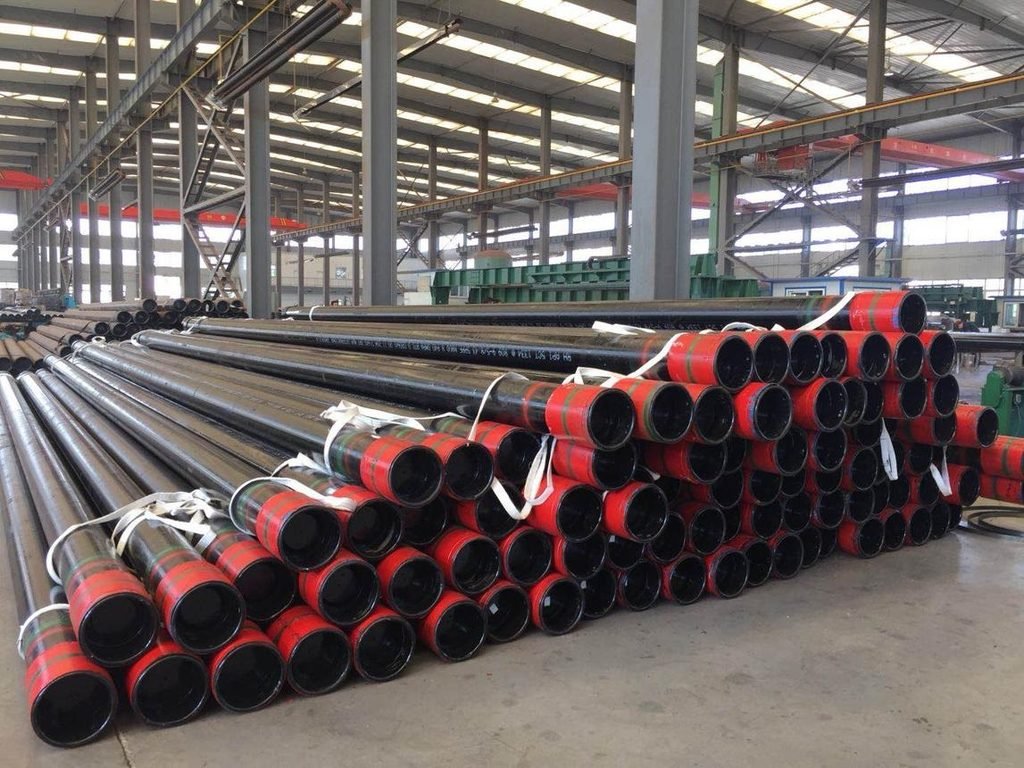
1. What Is Casing Corrosion?
Oilfield casing is a steel pipe installed in a wellbore to stabilize the formation, isolate different geological layers, and support safe well operations. Cement is commonly placed in the annular space between the casing and the surrounding formation to provide zonal isolation and support.
Although casing is designed for demanding service, it can still corrode when exposed to water, dissolved salts, corrosive gases, microorganisms, or other aggressive substances.
Corrosion can affect the casing’s internal surface, external surface, or both.
Internal Casing Corrosion
Internal corrosion develops on the surface exposed to drilling fluids, completion fluids, produced water, or other fluids inside the well.
Common contributing factors include:
- Carbon dioxide (CO₂) dissolved in water
- Hydrogen sulfide (H₂S)
- Chloride-containing water and brines
- Organic acids and other corrosive chemicals
- Microbiologically influenced corrosion under suitable conditions
- Erosion-corrosion caused by fluid flow and entrained solids
The severity depends on the fluid composition, water availability, temperature, pressure, flow conditions, and the material’s resistance to the specific environment.
External Casing Corrosion
External corrosion develops on the outside of the casing, where it may be exposed to formation fluids, groundwater, saline layers, or other corrosive environments.
Poor or incomplete cement coverage can leave sections of the casing in contact with the surrounding medium. Differences in the local environment may also create electrochemical cells that accelerate localized corrosion.
Stray electrical currents and interactions with other metallic structures can introduce additional risks.
External casing corrosion is particularly challenging because the affected surface may not be directly accessible for routine inspection.
The first step in prevention is to determine whether the main threat is internal corrosion, external corrosion, or a combination of both. A protection method designed for one surface may not adequately protect the other.
2. What Causes Casing Corrosion?
Choosing an effective prevention strategy requires understanding the conditions that make the casing vulnerable.
Carbon Dioxide (CO₂) Corrosion
When CO₂ dissolves in water, it can contribute to an acidic environment and promote corrosion of carbon steel. The resulting corrosion rate depends on several variables, including temperature, pressure, pH, water chemistry, and the formation and stability of corrosion-product layers.
CO₂ corrosion can cause general wall thinning or localized attack, depending on the conditions.
Hydrogen Sulfide (H₂S) and Sour-Service Conditions
H₂S can contribute to corrosion and may also increase the risk of hydrogen-related damage in susceptible steels.
In sour environments, material selection cannot be based on general corrosion resistance alone. The steel’s hardness, strength, metallurgical condition, and compliance with the applicable sour-service requirements must also be considered.
Chlorides and Saline Water
High concentrations of dissolved salts can change water chemistry and increase corrosion risks under certain conditions. The effect depends on the steel grade, temperature, water chemistry, deposits, and other corrosive species present.
Chloride concentration alone is not enough to predict corrosion performance.
Microbiologically Influenced Corrosion
Certain microorganisms can influence corrosion by changing local chemistry or producing corrosive metabolites. Microbiologically influenced corrosion (MIC) may occur in suitable environments, particularly where water, nutrients, and favorable surface conditions are present.
However, corrosion should not automatically be attributed to bacteria simply because it occurs in a water-bearing well. Appropriate evidence is needed to identify MIC as a contributing mechanism.
Poor Cementing and Stray Currents
External corrosion risks may increase where cement coverage is incomplete, the annular environment is aggressive, or electrical currents create unfavorable electrochemical conditions.
These problems require a different response from internal corrosion caused by produced fluids.
3. Choose the Right Casing Material
Material selection is one of the most important decisions in casing corrosion prevention. The objective is to choose a material that meets the well’s mechanical requirements and provides suitable resistance to the expected service environment.
Carbon Steel Casing
Carbon steel is widely used for oilfield casing because it offers established manufacturing practices, a broad range of grades, and cost-effective mechanical performance.
Its corrosion resistance, however, depends on the environment. In corrosive service, carbon steel may require a combination of fluid management, corrosion inhibitors, cementing controls, coatings, or other protection measures.
Corrosion-Resistant Alloys
Corrosion-resistant alloys (CRAs) may be considered where carbon steel cannot provide adequate performance under the expected conditions.
Depending on the environment, options may include selected stainless steels, duplex stainless steels, nickel-based alloys, or other qualified materials.
These materials are not interchangeable. A grade suitable for one combination of CO₂, H₂S, chlorides, temperature, and pressure may not be suitable for another.
What Should Buyers Consider?
Before specifying casing, review:
- CO₂ and H₂S partial pressures, where applicable
- Water chemistry, including pH and chloride concentration
- Operating and upset temperatures
- Well pressure and mechanical loads
- Expected service life
- Sour-service requirements
- Availability of qualified materials and connections
- Total lifecycle cost
A more expensive alloy may reduce corrosion-related maintenance in a demanding environment, but upgrading the material without understanding the corrosion mechanism can lead to unnecessary cost without solving the problem.
4. Improve Cementing Quality to Reduce External Corrosion
Cementing is a major part of well integrity. Properly designed and executed cementing helps support the casing and isolate different formations. It can also reduce direct exposure of the casing’s external surface to corrosive formation fluids.
Why Does Cement Coverage Matter?
If the cement sheath is incomplete or contains channels, some portions of the casing may remain exposed to the surrounding environment. Local differences in exposure can create conditions favorable to external corrosion.
Cementing problems can arise from unsuitable slurry properties, poor displacement, inadequate centralization, contamination, or operational issues during placement.
How to Reduce the Risk
Effective measures may include:
- Selecting a cement system suited to the well conditions
- Using appropriate centralizers and casing placement practices
- Designing the cementing operation for effective mud displacement
- Controlling slurry properties and placement conditions
- Evaluating cement placement and zonal isolation
- Investigating evidence of poor cement coverage
Cement does not guarantee that external corrosion will never occur. Its effectiveness depends on the quality of the cement sheath, the surrounding environment, and the integrity of the overall well construction.
For operators, cementing quality should be treated as a preventive barrier, not as a substitute for corrosion monitoring or other protection measures where those are necessary.
5. Use Corrosion Inhibitors to Protect Internal Surfaces
Corrosion inhibitors are widely used to reduce internal corrosion in oil and gas production systems.
Depending on the formulation, an inhibitor may adsorb onto the metal surface or otherwise modify the electrochemical processes responsible for corrosion. The aim is to reduce the rate of metal loss under the intended operating conditions.
How Do Corrosion Inhibitors Work?
Film-forming inhibitors can create a protective layer at the metal-fluid interface. The effectiveness of the film depends on the chemistry of the inhibitor, the steel surface, fluid composition, temperature, and flow conditions.
An inhibitor that performs well in one production system may not provide the same protection in another.
How Are Inhibitors Applied?
Depending on the well design and treatment program, inhibitors may be introduced through continuous injection, batch treatment, or other qualified delivery methods.
The method should ensure that the inhibitor reaches the surfaces that require protection. Treatment frequency and dosage must be based on the selected product, operating conditions, and monitoring results.
What Should Operators Monitor?
A corrosion-inhibitor program should evaluate:
- Compatibility with the produced fluids and other treatment chemicals
- Performance under the expected temperature and pressure
- Delivery and distribution throughout the intended system
- Changes in corrosion rate over time
- Evidence of localized corrosion despite treatment
- Chemical consumption and operating cost
Corrosion inhibitors are not a universal solution. They are generally most relevant to internal corrosion and should not be assumed to protect external casing surfaces that are isolated from the treatment fluid.
6. Consider Cathodic Protection for External Casing Corrosion
Cathodic protection (CP) is an electrochemical method used to reduce corrosion of a metal structure by shifting its potential in a protective direction.
For suitable well casings, CP may be considered when external corrosion risk cannot be adequately controlled by well construction and other measures alone.
Two common approaches are sacrificial-anode systems and impressed-current systems. The appropriate design depends on the casing configuration, electrical continuity, surrounding environment, and protection objectives.
When Is Cathodic Protection Appropriate?
Cathodic protection may be considered where risk assessments identify external corrosion concerns associated with the surrounding soil, formation environment, incomplete cement coverage, or stray currents.
However, CP is not automatically required for every well. Its necessity and effectiveness should be evaluated using the relevant engineering criteria and site conditions.
Important Limitations
Cathodic protection of the external casing surface does not directly control internal corrosion caused by produced fluids.
Its effectiveness also depends on the electrical configuration of the well, current distribution, the presence of shielding, and the ability to monitor the system.
For this reason, CP should be designed and assessed by qualified corrosion professionals. The applicable guidance for well casings includes NACE SP0186-2024 and EN 15112:2022.
7. Use Coatings and Linings Where Suitable
Protective coatings and internal linings can provide a barrier between steel and corrosive fluids or surrounding environments.
Their suitability depends on the coating material, application method, surface preparation, operating temperature, pressure, chemical exposure, and mechanical conditions.
External Protection
Where a suitable coating system can be applied to the relevant casing surface, it may help reduce direct contact between steel and the surrounding corrosive environment.
However, coating performance depends on adhesion, continuity, handling damage, and the conditions experienced after installation.
Internal Linings
Internal linings may be considered when the tubing or casing is exposed to fluids that could otherwise cause unacceptable corrosion.
The selected lining must be compatible with the fluid chemistry, operating temperature, pressure, flow conditions, and expected mechanical wear.
What Can Cause Coating Failure?
Common concerns include poor surface preparation, inadequate coating thickness, pinholes, impact damage, disbondment, and degradation under unsuitable service conditions.
A coating should therefore be selected based on the actual operating environment and inspected according to the applicable coating specification.
Coatings and linings are preventive barriers, but they should not be treated as substitutes for appropriate material selection, well design, or monitoring.
8. Monitor Corrosion Before It Becomes a Well-Integrity Problem
Even a well-designed casing system requires appropriate monitoring. Corrosion rates can change as water production, gas composition, operating conditions, and treatment effectiveness change.
The goal of monitoring is to identify deterioration early enough to support a planned response.
Corrosion Coupons and Probes
Where suitable, corrosion coupons can provide information about metal loss over a defined exposure period. Corrosion probes can provide additional information about changes in corrosion behavior over time.
These methods have limitations and may not represent every location or corrosion mechanism in the well.
Caliper and Well-Integrity Surveys
Casing inspection and well-integrity surveys may help identify internal wall loss, deformation, or other changes, depending on the tool and inspection method.
Different tools provide different measurements. An internal survey does not automatically establish the condition of the external casing surface.
Review Operating Data
Changes in water cut, produced-fluid chemistry, H₂S or CO₂ content, inhibitor dosage, temperature, and operating pressure can indicate a change in corrosion risk.
These indicators should be interpreted together rather than used individually to diagnose a corrosion mechanism.
Establish a Response Plan
A useful monitoring program defines what measurements will be collected, how frequently they will be reviewed, what conditions trigger further investigation, and who is responsible for corrective action.
Where casing integrity is uncertain, a qualified well-integrity assessment may be necessary before deciding on remediation.
9. Common Casing Corrosion Problems and Their Solutions
| Corrosion concern | Potential contributing factors | Prevention or mitigation approach |
|---|---|---|
| Internal CO₂ corrosion | CO₂, water chemistry, temperature, flow | Evaluate material suitability, inhibitors, and operating conditions |
| H₂S-related corrosion and damage | Sour environment, susceptible material condition | Qualified sour-service materials, hardness control, and appropriate corrosion management |
| Chloride-related corrosion | Saline fluids, temperature, deposits, material susceptibility | Assess the environment and select suitable materials or protection methods |
| External corrosion | Formation fluids, incomplete cement coverage, stray currents | Improve cementing, assess external CP, and investigate electrical conditions |
| MIC | Suitable microbial activity and environmental conditions | Confirm the mechanism and implement an evidence-based treatment and monitoring program |
| Localized corrosion | Deposits, crevices, coating damage, local chemistry differences | Identify the cause and use targeted material, design, and protection measures |
These are general starting points rather than universal solutions. The correct response depends on the actual corrosion mechanism, well configuration, and applicable engineering requirements.
10. How to Select a Casing Corrosion Prevention Strategy
A practical corrosion-management plan should begin with the well conditions rather than a predetermined product or treatment.
Step 1: Identify the Corrosion Mechanism
Determine whether the dominant concern is internal corrosion, external corrosion, localized attack, hydrogen-related damage, or a combination of mechanisms.
Use available fluid data, inspection results, operating history, and material information to support the assessment.
Step 2: Establish the Operating Conditions
Review the well’s temperature, pressure, fluid composition, water production, mechanical loads, and expected service life.
Include foreseeable operating changes and treatment interruptions where relevant.
Step 3: Select Appropriate Protection Measures
Depending on the findings, the solution may involve material selection, cementing improvements, inhibitors, coatings or linings, cathodic protection, or a combination of these methods.
Step 4: Define Monitoring and Acceptance Criteria
Determine which measurements and inspections are needed to verify performance. Define the conditions that require reassessment or intervention.
Step 5: Review Lifecycle Cost
Compare the initial cost of materials and protection measures with expected maintenance, intervention, downtime, and replacement costs.
The most economical solution is the one that provides the required level of integrity over the intended service life, not necessarily the one with the lowest purchase price.
11. Frequently Asked Questions About Casing Corrosion
What is the main cause of oilfield casing corrosion?
There is no single cause for every well. Common contributors include CO₂, H₂S, water and dissolved salts, unsuitable material selection, incomplete cement coverage, stray currents, and certain microbial conditions.
Can casing corrosion be prevented completely?
No protection method can guarantee that corrosion will never occur under all conditions. The objective is to identify the dominant risks, reduce corrosion rates to acceptable levels, and monitor casing integrity throughout the well’s service life.
Does cathodic protection prevent both internal and external corrosion?
No. Cathodic protection of the casing’s external surface does not directly protect the internal surface from corrosive produced fluids. Internal and external corrosion may require different prevention measures.
Are corrosion inhibitors effective for casing?
They can be effective for suitable internal corrosion mechanisms when the inhibitor is compatible with the fluid and is delivered at the required concentration to the surfaces needing protection. Performance should be verified through an appropriate monitoring program.
Is corrosion-resistant alloy casing always the best option?
Not necessarily. CRAs may be justified in highly corrosive environments, but selection depends on the full fluid chemistry, temperature, pressure, mechanical requirements, material compatibility, and total lifecycle cost.
How can operators detect casing corrosion?
Depending on the well configuration and the type of deterioration, methods may include corrosion monitoring, caliper surveys, other well-integrity logging tools, review of operating data, and targeted investigations. No single method provides a complete picture of every internal and external surface.
Conclusion: Prevent Casing Corrosion with a Risk-Based Approach
Preventing casing corrosion requires more than selecting a corrosion-resistant steel grade or applying a single treatment. It requires understanding the well environment and combining appropriate materials, well construction, chemical treatment, external protection, and monitoring.
For some wells, improving cementing quality and controlling internal corrosion may provide the greatest benefit. Others may require corrosion-resistant alloys, coatings, cathodic protection, or a more comprehensive integrity-management program.
The right solution depends on the actual corrosion mechanism and the conditions the casing must withstand.
Need Help Selecting Oilfield Casing?
When sourcing casing for a new well or replacement project, provide the required grade, dimensions, applicable standard, operating conditions, and known corrosion risks.
This information helps establish the mechanical and environmental requirements before the product is specified.
Contact our team to discuss your oilfield casing requirements and request a quotation.