
In oil and gas, petrochemical and offshore projects, pipeline materials often face severe corrosion challenges caused by:
- Hydrogen sulfide (H₂S)
- Carbon dioxide (CO₂)
- Chlorides
- High temperature
- High pressure
Using solid corrosion-resistant alloy pipe can provide excellent performance, but material cost can become extremely high.
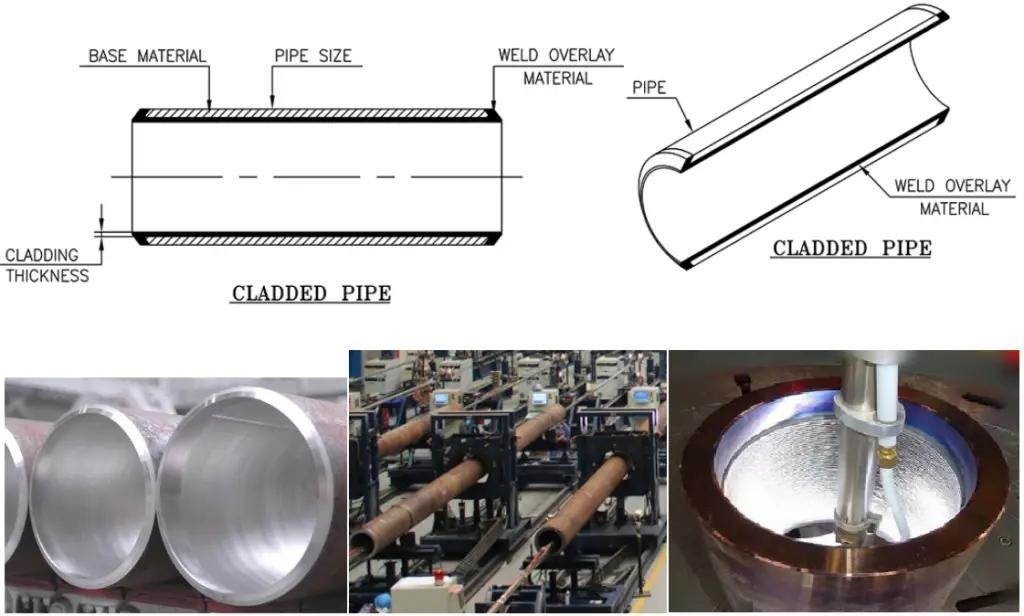
CRA clad pipe provides an alternative solution by combining:
- Carbon steel base pipe
- Corrosion-resistant alloy inner layer
This structure provides both mechanical strength and corrosion protection.
1. What Is CRA Clad Pipe?
CRA means:
Corrosion Resistant Alloy
Common cladding materials include:
- Stainless steel
- Nickel alloys
- Alloy 625
- Alloy 825
- Duplex stainless steel
The typical structure:
2. Why Use CRA Clad Pipe Instead of Solid Alloy Pipe?
Solid nickel alloy pipe:
Advantages:
- Excellent corrosion resistance
Disadvantages:
- Very high material cost
CRA clad pipe:
Advantages:
- Carbon steel provides structural strength
- CRA layer provides corrosion resistance
- Lower material cost
- Suitable for large diameter applications
3. Applications of CRA Clad Pipe
Typical applications:
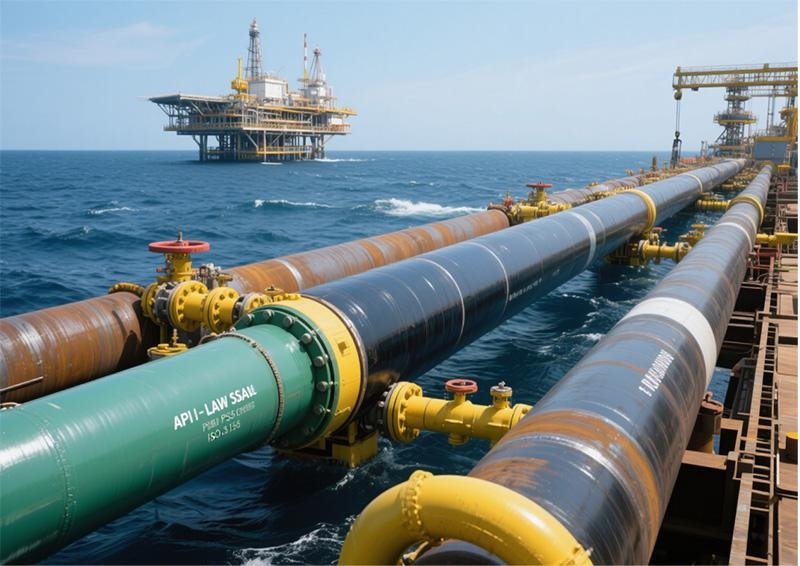
Offshore Oil and Gas
Used for:
- Subsea pipelines
- Risers
- Flowlines
Refinery
Used for:
- Hydroprocessing units
- Sour service pipelines
Chemical Industry
Used for:
- Corrosive chemical transportation
4. Inspection Requirements
CRA clad pipe requires strict quality control:
- Bond integrity testing
- Ultrasonic testing
- Chemical analysis
- PMI
- Dimensional inspection
Conclusion
CRA clad pipe provides an engineering balance between corrosion resistance and cost efficiency.
For offshore, petrochemical and high-corrosion environments, it can offer significant advantages compared with conventional carbon steel or solid alloy pipe.
Aspera Steel supplies clad pipe solutions according to project specifications, including CRA cladding options, inspection requirements and international standards.