
Carbon steel pipe is one of the most widely used pipe materials in industrial projects because of its high strength, good weldability and cost efficiency. However, when carbon steel is exposed to moisture, chemicals, seawater or aggressive soil environments, corrosion can significantly affect its service life.
To improve corrosion resistance and extend operating life, carbon steel pipes are often protected with different types of external or internal coatings. These products are commonly known as coated carbon steel pipes.
Coated carbon steel pipes combine the mechanical strength of carbon steel with the protective performance of corrosion-resistant coatings. They are widely used in oil and gas pipelines, water transmission systems, chemical plants, offshore projects and infrastructure construction.
The selection of coating type depends on factors such as operating environment, pipeline location, transported medium, temperature and required service life.
What Is Coated Carbon Steel Pipe?
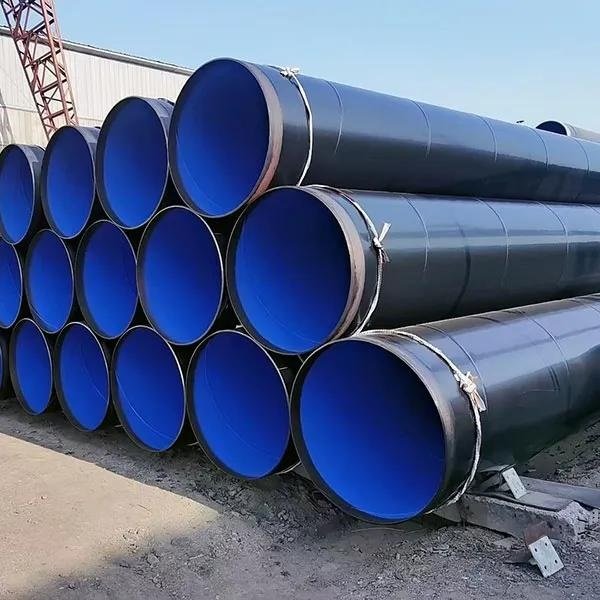
A coated carbon steel pipe is a carbon steel pipe that has been treated with one or more protective coating layers on its internal or external surface.
The purpose of coating is mainly to prevent corrosion caused by:
- Moisture
- Oxygen exposure
- Chemicals
- Salt water
- Underground soil conditions
- Industrial fluids
The carbon steel provides the required mechanical strength, while the coating acts as a protective barrier between the steel surface and the surrounding environment.
Common base pipes used for coating include:
- Seamless carbon steel pipe
- ERW steel pipe
- SSAW spiral welded pipe
- LSAW welded pipe
Common coating systems include:
- 3PE / 3LPE coating
- FBE coating
- 3PP coating
- Epoxy coating
- Cement mortar lining
- Polyurethane coating
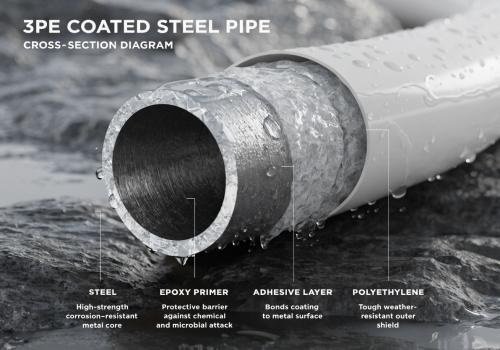
For pipeline applications, 3LPE and FBE are among the most widely used corrosion protection systems. 3LPE typically consists of an epoxy primer, adhesive layer and polyethylene outer layer, while FBE uses a fusion bonded epoxy layer applied directly to the steel surface.
Why Are Carbon Steel Pipes Coated?
Although carbon steel offers excellent mechanical performance, it is naturally vulnerable to corrosion.
Without protection, carbon steel pipes may experience:
- Surface rust
- Pitting corrosion
- Wall thickness reduction
- Leakage risk
- Reduced service life
For buried pipelines, offshore systems and chemical applications, corrosion protection is often a key design requirement.
A suitable coating system can provide:
Corrosion Protection
The coating separates the steel surface from water, oxygen and corrosive substances.
Longer Service Life
Proper coating reduces maintenance requirements and extends pipeline operating periods.
Better Environmental Adaptability
Different coatings can be selected for:
- Underground installation
- Marine environments
- High-temperature service
- Chemical exposure
Main Types of Coated Carbon Steel Pipe
1. 3PE / 3LPE Coated Carbon Steel Pipe
3PE, also known as 3LPE (Three-Layer Polyethylene), is one of the most common external coating systems for buried pipelines.
The coating structure normally consists of three layers:
| Layer | Material | Function |
|---|---|---|
| First Layer | Fusion Bonded Epoxy (FBE) | Provides strong adhesion and corrosion protection |
| Second Layer | Adhesive Layer | Bonds epoxy with polyethylene |
| Third Layer | Polyethylene (PE) | Provides mechanical protection and moisture resistance |
Advantages of 3PE Coated Pipe
- Excellent corrosion resistance
- Strong resistance to soil stress
- Good mechanical protection
- High waterproof performance
- Suitable for buried pipelines
Common Applications
3PE coated carbon steel pipes are commonly used in:
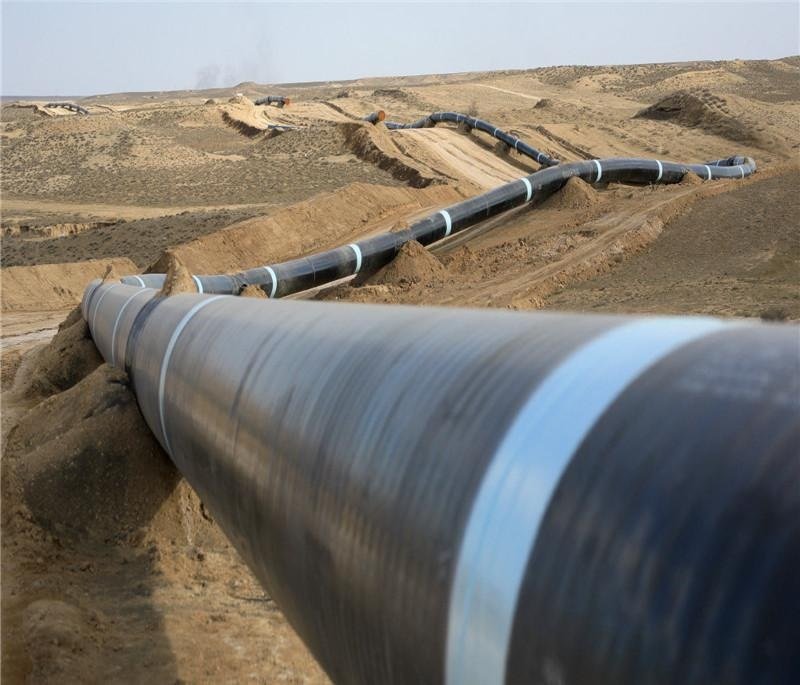
- Oil transportation pipelines
- Natural gas pipelines
- Water supply pipelines
- Underground transmission systems
- Long-distance pipeline projects
Because of its strong external protection capability, 3LPE is frequently selected for buried and offshore pipeline applications.
2. FBE Coated Carbon Steel Pipe
FBE stands for Fusion Bonded Epoxy coating.
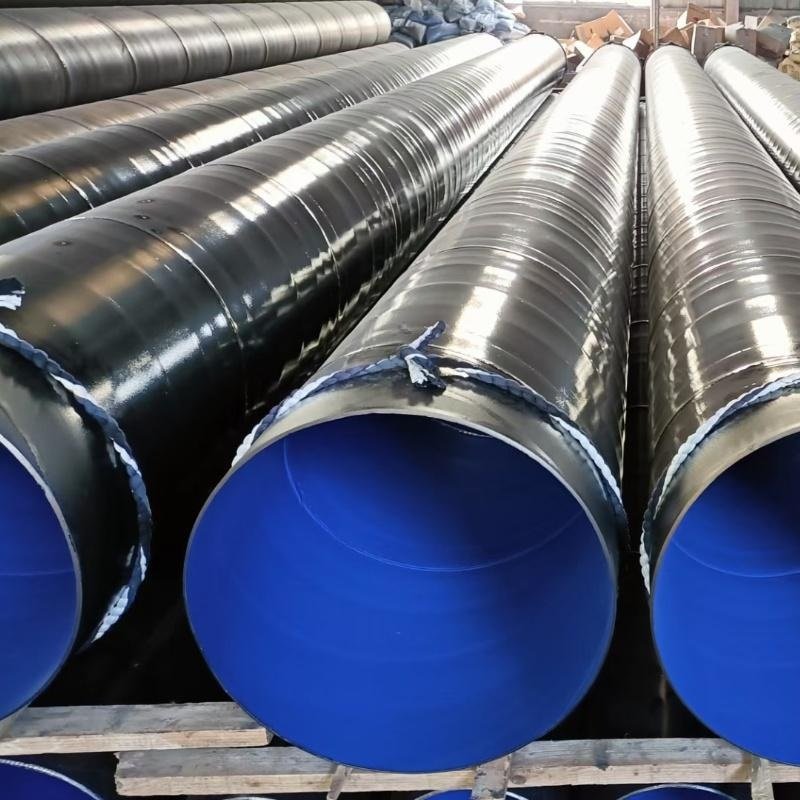
Unlike 3PE, FBE normally uses an epoxy powder coating applied directly onto a heated steel pipe surface. The powder melts and chemically bonds with the steel surface, creating a continuous protective layer.
Advantages of FBE Coating
- Strong adhesion to steel
- Good chemical resistance
- Smooth coating surface
- Suitable for internal and external protection
- Good corrosion resistance
Common Applications
FBE coated pipes are widely used in:
- Water pipelines
- Oil and gas systems
- Chemical processing pipelines
- Fire protection systems
- Industrial fluid transportation
For applications where mechanical damage risk is controlled, FBE provides an effective corrosion protection solution.
3. 3PP Coated Carbon Steel Pipe
3PP coating is similar to 3PE but uses polypropylene as the outer protective layer.
The structure usually includes:
- Epoxy primer
- Adhesive layer
- Polypropylene outer layer
Compared with polyethylene, polypropylene provides better temperature resistance.
Advantages:
- Higher temperature capability
- Good mechanical strength
- Strong resistance to chemical environments
Applications:
- High-temperature oil pipelines
- Offshore pipelines
- Industrial transportation systems
4. Internal Epoxy Coated Carbon Steel Pipe
Some pipelines require protection not only from external corrosion but also from internal fluid conditions.
Internal epoxy coating creates a smooth protective surface inside the pipe.
Benefits include:
- Reduced internal corrosion
- Improved flow efficiency
- Protection against chemical attack
Common applications:
- Drinking water pipelines
- Industrial water systems
- Chemical transportation pipelines
Coated Carbon Steel Pipe Manufacturing Process
The coating process usually includes several important stages.
| Process Step | Description |
|---|---|
| Pipe Surface Inspection | Check pipe quality before coating |
| Surface Cleaning | Remove rust, oil and contaminants |
| Abrasive Blasting | Create suitable surface profile for coating adhesion |
| Heating | Heat pipe to required coating temperature |
| Coating Application | Apply FBE, PE or other coating layers |
| Curing | Allow coating to bond and stabilize |
| Inspection | Check thickness, adhesion and coating defects |
| Marking and Packing | Prepare pipe for shipment |
How to Choose the Right Coating for Carbon Steel Pipe?
The correct coating depends on the actual working environment.
Underground Pipeline
Recommended coatings:
- 3PE / 3LPE
- 3PP
Reasons:
- High moisture resistance
- Strong mechanical protection
- Suitable for soil environments
Water Transmission Pipeline
Common choices:
- FBE
- Epoxy coating
- Cement mortar lining
Important considerations:
- Water quality requirements
- Internal corrosion protection
- Long-term reliability
Oil and Gas Pipeline
Common choices:
- 3PE
- 3PP
- FBE
Selection depends on:
- Pipeline location
- Operating temperature
- Pressure requirements
- Soil conditions
Offshore Pipeline
Offshore environments expose pipelines to:
- Salt water
- Mechanical impact
- Temperature changes
Common coating systems include:
- 3PP
- Multi-layer epoxy systems
- Additional weight coating when required
Coated Carbon Steel Pipe Inspection
Quality inspection is essential because coating performance directly affects pipeline life.
Common inspection methods include:
Coating Thickness Test
Measures whether coating thickness meets project requirements.
Holiday Detection Test
Detects small coating defects or pinholes.
Adhesion Test
Checks bonding strength between coating and steel surface.
Visual Inspection
Checks:
- Surface condition
- Coating uniformity
- Damage
- Repair areas
Pipe Inspection
Before coating, the steel pipe itself should also meet required standards through:
- Dimensional inspection
- Hydrostatic testing
- Ultrasonic testing
- Material verification
Common Standards for Coated Carbon Steel Pipe
Coated carbon steel pipes are usually supplied according to both pipe standards and coating specifications.
Common pipe standards include:
| Standard | Application |
|---|---|
| API 5L | Oil and gas transmission line pipe |
| ASTM A53 | General carbon steel pipe |
| ASTM A106 | High-temperature carbon steel pipe |
| ASTM A252 | Steel pipe piles |
Common coating standards include:
| Standard | Coating System |
|---|---|
| DIN 30670 | Polyethylene coating |
| ISO 21809 | Pipeline coating systems |
| AWWA C213 | Fusion bonded epoxy coating |
Coated Carbon Steel Pipe Applications
Oil and Gas Industry
Used for:
- Crude oil pipelines
- Natural gas transmission
- Gathering systems
Water Engineering
Used for:
- Water supply pipelines
- Wastewater systems
- Irrigation projects
Chemical Industry
Used for:
- Chemical transportation
- Process pipelines
- Storage systems
Infrastructure Projects
Used for:
- Pipe piles
- Bridge construction
- Underground structures
How to Select a Reliable Coated Steel Pipe Supplier?
A professional supplier should provide:
Complete Material Documentation
Including:
- Mill Test Certificate
- Chemical composition
- Mechanical properties
Coating Inspection Reports
Including:
- Coating thickness
- Adhesion test
- Holiday test results
Experience with International Projects
A reliable supplier should understand requirements from:
- API
- ASTM
- ISO
- EN standards
Customized Solutions
Different projects may require:
- Different coating thickness
- Internal lining
- Special inspection
- Different pipe grades
Conclusion
Coated carbon steel pipes provide an effective solution for protecting steel pipelines against corrosion while maintaining the strength and reliability of carbon steel.
Different coating systems serve different purposes:
- 3PE / 3LPE coating is widely used for buried pipelines requiring strong external protection.
- FBE coating provides excellent adhesion and corrosion resistance for many industrial applications.
- 3PP coating is suitable for higher-temperature and demanding environments.
Choosing the right coating depends on the pipeline environment, operating conditions and project requirements.
A reliable coated carbon steel pipe supplier can help customers select the appropriate pipe grade, coating system and inspection requirements to ensure long-term pipeline performance.