
1. Introduction: Why Do Steel Pipe Prices Vary Between Suppliers?
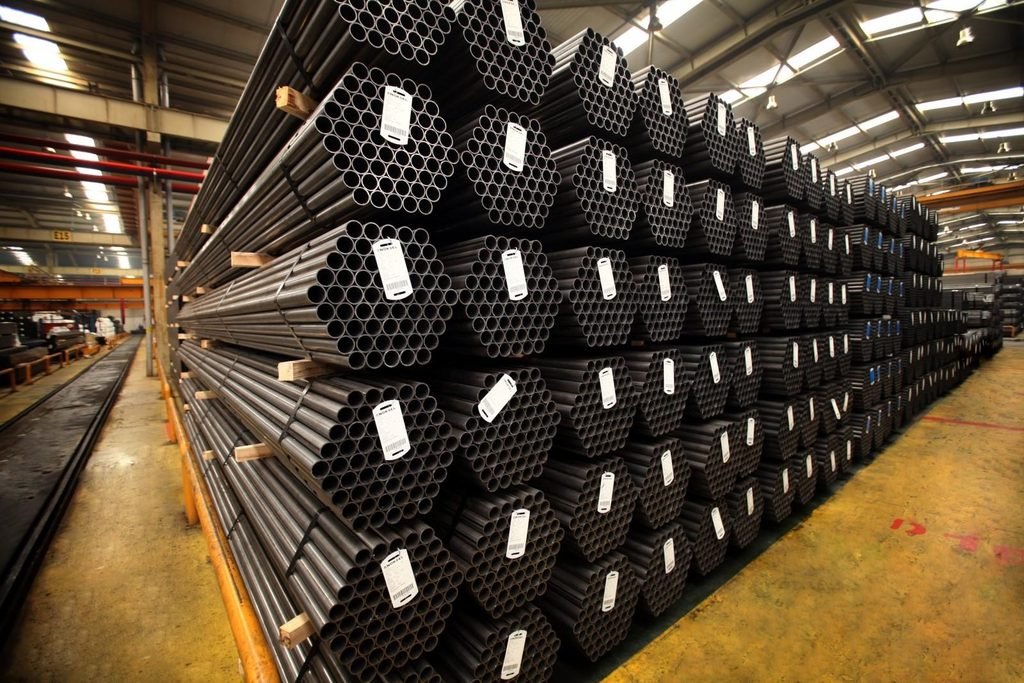
Steel pipes are widely used in oil and gas transportation, petrochemical plants, power generation, water supply systems, construction and industrial manufacturing.
When buyers request quotations from different steel pipe manufacturers, they may find significant differences in the quoted prices, even when the products appear to have similar dimensions.
This is because steel pipe pricing is not determined by weight or material cost alone.
The final quotation depends on several factors, including:
- Raw material prices.
- Steel grade and material specification.
- Outside diameter and wall thickness.
- Manufacturing process.
- Heat treatment requirements.
- Surface treatment and coating.
- Inspection and testing requirements.
- Order quantity and production schedule.
- Packaging and transportation.
- Delivery terms and payment conditions.
For example, an ASTM A106 Grade B seamless steel pipe and an ASTM A53 Grade B welded steel pipe may have similar outside diameters and wall thicknesses, but their manufacturing processes and applicable requirements are different.
As a result, their prices should not be compared without considering the full technical specification.
Understanding these factors helps buyers evaluate quotations more accurately, avoid unexpected costs and select a supplier that meets their project requirements.
2. Raw Material Costs: One of the Main Factors Affecting Steel Pipe Prices
Raw materials are a major component of steel pipe manufacturing costs.
The type of raw material depends on the production process.
Common inputs include:
- Steel billets.
- Hot-rolled steel coils.
- Steel plates.
- Alloying elements.
- Stainless steel slabs and billets.
- Zinc for galvanized steel pipes.
Changes in the prices of these materials can affect manufacturers’ production costs and quotation levels.
2.1 Steel Billet Prices
Steel billets are commonly used in seamless steel pipe production.
The billet is heated, pierced and rolled into a hollow steel tube.
When billet prices increase, the production cost of seamless steel pipes may also rise.
The final effect depends on billet purchasing contracts, inventory levels, production efficiency and the manufacturer’s pricing policy.
2.2 Hot-Rolled Coil Prices
Hot-rolled steel coils are commonly used in ERW and SSAW steel pipe manufacturing.
The coil is formed into a pipe and processed through the relevant welding and sizing operations.
Fluctuations in hot-rolled coil prices can therefore influence the base cost of welded steel pipes.
2.3 Steel Plate Prices
Steel plates are commonly used to manufacture LSAW steel pipes.
The plate is formed into a cylindrical shape and welded along the longitudinal seam.
Plate thickness, steel grade, plate quality and procurement availability can all influence the manufacturing cost.
2.4 Alloying Element Prices
For alloy steel and stainless steel pipes, the prices of alloying elements are particularly important.
Common elements include:
- Nickel.
- Chromium.
- Molybdenum.
- Vanadium.
- Niobium.
- Manganese.
For example, stainless steel grades such as 304, 316 and 316L contain different alloy compositions.
316 and 316L generally contain molybdenum, while 304 does not have the same specified molybdenum addition.
Consequently, alloy composition and prevailing metal costs can create substantial price differences between stainless steel grades.
What should buyers check?
When comparing quotations, buyers should confirm whether the supplier’s price is based on the same material grade, raw material specification and quotation date.
A quotation based on an earlier raw material purchase may differ from one calculated using recently purchased billets, coils or plates.
3. Steel Grade and Material Standard
Steel grade is another important factor affecting pipe prices.
Different grades have different chemical composition limits, mechanical properties and manufacturing requirements.
3.1 Carbon Steel Pipes
Common carbon steel pipe grades include:
- ASTM A106 Grade A, B and C.
- ASTM A53 Grade A and B.
- API 5L Grade B.
- API 5L X42, X52, X60, X65 and X70.
Different specifications may require different manufacturing routes, chemical composition limits, mechanical testing and inspection procedures.
For example, ASTM A106 covers seamless carbon steel pipe for high-temperature service, while ASTM A53 covers welded and seamless carbon steel pipe for specified general applications.
API 5L covers line pipe for pipeline transportation systems and includes additional product and manufacturing requirements according to the applicable product specification level.
These standards should not be treated as directly interchangeable.
3.2 Alloy Steel Pipes
Alloy steel pipes contain additional alloying elements to achieve specified mechanical and high-temperature properties.
Common grades include:
- ASTM A335 P11.
- ASTM A335 P22.
- ASTM A335 P91.
- ASTM A335 P92.
These materials may require more complex steelmaking, heat treatment and quality control than conventional carbon steel grades.
The additional manufacturing and inspection requirements can increase the final quotation.
3.3 Stainless Steel Pipes
Common stainless steel grades include:
-
- 304L.
-
- 316L.
-
-
- 2205 Duplex.
- 2507 Super Duplex.
Their prices vary according to alloy composition, raw material costs, manufacturing route and applicable product specification.
For duplex and super duplex stainless steel pipes, additional metallurgical control and testing may also influence cost.
Important: A higher steel grade does not automatically mean a higher price in every market condition. Buyers should compare the exact specification, supply availability and quotation date.
4. Pipe Diameter and Wall Thickness
Pipe dimensions directly affect the amount of material required and the manufacturing process.
Two pipes made from the same steel grade can have different prices simply because their outside diameters and wall thicknesses are different.
4.1 Outside Diameter (OD)
A larger outside diameter generally requires more raw material per metre when other relevant dimensions and conditions are comparable.
However, the relationship between diameter and price is not always linear.
Production equipment, forming limitations, manufacturing yield and available production sizes can also influence the cost.
4.2 Wall Thickness (WT)
Wall thickness is another important pricing factor.
A thicker pipe generally requires more steel and may involve additional processing.
For example, a pipe with a 10 mm wall thickness will generally contain more material per metre than a pipe with the same outside diameter and a 5 mm wall thickness.
Thicker walls may also require different piercing, rolling, forming, welding or heat treatment arrangements depending on the manufacturing route.
4.3 Pipe Length
Standard commercial lengths may be easier to produce and handle than non-standard lengths.
Custom lengths can require additional cutting, handling and inspection.
For project orders, buyers should clearly specify whether they require:
- Random lengths.
- Single random lengths.
- Double random lengths.
- Fixed lengths.
- Custom lengths.
Length tolerances should also be included in the purchase specification.
4.4 Schedule and Wall Thickness Requirements
For standard pipe dimensions, wall thickness is often specified using schedule numbers such as:
- SCH 10.
- SCH 20.
- SCH 40.
- SCH 80.
- SCH 160.
A higher schedule generally indicates a greater nominal wall thickness for the same NPS size, although the exact thickness depends on the nominal pipe size.
Therefore, buyers should specify both the nominal pipe size and the required wall thickness or schedule.
5. Manufacturing Process: Seamless vs ERW vs LSAW vs SSAW
The manufacturing process has a direct influence on steel pipe production costs.
Different manufacturing methods require different raw materials, equipment, production steps and inspection procedures.
5.1 Seamless Steel Pipes
Seamless pipes are manufactured from solid steel billets.
The production process includes heating, piercing, rolling, sizing, straightening and, where required, heat treatment.
The process involves specialized equipment and multiple manufacturing operations.
Seamless pipes are commonly specified for boiler systems, high-temperature piping, mechanical engineering and selected oil and gas applications.
Their pricing is influenced by:
- Billet costs.
- Piercing and rolling efficiency.
- Pipe dimensions.
- Steel grade.
- Heat treatment.
- Surface finishing.
- Inspection requirements.
5.2 ERW Steel Pipes
ERW pipes are manufactured from steel strip or coil.
The strip is formed into a cylindrical shape and welded using high-frequency electrical resistance welding.
ERW production is generally suitable for continuous manufacturing and efficient material utilization.
Pricing depends on:
- Hot-rolled coil costs.
- Strip thickness and width.
- Forming and welding conditions.
- Sizing requirements.
- Weld seam inspection.
- Heat treatment where specified.
5.3 LSAW Steel Pipes
LSAW pipes are produced from steel plates.
The plate is formed into a pipe and joined through longitudinal submerged arc welding.
Manufacturing requires plate preparation, forming, welding and specified inspection procedures.
Pricing depends on:
- Steel plate costs.
- Plate thickness.
- Forming process.
- Welding consumables.
- Welding procedures.
- Mechanical expansion where applicable.
- Nondestructive testing.
- Hydrostatic testing.
5.4 SSAW Steel Pipes
SSAW pipes are manufactured from steel strip using spiral forming and submerged arc welding.
Their production process is suitable for many large-diameter pipe applications.
Pricing is influenced by:
- Steel coil costs.
- Strip dimensions.
- Spiral forming parameters.
- Welding requirements.
- Inspection scope.
- Pipe diameter and wall thickness.
5.5 Manufacturing Cost Comparison
There is no universal price ranking that applies to every size and grade.
However, for technically comparable products, seamless manufacturing often has a higher conversion cost than conventional welded pipe production.
The final quotation depends on production capacity, dimensions, material availability and inspection requirements.
A buyer should never assume that a welded pipe can replace a seamless pipe unless the applicable design code, product specification and project requirements permit it.
6. Heat Treatment and Additional Processing Costs
Heat treatment can significantly influence steel pipe production costs.
Different steel grades and applications require different metallurgical conditions.
Common heat treatment processes include:
Normalizing
Normalizing is used to obtain a specified microstructural condition and mechanical property profile.
Annealing
Annealing may be used to reduce hardness, improve ductility or achieve a specified material condition.
Quenching and Tempering
Quenching and tempering are commonly applied to selected alloy steel and high-strength products.
They require additional heating, cooling and process control.
Other Additional Processing
The following operations may also affect quotations:
- Straightening.
- Cold drawing.
- End beveling.
- Threading.
- Coupling installation.
- Precision cutting.
- Surface grinding.
- Shot blasting.
- Special dimensional tolerances.
For this reason, buyers should specify the required delivery condition and end preparation before requesting a quotation.
7. Surface Treatment and Coating Requirements
Surface treatment can add a significant cost component to a steel pipe quotation.
The final cost depends on the coating material, application process, surface preparation and inspection requirements.
7.1 Black Steel Pipes
Black steel pipes are generally supplied without an additional galvanized or specialized protective coating.
Depending on the order, they may still require temporary rust prevention for storage and transportation.
7.2 Galvanized Steel Pipes
Galvanized pipes have a zinc coating that provides corrosion protection.
Their prices depend on:
- Zinc material costs.
- Required coating thickness.
- Galvanizing process.
- Surface preparation.
- Coating inspection.
- Pipe dimensions.
7.3 3PE Coated Steel Pipes
Three-layer polyethylene coating is commonly used for external corrosion protection in pipeline applications.
The coating system typically includes:
- Fusion-bonded epoxy primer.
- Adhesive layer.
- Polyethylene outer layer.
The additional coating materials, production equipment, surface preparation and inspection increase the overall product cost.
7.4 FBE Coated Steel Pipes
Fusion-bonded epoxy coating is another common corrosion protection method.
The final cost depends on coating thickness, surface preparation, application conditions, adhesion requirements and holiday testing.
7.5 Internal Coatings
Internal epoxy and other lining systems may be specified for water transportation, oil and gas or industrial chemical applications.
Their costs depend on the selected coating system, internal diameter, pipe length and application requirements.
8. Inspection, Testing and Certification Requirements
Inspection and testing requirements can significantly influence the final quotation.
A standard product inspection package and a project-specific inspection package may involve different costs.
Common requirements include:
8.1 Chemical Composition Testing
Chemical analysis verifies whether the material meets the specified grade.
8.2 Mechanical Testing
Typical tests include:
- Tensile testing.
- Yield strength testing.
- Elongation testing.
- Hardness testing.
- Impact testing.
- Flattening testing.
- Bend testing.
8.3 Nondestructive Testing (NDT)
Depending on the product specification, testing may include:
- Ultrasonic Testing (UT).
- Radiographic Testing (RT).
- Eddy Current Testing (ET).
- Magnetic Particle Testing (MT).
Additional inspection coverage or more stringent acceptance criteria may increase inspection time and cost.
8.4 Hydrostatic Testing
Hydrostatic testing verifies the pressure integrity of the pipe under specified test conditions.
Testing equipment, test pressure, holding time and product requirements can influence production and inspection costs.
8.5 Third-Party Inspection
Some projects require inspection by independent organizations.
Examples include inspection by SGS, Bureau Veritas, TÜV or other approved inspection agencies.
Third-party inspection can introduce additional charges for:
- Inspector attendance.
- Testing supervision.
- Documentation review.
- Factory inspection.
- Shipment release.
8.6 Material Test Certificates
Material test certificates provide information about chemical composition, mechanical properties and applicable testing results.
For example, EN 10204 Type 3.1 and Type 3.2 documents have different verification and validation requirements.
Buyers should specify the required certificate type before the order is confirmed.
9. Order Quantity and Production Schedule
Order quantity affects production planning, material purchasing and logistics efficiency.
Larger orders may benefit from economies of scale because fixed costs can be distributed across more products.
However, the relationship between order quantity and unit price depends on the manufacturer’s production schedule and available capacity.
9.1 Bulk Orders
Larger orders may allow manufacturers to:
- Purchase raw materials in larger quantities.
- Optimize production scheduling.
- Reduce repeated machine setup.
- Improve production efficiency.
- Arrange more efficient transportation.
These factors may reduce the unit cost.
9.2 Small Orders
Small orders may involve relatively higher unit costs because of:
- Minimum production quantities.
- Machine setup.
- Material purchasing limitations.
- Additional handling.
- Packaging costs.
- Inspection and documentation expenses.
9.3 Mixed Specifications
A 100-ton order containing one standard pipe size may be easier to manufacture than a 100-ton order divided into many different diameters, wall thicknesses and grades.
The number of product specifications can affect production planning and manufacturing efficiency.
9.4 Delivery Time
Urgent orders may require production schedule adjustments, expedited raw material procurement or additional logistics arrangements.
These requirements can affect the final quotation.
Buyers should provide realistic delivery deadlines when requesting offers.
10. Transportation, Packaging and International Trade Terms
For international steel pipe purchases, transportation costs can represent an important part of the total landed cost.
The shipping cost depends on:
- Shipping destination.
- Port of loading.
- Port of discharge.
- Cargo weight.
- Cargo dimensions.
- Container availability.
- Vessel schedules.
- Freight market conditions.
- Insurance requirements.
- Customs and import duties.
Large-diameter pipes may require flat racks, open-top containers or break-bulk shipping instead of standard containers.
10.1 Packaging Costs
Export packaging requirements may include:
- Steel-strapped bundles.
- Wooden supports.
- Plastic wrapping.
- Anti-rust protection.
- Protective end caps.
- Thread protectors.
- Waterproof covering.
- Special marking.
These items should be included in the quotation when required.
10.2 FOB, CFR and CIF Pricing
International steel pipe quotations commonly use Incoterms such as FOB, CFR and CIF.
FOB – Free on Board
Under FOB, the seller delivers the goods on board the nominated vessel at the agreed port of shipment. The buyer arranges the main ocean freight and insurance.
CFR – Cost and Freight
Under CFR, the seller pays the cost and freight necessary to bring the goods to the named destination port. Risk transfers when the goods are on board the vessel at the port of shipment.
CIF – Cost, Insurance and Freight
Under CIF, the seller pays the freight and obtains the required insurance cover for the agreed destination port. Risk also transfers when the goods are on board the vessel at the port of shipment.
Buyers should specify the exact named port and Incoterms edition, such as Incoterms 2020.
FOB, CFR and CIF prices cannot be compared directly without checking what each quotation includes.
11. Why Are Steel Pipe Quotations Different Between Suppliers?
Two manufacturers may provide different quotations for what appears to be the same steel pipe.
This does not necessarily mean that one supplier is overcharging.
The differences may come from:
Different Raw Material Purchasing Costs
Manufacturers may purchase billets, coils or plates at different times and under different contracts.
Different Manufacturing Capabilities
Production efficiency, equipment condition and manufacturing yield affect conversion costs.
Different Inspection Scope
One supplier may include additional testing or third-party inspection while another may quote only the basic inspection package.
Different Product Specifications
The steel grade, wall thickness tolerance, pipe length and end preparation may not be identical.
Different Documentation Requirements
Material certificates, inspection reports and project-specific documentation can affect costs.
Different Delivery Conditions
One quotation may be EXW or FOB, while another includes freight and insurance.
Different Supplier Business Models
Manufacturers, stockists and trading companies may have different cost structures and supply arrangements.
The best way to compare suppliers is to ensure that all quotations are based on the same technical and commercial requirements.
12. How to Compare Steel Pipe Quotations Correctly
Before selecting a supplier, buyers should prepare a quotation comparison sheet.
The following information should be checked.
| Comparison Item | What to Verify |
|---|---|
| Product Type | Seamless, ERW, LSAW or SSAW |
| Standard | ASTM, API, EN or other applicable standard |
| Material Grade | Exact grade and product specification |
| Outside Diameter | Same OD |
| Wall Thickness | Same thickness or schedule |
| Length | Standard or custom length |
| Manufacturing Route | Confirmed production method |
| Heat Treatment | Required delivery condition |
| Surface Treatment | Black, galvanized, FBE, 3PE or other |
| Testing | Hydrostatic test, NDT and mechanical testing |
| Certification | MTC 3.1, 3.2 or project-specific documents |
| Inspection | Manufacturer or third-party inspection |
| Packaging | Standard or special export packaging |
| Quantity | Same total quantity and size mix |
| Delivery Terms | EXW, FOB, CFR or CIF |
| Delivery Time | Confirmed production and shipment schedule |
| Price Validity | Expiry date of the quotation |
A lower unit price may not represent a lower total purchasing cost if the quotation excludes essential inspection, coating, packaging or shipping requirements.
13. How to Request an Accurate Steel Pipe Quotation
A complete inquiry helps manufacturers calculate prices more accurately and reduces unnecessary quotation revisions.
Buyers should provide the following information:
1. Product Type
Specify whether the required product is seamless, ERW, LSAW, SSAW, stainless steel or alloy steel pipe.
2. Material Standard and Grade
Examples include ASTM A106 Grade B, ASTM A53 Grade B, API 5L X52 and ASTM A335 P11.
3. Pipe Dimensions
Provide outside diameter, wall thickness, schedule and required length.
4. Order Quantity
Specify the total quantity and, where applicable, the quantity for each size.
5. Surface Treatment
Specify whether the pipe requires black finish, galvanizing, FBE, 3PE or internal coating.
6. Inspection Requirements
Confirm hydrostatic testing, NDT, mechanical testing and third-party inspection requirements.
7. Packaging Requirements
Specify bundling, protective end caps, anti-rust protection and special export packaging.
8. Delivery Destination
Provide the destination port or delivery address and required Incoterm.
9. Required Delivery Date
Specify the expected production completion and shipment schedule.
The more complete the inquiry, the easier it is for the manufacturer to provide an accurate and comparable quotation.
14. Frequently Asked Questions
What is the biggest factor affecting steel pipe prices?
Raw material costs are one of the major factors. However, material grade, dimensions, manufacturing process, inspection, coating, order quantity and delivery conditions can also significantly influence the final quotation.
Why are seamless steel pipes generally more expensive than welded pipes?
Seamless pipe production requires billet heating, piercing, rolling and additional sizing operations. Its manufacturing route can involve higher conversion costs than conventional welded pipe production. Actual prices depend on dimensions, grade and market conditions.
Does wall thickness affect steel pipe prices?
Yes. Greater wall thickness generally requires more raw material per metre and may involve additional processing. This usually increases the cost when other specifications remain comparable.
Does a larger order always receive a lower price?
Not necessarily. Larger orders can benefit from production efficiency and bulk material purchasing, but the price also depends on the number of specifications, available production capacity and delivery schedule.
Why do ASTM A106 and ASTM A53 pipes have different prices?
The two specifications cover different product requirements and manufacturing routes. ASTM A106 covers seamless carbon steel pipe for high-temperature service, while ASTM A53 covers welded and seamless pipe for specified general applications. The actual price difference depends on grade, size, supply availability and inspection requirements.
How do coating requirements affect steel pipe prices?
Coating adds material, surface preparation, application, curing and inspection costs. The impact depends on the coating type, thickness, pipe dimensions and project specification.
What is the difference between steel pipe price per ton and price per meter?
Price per ton expresses the cost based on material weight, while price per meter expresses the cost based on pipe length.
The conversion depends on outside diameter, wall thickness and steel density.
How long is a steel pipe quotation valid?
The validity period depends on the supplier’s raw material purchasing conditions, production schedule and commercial policy. Buyers should always check the quotation’s stated validity period.
Is FOB cheaper than CIF?
Not necessarily. FOB excludes the main ocean freight and seller-arranged insurance, while CIF includes freight and the required seller-provided insurance. Buyers should compare the complete costs and responsibilities under each Incoterm.
How can buyers obtain a competitive steel pipe quotation?
Provide a complete technical specification, confirm the required inspection scope, compare quotations on the same delivery basis and evaluate the supplier’s manufacturing and quality control capabilities.
15. Conclusion
Steel pipe prices are influenced by more than raw material costs.
Material grade, pipe dimensions, manufacturing method, heat treatment, surface treatment, inspection requirements, order quantity, packaging and transportation all contribute to the final quotation.
For international buyers, comparing prices without checking the technical specification and delivery terms can lead to misleading purchasing decisions.
A reliable quotation should clearly identify the product standard, grade, dimensions, manufacturing process, testing requirements, packaging method, delivery terms and quotation validity.
By evaluating these factors together, buyers can make more informed purchasing decisions and avoid unexpected costs during production and delivery.
Looking for a Steel Pipe Quotation for Your Project?
Whether you need seamless, ERW, LSAW, SSAW, carbon steel, alloy steel or stainless steel pipes, provide your required specifications, quantities and delivery destination.
Request a detailed quotation based on your technical requirements so that the product scope, inspection standards and delivery costs are clearly defined before placing an order.