
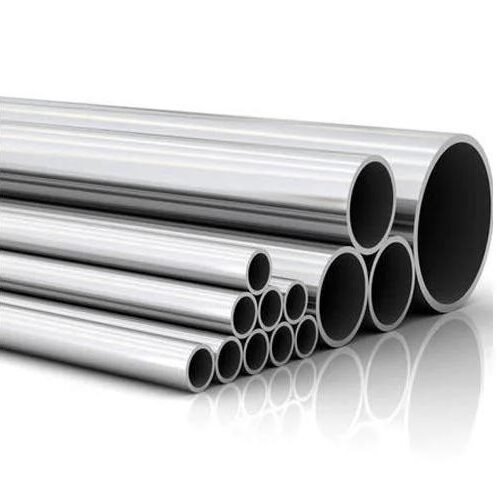
1. What Are Nickel Alloy Pipes?
Nickel alloy pipes are industrial pipes manufactured from nickel-based alloys designed to provide specific combinations of corrosion resistance, high-temperature performance, mechanical strength and metallurgical stability.
Compared with conventional carbon steel pipes and many stainless steel grades, nickel alloy pipes can offer better performance in certain aggressive chemical environments, high-temperature applications and marine service conditions.
Their properties depend on the alloying elements added to the nickel base. Common additions include chromium, molybdenum, iron, copper, niobium and titanium.
Each element contributes different characteristics:
- Chromium (Cr): Improves oxidation resistance and corrosion resistance in many environments.
- Molybdenum (Mo): Improves resistance to pitting and crevice corrosion in chloride-containing environments.
- Iron (Fe): Adjusts alloy composition, mechanical properties and material cost.
- Copper (Cu): Improves resistance to certain acids and alkaline environments.
- Niobium (Nb): Contributes to strengthening and metallurgical stability in selected alloys.
- Titanium (Ti): Helps stabilise certain alloy systems and contributes to precipitation strengthening.
Nickel alloy pipes are widely used in:
- Oil and gas production.
- Chemical and petrochemical processing.
- Marine engineering.
- Offshore platforms.
- Power generation.
- Heat exchangers and condensers.
- Nuclear power facilities.
- Aerospace and high-temperature equipment.
The correct alloy should be selected according to the actual operating environment rather than nickel content alone.
2. Main Types of Nickel Alloy Pipes
Nickel alloy pipes can be classified according to their chemical composition and alloy family.
The most widely recognised product groups include Nickel 200/201, Monel, Inconel, Incoloy and Hastelloy.
2.1 Nickel 200 and Nickel 201 Pipes
Nickel 200 and Nickel 201 are commercially pure nickel materials.
They provide good resistance to many alkaline environments, excellent electrical and thermal conductivity, and useful resistance to selected reducing chemical environments.
Nickel 200 (UNS N02200)
Nickel 200 is a commercially pure wrought nickel grade with good mechanical and fabrication properties.
Typical characteristics include:
- High nickel content.
- Good resistance to caustic alkalis.
- Good thermal and electrical conductivity.
- Good resistance to selected neutral and reducing environments.
- Good fabrication and welding characteristics.
Typical applications include:
- Chemical processing equipment.
- Caustic soda production.
- Food processing equipment.
- Electronic components.
- Heat exchangers.
Nickel 201 (UNS N02201)
Nickel 201 is a low-carbon version of Nickel 200.
Its lower carbon content helps reduce the risk of carbon-related embrittlement during prolonged exposure to elevated temperatures.
It is often selected for applications where commercially pure nickel is required under higher-temperature conditions.
Nickel 200 vs Nickel 201
The main difference is carbon content.
Nickel 201 is generally preferred where elevated-temperature exposure makes carbon-related embrittlement a concern, while Nickel 200 is suitable for many general commercially pure nickel applications.
2.2 Monel Alloy Pipes
Monel alloys are nickel-copper alloys known for their resistance to seawater, certain acids and alkaline environments.
They are widely used in marine equipment, chemical processing and selected offshore applications.
Monel 400 (UNS N04400)
Monel 400 is a solid-solution nickel-copper alloy.
Its main characteristics include:
- Excellent resistance to flowing seawater in many service conditions.
- Good resistance to hydrofluoric acid.
- Good performance in selected alkaline environments.
- Good mechanical properties over a wide temperature range.
- Good resistance to stress corrosion cracking in many chloride environments.
Typical applications include:
- Marine piping systems.
- Seawater handling equipment.
- Chemical processing equipment.
- Heat exchangers.
- Pump and valve components.
- Offshore equipment.
Its performance in seawater depends on flow velocity, aeration, temperature and the presence of deposits or crevices. Material selection should therefore consider the actual service environment.
Monel K-500 (UNS N05500)
Monel K-500 is a precipitation-hardenable nickel-copper alloy.
Compared with Monel 400, it offers higher strength and hardness after suitable heat treatment.
Typical applications include:
- Pump shafts.
- Valve components.
- Marine fasteners.
- High-strength mechanical parts.
- Offshore equipment.
Monel K-500 is more commonly specified for high-strength components than for conventional general-purpose piping. The availability and applicable product specification must be confirmed for the required pipe or tube form.
2.3 Inconel Alloy Pipes
Inconel is a family of nickel-chromium-based alloys developed for applications requiring high-temperature strength, oxidation resistance and corrosion resistance.
Different Inconel grades contain varying amounts of iron, molybdenum, niobium, titanium and other alloying elements.
Common grades include Inconel 600, 601, 625 and 718.
Inconel 600 (UNS N06600)
Inconel 600 is a nickel-chromium-iron alloy with good resistance to oxidation and corrosion at elevated temperatures.
Main characteristics:
- Good oxidation resistance.
- Good resistance to many organic and inorganic chemicals.
- Good mechanical performance at elevated temperatures.
- Good resistance to selected alkaline environments.
Typical applications:
- Heat treatment equipment.
- Chemical processing systems.
- Furnace components.
- Heat exchangers.
- Nuclear engineering equipment.
Inconel 601 (UNS N06601)
Inconel 601 is a nickel-chromium-iron alloy containing aluminium.
The aluminium addition helps improve oxidation resistance through the formation of a protective oxide scale.
Typical applications include:
- Industrial furnaces.
- Heat treatment equipment.
- Thermal processing systems.
- Combustion equipment.
- High-temperature industrial components.
Inconel 625 (UNS N06625)
Inconel 625 is a nickel-chromium-molybdenum-niobium alloy widely used in corrosive and high-temperature environments.
Its major characteristics include:
- Excellent resistance to pitting and crevice corrosion in many chloride-containing environments.
- Good resistance to seawater corrosion.
- High strength.
- Good resistance to oxidation.
- Good weldability compared with many other high-performance nickel alloys.
Typical applications include:
- Offshore oil and gas equipment.
- Marine engineering.
- Chemical processing.
- Seawater heat exchangers.
- Flue gas treatment systems.
- Corrosion-resistant piping and cladding.
Inconel 625 is especially useful where both corrosion resistance and mechanical strength are required.
Inconel 718 (UNS N07718)
Inconel 718 is a precipitation-hardenable nickel-chromium alloy containing niobium, molybdenum and other alloying elements.
It is primarily known for its high strength and good mechanical performance at elevated temperatures.
Typical applications include:
- Aerospace engine components.
- Gas turbines.
- High-strength fasteners.
- Nuclear and energy equipment.
- Specialised high-temperature mechanical components.
Inconel 718 is not interchangeable with conventional Inconel 625 or 600 piping products. Its product form, manufacturing specification and heat treatment condition must be verified for each order.
2.4 Incoloy Alloy Pipes
Incoloy alloys are generally nickel-iron-chromium alloys designed for applications requiring a combination of corrosion resistance, oxidation resistance and elevated-temperature performance.
Common grades include Incoloy 800, 800H, 800HT and 825.
Incoloy 800 (UNS N08800)
Incoloy 800 is a nickel-iron-chromium alloy designed for elevated-temperature service.
Its characteristics include:
- Good oxidation resistance.
- Good carburisation resistance in suitable environments.
- Good resistance to many industrial atmospheres.
- Good mechanical stability at elevated temperatures.
Typical applications:
- Heat exchangers.
- Furnace equipment.
- Petrochemical processing.
- Industrial heating systems.
- High-temperature piping.
Incoloy 800H (UNS N08810)
Incoloy 800H is a controlled version of Alloy 800 with higher-temperature creep and rupture properties.
It is commonly used in high-temperature equipment where resistance to long-term deformation is important.
Incoloy 800HT (UNS N08811)
Incoloy 800HT is a further controlled version of the 800-series alloy with specific requirements for carbon and grain size to improve high-temperature creep and rupture performance.
Typical applications for 800H and 800HT include:
- Petrochemical furnaces.
- Steam reforming equipment.
- Heat treatment systems.
- High-temperature process equipment.
Incoloy 825 (UNS N08825)
Incoloy 825 is a nickel-iron-chromium alloy containing molybdenum, copper and titanium.
It is designed to provide resistance to a range of corrosive environments.
Main characteristics include:
- Good resistance to sulphuric acid.
- Good resistance to phosphoric acid.
- Resistance to pitting and crevice corrosion.
- Good resistance to stress corrosion cracking in many environments.
- Good performance in selected oil and gas applications.
Typical applications include:
- Chemical processing plants.
- Pickling equipment.
- Oil and gas production.
- Heat exchangers.
- Acid handling systems.
- Pollution control equipment.
2.5 Hastelloy Alloy Pipes
Hastelloy alloys are nickel-based corrosion-resistant alloys used in demanding chemical and industrial environments.
Many grades contain substantial amounts of chromium and molybdenum, providing resistance to different forms of corrosion.
Common grades include Hastelloy C22 and C276.
Hastelloy C276 (UNS N10276)
Hastelloy C276 is a nickel-molybdenum-chromium alloy containing tungsten.
It is known for its resistance to a wide range of aggressive chemical environments.
Main characteristics include:
- Excellent resistance to pitting and crevice corrosion.
- Good resistance to many oxidising and reducing chemical environments.
- Good resistance to chloride-induced corrosion.
- Resistance to many mixed-acid environments.
- Good weldability.
Typical applications include:
- Chemical reactors.
- Acid processing equipment.
- Flue gas desulphurisation systems.
- Pollution control equipment.
- Pharmaceutical processing.
- Offshore chemical handling systems.
Hastelloy C22 (UNS N06022)
Hastelloy C22 is a nickel-chromium-molybdenum alloy with enhanced resistance to a broad range of oxidising and reducing environments.
It is frequently selected for equipment exposed to mixed acids, chloride-containing solutions and other aggressive chemicals.
Typical applications include:
- Chemical processing.
- Pharmaceutical equipment.
- Waste treatment systems.
- Flue gas treatment.
- Corrosive fluid transportation.
C22 and C276 have overlapping applications, but neither is universally superior. The correct choice depends on chemical composition, temperature, concentration, aeration and other service conditions.
3. Comparison of Common Nickel Alloy Pipe Grades
The following table provides a quick comparison of commonly specified nickel alloy grades.
| Alloy Grade | UNS Number | Main Alloy System | Key Characteristics | Typical Applications |
|---|---|---|---|---|
| Nickel 200 | N02200 | Commercially pure nickel | Caustic resistance, conductivity | Chemical processing |
| Nickel 201 | N02201 | Low-carbon nickel | Reduced risk of high-temperature carbon embrittlement | Chemical equipment |
| Monel 400 | N04400 | Nickel-copper | Marine and selected chemical corrosion resistance | Marine piping |
| Monel K-500 | N05500 | Precipitation-hardened nickel-copper | High strength and hardness | Marine mechanical components |
| Inconel 600 | N06600 | Nickel-chromium-iron | Oxidation and corrosion resistance | Heat treatment equipment |
| Inconel 601 | N06601 | Nickel-chromium-iron-aluminium | High-temperature oxidation resistance | Furnaces |
| Inconel 625 | N06625 | Nickel-chromium-molybdenum-niobium | Corrosion resistance and high strength | Offshore and chemical plants |
| Inconel 718 | N07718 | Precipitation-hardened nickel alloy | High strength and creep resistance | Aerospace and turbines |
| Incoloy 800 | N08800 | Nickel-iron-chromium | High-temperature oxidation resistance | Heat exchangers |
| Incoloy 800H | N08810 | Nickel-iron-chromium | High-temperature creep resistance | Furnaces and reformers |
| Incoloy 800HT | N08811 | Nickel-iron-chromium | Controlled high-temperature performance | High-temperature process equipment |
| Incoloy 825 | N08825 | Nickel-iron-chromium-molybdenum-copper | Acid and chloride corrosion resistance | Chemical and oil and gas |
| Hastelloy C22 | N06022 | Nickel-chromium-molybdenum | Broad chemical corrosion resistance | Chemical processing |
| Hastelloy C276 | N10276 | Nickel-molybdenum-chromium-tungsten | Resistance to severe corrosion environments | Chemical and pollution control |
The table is a material selection guide. Actual performance depends on the specified product condition, heat treatment, fabrication, environment and applicable material standard.
4. Nickel Alloy Seamless Pipes vs Welded Pipes
Nickel alloy pipes are available in seamless and welded forms.
The choice depends on pipe dimensions, operating conditions, manufacturing availability and project specifications.
4.1 Nickel Alloy Seamless Pipes
Seamless nickel alloy pipes are manufactured without a longitudinal welded seam.
Typical manufacturing routes include hot extrusion, rotary piercing and subsequent hot or cold working.
Advantages include:
- No longitudinal weld seam.
- Wide selection of wall thicknesses.
- Suitability for many high-pressure applications.
- Good dimensional and mechanical consistency when properly manufactured.
- Availability in various nickel alloy grades.
Common applications include:
- High-pressure process piping.
- Chemical processing.
- Oil and gas equipment.
- Heat exchangers.
- High-temperature industrial systems.
4.2 Nickel Alloy Welded Pipes
Welded nickel alloy pipes are manufactured by forming alloy strip or plate into a tubular shape and joining the edges through a qualified welding process.
Common welding methods include TIG/GTAW, plasma welding and other qualified processes.
Advantages include:
- Suitable for larger diameters.
- Flexible production dimensions.
- Efficient material utilisation.
- Potential cost advantages for suitable sizes and applications.
Important quality control requirements include:
- Welding procedure qualification.
- Weld metal composition.
- Heat-affected zone properties.
- Non-destructive testing.
- Heat treatment where required.
- Dimensional and surface inspection.
A welded nickel alloy pipe is not automatically inferior to a seamless pipe. Its suitability depends on the applicable product specification, manufacturing quality, weld qualification and service requirements.
5. Common ASTM Standards for Nickel Alloy Pipes and Tubes
Nickel alloy products are covered by various ASTM and ASME specifications.
The applicable standard depends on alloy grade, product form and manufacturing method.
| Standard | Product Description | Common Materials |
|---|---|---|
| ASTM B161 | Seamless nickel pipe and tube | Nickel 200 / 201 |
| ASTM B165 | Seamless nickel-copper alloy pipe and tube | Monel 400 |
| ASTM B167 | Seamless nickel-chromium-iron alloy pipe and tube | Inconel 600 / 601 |
| ASTM B407 | Seamless nickel-iron-chromium alloy pipe and tube | Incoloy 800 series |
| ASTM B423 | Seamless nickel-iron-chromium-molybdenum-copper alloy pipe and tube | Incoloy 825 |
| ASTM B444 | Seamless nickel-chromium-molybdenum-niobium alloy pipe and tube | Inconel 625 |
| ASTM B622 | Seamless nickel and nickel-cobalt alloy pipe and tube | Hastelloy C276 and selected other grades |
| ASTM B619 | Welded nickel and nickel-cobalt alloy pipe | Selected Hastelloy grades |
| ASTM B705 | Welded nickel-chromium-iron alloy pipe | Selected nickel-chromium-molybdenum grades |
| ASTM B725 | Welded nickel and nickel-cobalt alloy pipe | Applicable nickel alloy grades |
ASTM B829 provides general requirements for applicable seamless nickel and nickel alloy pipe and tube specifications.
For welded products, the relevant welded-product specification and applicable general requirements must be checked separately.
ASME SB specifications may be used where required by the ASME Boiler and Pressure Vessel Code or the project specification.
Buyers should never select a standard based only on the alloy name. The standard must match the exact product form, manufacturing method and delivery condition.
6. Applications of Nickel Alloy Pipes in Different Industries
6.1 Oil and Gas Industry
Nickel alloy pipes are used in oil and gas production systems where conventional materials may experience severe corrosion or high-temperature degradation.
Typical applications include:
- Offshore production equipment.
- Chemical injection lines.
- Heat exchangers.
- Corrosion-resistant piping.
- Selected sour-service applications.
- Specialised downhole and well-related equipment.
Inconel 625 and Incoloy 825 are frequently considered for corrosive offshore environments.
Material selection should account for H2S, CO2, chlorides, temperature, pressure and applicable sour-service requirements.
6.2 Chemical and Petrochemical Industry
Chemical plants may transport sulphuric acid, hydrochloric acid, phosphoric acid, caustic solutions and other aggressive process fluids.
Different nickel alloys provide resistance to different combinations of chemicals.
Commonly considered materials include:
- Hastelloy C276.
- Hastelloy C22.
- Incoloy 825.
- Inconel 625.
- Monel 400.
The chemical concentration, temperature and contamination level must be considered before selecting an alloy.
6.3 Marine and Offshore Engineering
Marine equipment is exposed to seawater, chloride ions, marine deposits and varying flow conditions.
Monel 400 and Inconel 625 are commonly considered for selected marine and offshore applications.
Typical equipment includes:
- Seawater heat exchangers.
- Marine piping systems.
- Offshore processing equipment.
- Pump and valve components.
- Desalination equipment.
6.4 Power Generation
Power plants and energy facilities use nickel alloy tubes and pipes in high-temperature systems.
Typical applications include:
- Heat exchangers.
- Steam-related equipment.
- Furnace components.
- Gas turbine systems.
- Nuclear power equipment.
Incoloy 800H, Incoloy 800HT and selected Inconel grades are used where high-temperature mechanical stability and oxidation resistance are important.
6.5 Aerospace and High-Temperature Engineering
Certain nickel-based superalloys are designed to retain strength under demanding thermal and mechanical loading.
Inconel 718 is widely used in aerospace engine components, while other specialised nickel alloys are used in turbine and combustion systems.
For these applications, alloy selection must consider creep, fatigue, oxidation, thermal cycling and heat treatment.
7. How to Select the Right Nickel Alloy Pipe
Selecting a nickel alloy pipe requires more than comparing alloy grades or nickel content.
The material must match the actual operating environment.
7.1 Identify the Corrosive Medium
Determine the chemical composition of the transported fluid.
Important parameters include:
- Acid type and concentration.
- Chloride concentration.
- H2S and CO2 content.
- Oxygen concentration.
- Water content.
- pH.
- Flow velocity.
- Presence of solid particles.
For example, Monel 400 may be suitable for certain hydrofluoric acid and marine applications, while Hastelloy C276 may be considered for more complex mixed chemical environments.
Neither material should be selected without confirming its compatibility with the complete operating conditions.
7.2 Confirm Operating Temperature and Pressure
Different nickel alloy grades have different strength and corrosion characteristics at elevated temperatures.
Check:
- Normal operating temperature.
- Maximum design temperature.
- Minimum design temperature.
- Operating pressure.
- Design pressure.
- Thermal cycling.
- Pressure fluctuations.
High-temperature strength, creep resistance and oxidation resistance should be evaluated where necessary.
7.3 Select the Correct Manufacturing Form
Determine whether the project requires:
- Seamless nickel alloy pipe.
- Welded nickel alloy pipe.
- Precision nickel alloy tube.
- Heat exchanger tube.
- U-bend tube.
- Special dimensional tubing.
The product form affects applicable ASTM standards, manufacturing tolerances and inspection requirements.
7.4 Confirm Dimensions and Delivery Condition
The purchase specification should identify:
- Outside diameter.
- Wall thickness.
- Schedule.
- Length.
- Dimensional tolerances.
- Surface finish.
- Heat treatment condition.
- End preparation.
For precision tubing, inside diameter and tighter dimensional tolerances may also be required.
7.5 Verify Material Certification and Inspection
Before accepting the products, buyers should review:
- Material Test Certificate (MTC/MTR).
- Chemical composition.
- Mechanical test results.
- Heat treatment records.
- PMI results where required.
- NDT reports.
- Dimensional inspection reports.
- Heat number traceability.
For critical applications, third-party inspection may be included in the purchase specification.
8. Frequently Asked Questions About Nickel Alloy Pipes
What are the main types of nickel alloy pipes?
The main commercially recognised groups include commercially pure nickel, Monel, Inconel, Incoloy and Hastelloy. Common grades include Nickel 200, Monel 400, Inconel 600, Inconel 625, Incoloy 825 and Hastelloy C276.
What is the difference between Inconel and Hastelloy?
Inconel is a family of nickel-based alloys commonly used for high-temperature strength, oxidation resistance and corrosion resistance. Hastelloy is a family of corrosion-resistant nickel alloys designed for demanding chemical environments. Their actual performance depends on the specific grade and service conditions.
What is the difference between Inconel 600 and Inconel 625?
Inconel 600 is a nickel-chromium-iron alloy commonly used for oxidation resistance and elevated-temperature service. Inconel 625 contains substantial molybdenum and niobium, providing stronger resistance to pitting and crevice corrosion in many chloride-containing environments.
What is the difference between Monel 400 and Inconel 625?
Monel 400 is a nickel-copper alloy commonly used in marine and selected chemical environments. Inconel 625 is a nickel-chromium-molybdenum-niobium alloy with a different combination of high strength and corrosion resistance, particularly in many chloride-containing environments.
Is Hastelloy C276 better than Inconel 625?
Neither is universally better. Hastelloy C276 is often selected for severe chemical corrosion environments, while Inconel 625 is widely used in offshore, marine and chemical applications requiring strength and corrosion resistance. The selection depends on the specific medium and operating conditions.
Are nickel alloy pipes available in seamless and welded forms?
Yes. Many nickel alloy grades are available in seamless or welded pipe and tube forms, subject to the applicable product specification and supplier capability. The relevant ASTM standard must be confirmed for each product form.
Which ASTM standards apply to nickel alloy pipes?
Common standards include ASTM B161, B165, B167, B407, B423, B444, B622, B619, B705 and B725. Each standard covers a specific alloy system and product form.
Are nickel alloy pipes suitable for seawater applications?
Selected nickel alloys, including Monel 400 and Inconel 625, are used in marine and seawater equipment. However, corrosion performance depends on flow velocity, temperature, oxygen content, deposits and crevice conditions.
How do I choose the correct nickel alloy pipe grade?
Identify the chemical medium, temperature, pressure, required mechanical properties, pipe dimensions and applicable material standard. Corrosion compatibility and fabrication requirements should be evaluated before selecting the grade.
9. Conclusion
Nickel alloy pipes are available in several alloy families, each developed for specific combinations of corrosion resistance, high-temperature performance and mechanical strength.
Nickel 200 and 201 are used in selected caustic and chemical environments. Monel 400 is widely considered for marine and nickel-copper applications. Inconel grades provide a range of high-temperature and corrosion-resistant properties. Incoloy grades are used in heat exchangers and elevated-temperature systems, while Hastelloy grades are designed for demanding chemical environments.
Choosing the correct nickel alloy pipe requires careful evaluation of the operating medium, temperature, pressure, alloy grade, manufacturing method and applicable ASTM or ASME standard.
For buyers, specifying the UNS number, product form, dimensions, delivery condition and inspection requirements helps avoid material substitution and ensures that the supplied pipe matches the project specification.
Looking for Nickel Alloy Seamless or Welded Pipes?
Provide your required alloy grade, UNS number, outside diameter, wall thickness, length, applicable ASTM standard and operating conditions to identify the appropriate nickel alloy pipe for your industrial application.