
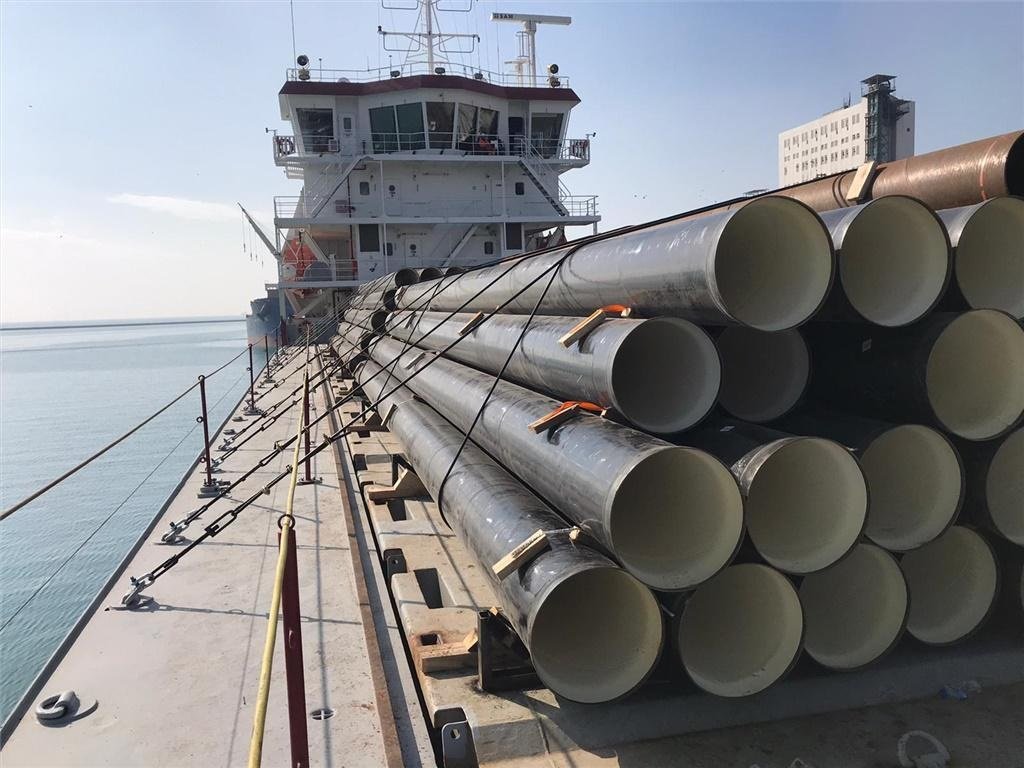
1. What Are FOB, CIF and CFR in International Steel Pipe Trade?
When purchasing steel pipes from overseas suppliers, buyers often receive quotations under three different shipping terms: FOB, CIF and CFR.
These terms are widely used in international maritime trade and define how transportation costs, insurance responsibilities and shipping risks are allocated between the seller and buyer.
Although all three terms involve sea or inland waterway transportation, their cost structures are different.
- FOB (Free On Board): The seller delivers the goods on board the vessel nominated by the buyer at the agreed port of shipment. The buyer arranges and pays for the main sea freight and insurance.
- CFR (Cost and Freight): The seller arranges and pays for transportation to the named destination port, but the buyer bears the transit risk after the goods have been loaded on board at the port of shipment.
- CIF (Cost, Insurance and Freight): Similar to CFR, but the seller must also arrange and pay for the required minimum cargo insurance.
These three terms are defined under Incoterms® 2020, published by the International Chamber of Commerce (ICC).
For steel pipe imports, understanding the differences is important because shipping costs can represent a significant part of the total purchase cost, particularly for heavy cargo and large-diameter pipes.
A quotation should therefore identify not only the steel pipe price but also the agreed shipping term, loading port and destination port.
2. What Does FOB Mean in Steel Pipe Export?
FOB stands for Free On Board.
Under FOB Incoterms® 2020, the seller delivers the steel pipes when the goods are placed on board the vessel nominated by the buyer at the named port of shipment.
Once the goods are on board, the risk of loss or damage transfers from the seller to the buyer.
What Does an FOB Steel Pipe Price Include?
An FOB quotation generally includes:
- Steel pipe manufacturing cost.
- Required inspection and testing under the order.
- Export packaging.
- Inland transportation to the agreed port, where applicable.
- Export customs clearance.
- Port handling and loading costs allocated to the seller under the agreed FOB arrangement.
- Loading the goods on board the nominated vessel.
The buyer is generally responsible for:
- Booking and paying for ocean freight.
- Arranging cargo insurance if required.
- Destination port charges allocated to the buyer.
- Import customs clearance.
- Import duties and taxes.
- Inland transportation after arrival.
The precise allocation of individual terminal charges should be checked against the contract of carriage and the agreed Incoterms provisions.
Example of FOB Steel Pipe Pricing
Assume an overseas buyer purchases 100 metric tons of seamless carbon steel pipes from a manufacturer.
An illustrative quotation might be:
- Steel pipe value: USD 120,000.
- Export packing and inland transportation: USD 3,000.
- Export clearance and seller-side port costs: USD 2,000.
FOB price:
USD 120,000 + USD 3,000 + USD 2,000 = USD 125,000
The buyer then arranges ocean freight and cargo insurance independently.
These figures are examples only, not current market freight or steel prices.
When Is FOB Suitable?
FOB is often suitable for buyers who:
- Have established relationships with freight forwarders.
- Can negotiate competitive ocean freight rates.
- Want to choose their own shipping line.
- Need greater control over vessel schedules.
- Import steel pipes regularly.
- Arrange their own cargo insurance.
For experienced steel pipe importers, FOB can provide greater control over international logistics costs.
However, there is an important qualification: under Incoterms® 2020, FCA is generally more appropriate for containerized shipments when delivery takes place at a container terminal before the goods are loaded on board the vessel. FOB is designed for sea shipments where the seller delivers the goods on board the vessel.
3. What Does CFR Mean in Steel Pipe Export?
CFR stands for Cost and Freight.
Under CFR Incoterms® 2020, the seller arranges and pays for the sea transportation required to bring the steel pipes to the named destination port.
However, the risk transfers to the buyer once the goods are loaded on board the vessel at the port of shipment.
This distinction is important.
Although the seller pays the ocean freight, the buyer bears the risk of loss or damage during the main sea journey after loading.
What Does a CFR Steel Pipe Price Include?
A CFR quotation generally includes:
- Steel pipe manufacturing cost.
- Export packaging.
- Inland transportation to the port of shipment.
- Export customs clearance.
- Seller-side loading costs.
- Ocean freight to the named destination port.
The buyer is generally responsible for:
- Cargo insurance.
- Import customs clearance.
- Import duties and taxes.
- Destination charges allocated to the buyer.
- Inland transportation from the destination port.
Some destination terminal or unloading costs may be included in the seller’s freight contract. The quotation and carriage arrangements should specify which charges are included and which are payable separately.
Example of CFR Steel Pipe Pricing
Assume the same order of 100 metric tons of seamless steel pipes.
The seller’s costs are:
- Steel pipe value: USD 120,000.
- Export packing and inland transportation: USD 3,000.
- Export clearance and seller-side port costs: USD 2,000.
- Ocean freight: USD 8,000.
CFR price:
USD 120,000 + USD 3,000 + USD 2,000 + USD 8,000 = USD 133,000
The buyer pays USD 133,000 under the CFR quotation and arranges cargo insurance separately.
The buyer also handles destination import clearance, duties and other costs allocated under the contract.
When Is CFR Suitable?
CFR can be suitable for buyers who:
- Want the supplier to arrange ocean freight.
- Prefer to receive a quotation that includes transportation to the destination port.
- Already have their own cargo insurance arrangements.
- Want to compare supplier-arranged freight rates.
- Purchase steel pipes through conventional maritime shipping.
For buyers with an established insurance provider, CFR can offer a convenient balance between seller-managed freight and buyer-managed insurance.
4. What Does CIF Mean in Steel Pipe Export?
CIF stands for Cost, Insurance and Freight.
Under CIF Incoterms® 2020, the seller arranges and pays for ocean freight to the named destination port and also obtains cargo insurance covering the buyer’s transit risk.
Like FOB and CFR, risk transfers when the goods are loaded on board the vessel at the port of shipment.
The fact that the seller pays for freight and insurance does not mean that the seller retains the shipping risk until the goods reach the destination port.
What Does a CIF Steel Pipe Price Include?
A CIF quotation generally includes:
- Steel pipe manufacturing cost.
- Export packaging.
- Inland transportation to the loading port.
- Export customs clearance.
- Seller-side port and loading costs.
- Ocean freight.
- Required cargo insurance.
The buyer is generally responsible for:
- Import customs clearance.
- Import duties and taxes.
- Destination charges allocated to the buyer.
- Inland transportation.
- Unloading where not included in the seller’s carriage contract.
Example of CIF Steel Pipe Pricing
Using the same 100-metric-ton steel pipe order:
- Steel pipe value: USD 120,000.
- Export packing and inland transportation: USD 3,000.
- Export clearance and seller-side port costs: USD 2,000.
- Ocean freight: USD 8,000.
- Cargo insurance: USD 300.
CIF price:
USD 120,000 + USD 3,000 + USD 2,000 + USD 8,000 + USD 300 = USD 133,300
The buyer receives a quotation that includes the main sea freight and the required insurance arranged by the seller.
The insurance amount in this example is illustrative.
What Insurance Coverage Is Included in CIF?
This is one of the most important details buyers should understand.
Under Incoterms® 2020, the default CIF insurance requirement is generally minimum coverage equivalent to Institute Cargo Clauses (C) or similar coverage.
The seller must obtain insurance for at least 110% of the contract price in the contract currency, unless the parties agree otherwise, subject to the rule’s insurance provisions.
Minimum CIF insurance does not necessarily cover every possible loss or damage.
For steel pipe cargo, buyers may wish to discuss additional coverage for risks such as:
- Handling damage.
- Cargo shifting.
- Surface damage.
- Water ingress.
- Rust and moisture-related damage.
- Damage to protective coatings.
- Loading and unloading incidents.
Whether a particular event is insured depends on the actual policy wording, exclusions and applicable conditions.
Buyers requiring broader protection can negotiate higher insurance coverage or arrange supplementary insurance independently.
When Is CIF Suitable?
CIF is often suitable for buyers who:
- Prefer the supplier to arrange international freight and insurance.
- Do not have an established freight forwarding network.
- Want a quotation with freight and basic insurance included.
- Import steel pipes occasionally.
- Prefer a simpler initial cost comparison.
CIF can make supplier quotations easier to compare, but buyers should still check the insurance policy, destination charges and final landed cost.
5. FOB vs CIF vs CFR: What Are the Main Differences?
The main differences concern ocean freight, cargo insurance and risk allocation.
| Comparison | FOB | CFR | CIF |
|---|---|---|---|
| Full Name | Free On Board | Cost and Freight | Cost, Insurance and Freight |
| Main Freight Arrangement | Buyer | Seller | Seller |
| Ocean Freight Paid By | Buyer | Seller | Seller |
| Cargo Insurance Arranged By | Buyer | Buyer | Seller |
| Export Clearance | Seller | Seller | Seller |
| Import Clearance | Buyer | Buyer | Buyer |
| Main Risk Transfer Point | On board at loading port | On board at loading port | On board at loading port |
| Destination Port | Named port of shipment for delivery | Named destination port | Named destination port |
| Typical Buyer Preference | Control over freight | Seller-arranged freight | Seller-arranged freight and insurance |
The most important distinction is that CFR and CIF require the seller to pay for transportation to the destination port, even though transit risk transfers to the buyer at the port of shipment.
6. What Is the Difference Between Delivery Point and Risk Transfer?
Many international buyers assume that if a supplier quotes CFR or CIF, the supplier is responsible for the goods until they arrive at the destination port.
This is incorrect.
Under all three terms, delivery and risk transfer take place when the goods are loaded on board the vessel at the named port of shipment.
The difference is the allocation of freight and insurance costs.
FOB
The seller delivers the goods on board the buyer-nominated vessel.
The buyer arranges the main transportation and insurance.
CFR
The seller arranges and pays for transportation to the named destination port.
However, the buyer bears the transit risk after the goods are loaded on board at the origin port.
CIF
The seller arranges and pays for transportation and obtains the required cargo insurance.
However, risk still transfers to the buyer when the goods are loaded on board at the origin port.
This distinction should be clearly stated in the purchase contract to prevent misunderstandings if cargo damage occurs during transportation.
7. Which Shipping Term Is Best for Steel Pipe Imports?
There is no single best option for every steel pipe buyer.
The right choice depends on the buyer’s logistics experience, freight arrangements, insurance requirements and purchasing volume.
Choose FOB If You Want Control Over Shipping
FOB may be suitable if your company has:
- Its own freight forwarder.
- Negotiated shipping contracts.
- Regular import volumes.
- Existing cargo insurance arrangements.
For large-volume steel pipe purchases, controlling the freight contract may help buyers optimize logistics costs.
Choose CFR If You Want the Supplier to Arrange Freight
CFR may be suitable if you want the steel pipe supplier to organize ocean transportation but prefer to manage cargo insurance yourself.
It can be useful for buyers with established insurance arrangements.
Choose CIF If You Want Freight and Insurance Included
CIF may be more convenient for buyers who want the supplier to arrange the main sea freight and minimum required insurance.
However, buyers should not compare CIF quotations based only on the final price.
Check the insurance coverage, shipping route, vessel schedule, destination charges and any additional freight-related fees.
8. How to Calculate FOB, CFR and CIF Prices for Steel Pipes?
A quotation can be broken down into several cost components.
FOB Price Formula
FOB Price = Product Cost + Export Packing + Inland Transportation + Export Clearance and Applicable Seller-Side Port Costs
CFR Price Formula
CFR Price = FOB Price + Ocean Freight
CIF Price Formula
CIF Price = CFR Price + Cargo Insurance
These are simplified commercial quotation formulas. The actual cost allocation must follow the agreed Incoterms rule and contract.
Example: Comparing Three Steel Pipe Export Quotations
Assume an order for 100 metric tons of ASTM A106 Grade B seamless steel pipes.
| Cost Component | FOB (USD) | CFR (USD) | CIF (USD) |
|---|---|---|---|
| Steel Pipe Value | 120,000 | 120,000 | 120,000 |
| Export Packing | 1,500 | 1,500 | 1,500 |
| Inland Transportation | 1,000 | 1,000 | 1,000 |
| Export Clearance and Seller-Side Port Costs | 500 | 500 | 500 |
| Ocean Freight | Buyer Pays | 8,000 | 8,000 |
| Cargo Insurance | Buyer Pays | Buyer Pays | 300 |
| Seller’s Quoted Price | 123,000 | 131,000 | 131,300 |
All figures are illustrative and do not represent actual market prices.
Under this example:
- FOB quotation: USD 123,000.
- CFR quotation: USD 131,000.
- CIF quotation: USD 131,300.
The FOB price is lower because the buyer arranges the main freight and insurance separately.
The CFR price includes ocean freight.
The CIF price includes both ocean freight and the seller-arranged minimum insurance.
When comparing quotations, buyers should calculate the total landed cost rather than simply choosing the lowest quoted price.
9. What Additional Costs Should Steel Pipe Buyers Consider?
The FOB, CFR and CIF prices do not necessarily include every expense associated with importing steel pipes.
Depending on the contract and destination country, buyers may need to budget for:
Destination Port Charges
These may include terminal handling charges, documentation fees and other destination-side charges.
The allocation depends on the carrier’s contract and the agreed quotation.
Import Customs Clearance
Buyers generally arrange import customs clearance under FOB, CFR and CIF.
Import Duties and Taxes
Customs duties, VAT and other applicable import taxes are generally the buyer’s responsibility.
Inland Transportation
Transportation from the destination port to the final warehouse, factory or construction site is generally arranged by the buyer.
Inspection and Storage
Additional costs may arise from customs inspections, port storage, demurrage or detention.
These expenses should be considered when estimating the total landed cost of a steel pipe shipment.
10. What Should Be Included in a Steel Pipe Export Quotation?
A professional steel pipe quotation should clearly identify both the product specifications and the commercial shipping arrangements.
Product Information
The quotation should include:
- Product name.
- Material grade.
- Manufacturing method.
- Outside diameter.
- Wall thickness.
- Length.
- Quantity.
- Applicable product standard.
- Required inspection and testing.
- Surface treatment.
- Packaging requirements.
Commercial Information
The following details should also be stated:
- Unit price.
- Total order value.
- Currency.
- Payment terms.
- Production lead time.
- Quotation validity.
- Delivery term.
- Named port of shipment or destination, as applicable.
- Incoterms version.
Shipping Information
Buyers should confirm:
- Port of loading.
- Port of destination.
- Estimated shipping schedule.
- Containerized or breakbulk transportation.
- Freight inclusion.
- Insurance coverage.
- Required shipping documents.
For example, a quotation should state:
CIF Port of Singapore, Incoterms® 2020
rather than simply writing CIF.
The named destination port and applicable Incoterms edition help reduce misunderstandings.
11. What Shipping Documents Are Required for Steel Pipe Exports?
International steel pipe shipments generally require several commercial and transport documents.
Depending on the transaction and destination requirements, these may include:
- Commercial Invoice.
- Packing List.
- Bill of Lading.
- Certificate of Origin, where required.
- Material Test Certificate (MTC).
- Inspection Certificate, where agreed.
- Insurance Certificate or Policy under CIF.
- Export Customs Declaration.
- Other project-specific documents.
The Bill of Lading is an important shipping document that records details of the cargo and the contract of carriage.
For steel pipes, the packing list should clearly identify the quantity, dimensions, bundle numbers and gross and net weights.
The MTC should provide traceability between the supplied pipes and their corresponding material test results.
12. Common Mistakes When Comparing FOB, CIF and CFR Quotations
Mistake 1: Assuming CIF Means the Seller Bears All Transit Risks
Under CIF, risk transfers to the buyer when the goods are loaded on board the vessel at the origin port.
Mistake 2: Assuming CFR Includes Cargo Insurance
CFR requires the seller to arrange and pay for freight, but does not require the seller to purchase cargo insurance.
Mistake 3: Comparing CIF Prices Without Checking Insurance Coverage
The default CIF insurance requirement is minimum coverage. Buyers requiring broader protection should check the policy and negotiate additional insurance.
Mistake 4: Ignoring Destination Port Charges
A CIF quotation does not automatically include import clearance, duties, taxes and every destination terminal charge.
Mistake 5: Not Specifying the Named Port
FOB identifies the loading port, while CFR and CIF identify the destination port. Both the shipping route and named ports should be stated clearly.
Mistake 6: Using FOB for Every Container Shipment
For containerized shipments delivered to a terminal before vessel loading, FCA may be more appropriate under Incoterms® 2020.
Mistake 7: Comparing Only the Unit Price
A low FOB price may become more expensive after freight and insurance are added. Buyers should compare total landed cost.
13. Frequently Asked Questions
What is the main difference between FOB, CIF and CFR?
FOB requires the buyer to arrange and pay for main sea freight and insurance. CFR requires the seller to pay for ocean freight. CIF requires the seller to pay for ocean freight and arrange the required cargo insurance.
Is CIF more expensive than CFR?
Generally, CIF includes an additional insurance cost. However, the actual difference depends on the insurance premium, freight arrangement and quotation terms.
Does CIF include customs clearance?
No. Under CIF, the buyer is generally responsible for import customs clearance, import duties and taxes.
Who pays for shipping under FOB?
The buyer pays for the main ocean freight under FOB.
Who pays for insurance under CFR?
The buyer is responsible for arranging cargo insurance under CFR unless the parties separately agree otherwise.
Who bears the risk under CIF?
The buyer bears the risk of loss or damage after the goods have been loaded on board the vessel at the port of shipment, even though the seller pays for freight and arranges the required insurance.
Does CIF insurance cover all types of cargo damage?
No. The default CIF insurance requirement under Incoterms® 2020 is minimum coverage equivalent to Institute Cargo Clauses (C) or similar. Additional coverage may need to be negotiated.
Which is better for importing steel pipes, FOB or CIF?
FOB may be better for buyers with established freight and insurance arrangements. CIF may be more convenient for buyers who prefer the supplier to organize transportation and minimum cargo insurance.
Is CFR suitable for steel pipe exports?
Yes. CFR is commonly used for maritime shipments where the seller arranges freight and the buyer manages cargo insurance.
Can buyers negotiate FOB, CFR and CIF prices?
Yes. Buyers can request quotations under different terms and compare the associated costs, shipping routes and insurance arrangements.
What is the difference between FOB and FCA?
Under FOB, delivery and risk transfer occur when the goods are loaded on board the vessel. Under FCA, delivery and risk transfer occur when the goods are handed over to the buyer-nominated carrier at the agreed location. FCA is often more appropriate for containerized shipments delivered to a terminal.
14. Conclusion
FOB, CFR and CIF are three commonly used shipping terms in international steel pipe trade.
The main differences are the allocation of ocean freight costs and cargo insurance responsibilities.
FOB gives buyers greater control over freight arrangements. CFR allows sellers to organize and pay for ocean freight, while CIF includes seller-arranged freight and minimum cargo insurance.
However, all three terms transfer transit risk to the buyer once the goods are loaded on board the vessel at the named port of shipment.
Before placing an order, buyers should confirm the named port, Incoterms edition, freight inclusion, insurance coverage, destination charges and required shipping documents.
Understanding these differences helps steel pipe importers compare quotations accurately and avoid unexpected logistics costs.
Looking for Steel Pipes with Competitive FOB, CFR or CIF Quotations?
When requesting a quotation, provide the required steel pipe grade, dimensions, quantity, destination port and preferred shipping term.
A complete specification allows the supplier to calculate the product cost, export handling, ocean freight and applicable insurance requirements more accurately.