
API 5L line pipe is one of the most widely used steel pipe products in oil and gas transmission systems. It is designed for transporting crude oil, natural gas, petroleum products and water over long distances.
When selecting API 5L pipe, buyers often focus on the material grade, such as Grade B, X42, X52, X60, X65 and X70. However, these grades are not simply different product names. They represent different strength levels, manufacturing requirements and application conditions.
Understanding the differences between API 5L grades helps engineers and buyers select the correct pipe for pipeline pressure, environmental conditions and project requirements.
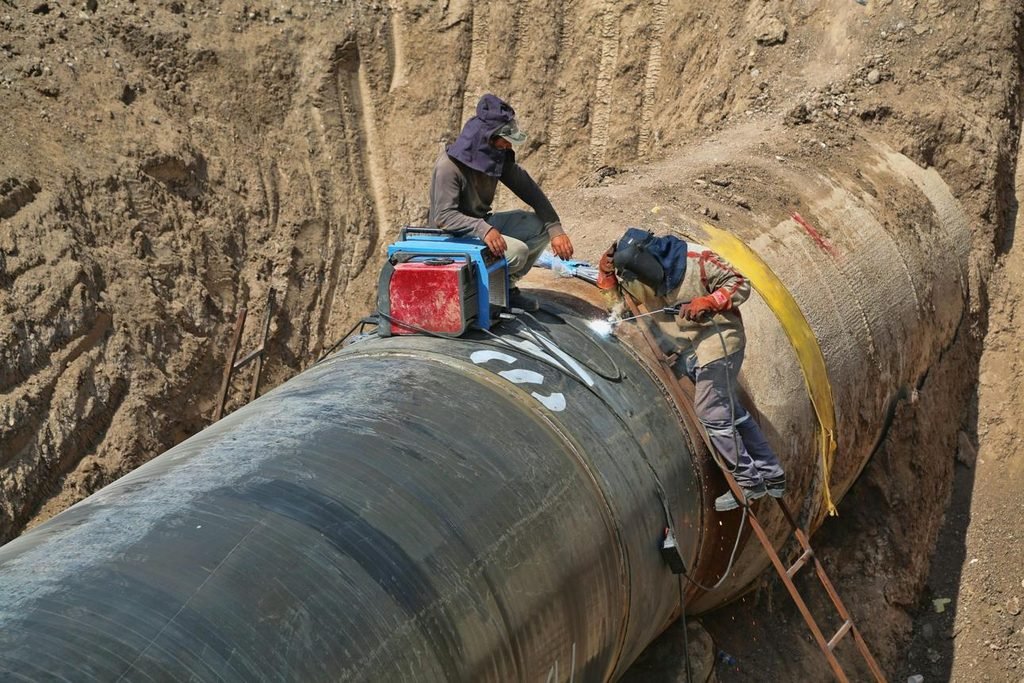
What Is API 5L Line Pipe?
API 5L is a specification developed by the American Petroleum Institute for steel line pipes used in pipeline transportation systems.
API 5L pipes are mainly used for:
- Oil transportation pipelines
- Natural gas transmission pipelines
- Petroleum product pipelines
- Water transmission systems
Compared with ordinary carbon steel pipes, API 5L line pipes require stricter control of:
- Chemical composition
- Mechanical properties
- Pipe dimensions
- Welding quality
- Non-destructive testing
- Traceability documentation
API 5L covers both seamless and welded steel pipes, including manufacturing methods such as:
- Seamless pipe (SMLS)
- Electric resistance welded pipe (ERW)
- Longitudinal submerged arc welded pipe (LSAW)
- Spiral submerged arc welded pipe (SSAW)
The standard includes grades from Grade B to higher-strength grades such as X42, X52, X60, X65, X70 and X80.
Understanding API 5L Pipe Grade Designation
API 5L grades are mainly identified by letters and numbers.
Examples:
- API 5L Grade B
- API 5L X42
- API 5L X52
- API 5L X60
- API 5L X65
The meaning is:
Grade B
Grade B is a commonly used standard strength line pipe grade.
X Series Grades
The number after “X” represents the minimum yield strength in ksi (thousand pounds per square inch).
For example:
- X42 = minimum yield strength of 42 ksi
- X52 = minimum yield strength of 52 ksi
- X60 = minimum yield strength of 60 ksi
- X65 = minimum yield strength of 65 ksi
The higher the number, the higher the required yield strength of the steel pipe.
API 5L Grade B Pipe
Overview
API 5L Grade B is one of the most commonly supplied line pipe grades.
It provides a balance of:
- Strength
- Weldability
- Availability
- Cost efficiency
Grade B is widely used for general pipeline applications where extreme pressure or harsh environmental conditions are not required.
Typical Applications
API 5L Grade B pipe is commonly used in:
- Oil gathering pipelines
- Gas distribution systems
- Water pipelines
- Industrial transportation pipelines
Advantages
- Good welding performance
- Easy fabrication
- Wide market availability
- Competitive price
For many standard pipeline projects, Grade B provides sufficient mechanical performance without unnecessary material cost.
API 5L X42 Pipe
API 5L X42 is a medium-strength pipeline steel grade.
The minimum yield strength requirement is approximately 42 ksi (290 MPa).
6
Compared with Grade B, X42 provides:
- Higher strength
- Better resistance to operating stress
- Improved performance in transmission pipelines
Applications
Typical applications include:
- Oil and gas gathering systems
- Medium-pressure transmission pipelines
- Industrial pipeline systems
X42 is often selected when a project requires improved strength but does not require higher-grade pipeline steel.
API 5L X52 Pipe
API 5L X52 is one of the most widely used line pipe grades in international pipeline projects.
It provides a good balance between:
- Strength
- Toughness
- Weldability
- Cost
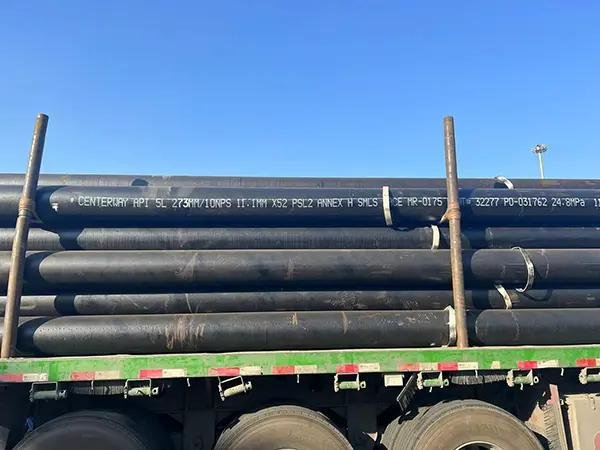
Why Is X52 Widely Used?
X52 is popular because it offers:
- Higher strength than Grade B and X42
- Reliable performance in long-distance pipelines
- Good manufacturing availability
Common applications include:
- Natural gas transmission pipelines
- Crude oil pipelines
- Long-distance energy transportation systems
API 5L X60 Pipe
API 5L X60 belongs to the high-strength line pipe category.
The minimum yield strength is approximately 60 ksi (415 MPa).
Compared with X52, X60 can withstand higher operating stresses.
Advantages of X60 Pipe
Using X60 may provide:
- Higher pipeline pressure capability
- Reduced wall thickness requirements
- Lower pipe weight in certain designs
However, higher-strength steel also requires:
- More precise manufacturing control
- Better welding procedures
- Strict inspection requirements
Applications
API 5L X60 is commonly used for:
- High-pressure oil pipelines
- Natural gas transmission projects
- Large energy infrastructure
API 5L X65 Pipe
API 5L X65 is a higher-strength pipeline grade designed for demanding transmission applications.
Its minimum yield strength is approximately 65 ksi (450 MPa).
Characteristics
X65 provides:
- High yield strength
- Good toughness
- Reliable performance under high-pressure conditions
Applications
Common uses include:
- Long-distance gas transmission pipelines
- Offshore pipeline projects
- High-pressure energy transportation systems
For large pipeline projects, X65 can help reduce pipe weight while maintaining required pressure performance.
API 5L X70 and X80 Pipe
X70 and X80 are among the highest-strength API 5L grades commonly used in pipeline engineering.
They are mainly applied in:
- Large-scale natural gas transmission projects
- High-pressure pipeline systems
- Advanced energy infrastructure
Higher grades require:
- Advanced steelmaking technology
- Precise chemical composition control
- Strict welding control
- Additional testing requirements
X70 and X80 are generally selected based on project design requirements rather than simply choosing the highest available strength.
API 5L Grade Comparison Table
| Grade | Minimum Yield Strength | Typical Applications |
|---|---|---|
| Grade B | 35 ksi | General pipelines |
| X42 | 42 ksi | Gathering and medium-pressure pipelines |
| X52 | 52 ksi | Oil and gas transmission |
| X60 | 60 ksi | High-pressure pipelines |
| X65 | 65 ksi | Large energy projects |
| X70 | 70 ksi | Major transmission systems |
| X80 | 80 ksi | Advanced high-pressure pipelines |
API 5L PSL1 vs PSL2
Besides grade selection, API 5L pipe is also classified by Product Specification Level (PSL).
The two main levels are:
- PSL1
- PSL2
API 5L PSL1
PSL1 is the basic quality level.
Characteristics:
- Standard chemical requirements
- Standard mechanical testing
- General pipeline applications
Suitable for:
- Normal operating conditions
- Standard transportation pipelines
API 5L PSL2
PSL2 has stricter requirements.
Compared with PSL1, PSL2 requires:
- More controlled chemical composition
- Stricter mechanical properties
- Additional testing requirements
- Better traceability
PSL2 is commonly specified for:
- High-pressure pipelines
- Critical transmission systems
- Sour service applications
- Harsh operating environments
API 5L Pipe Manufacturing Process
API 5L line pipes can be manufactured through different processes depending on diameter, wall thickness and project requirements.
| Manufacturing Process | Description |
|---|---|
| Seamless | Produced from solid billet without welding |
| ERW | Formed from steel coil and welded by electrical resistance |
| LSAW | Formed from steel plate with longitudinal submerged arc welding |
| SSAW | Formed from steel coil with spiral submerged arc welding |
API 5L Pipe Inspection Requirements
Because pipeline failure can have serious consequences, API 5L pipes usually require strict quality inspection.
Common inspection methods include:
Chemical Analysis
Checks:
- Carbon content
- Alloy elements
- Chemical composition compliance
Mechanical Testing
Includes:
- Tensile testing
- Yield strength testing
- Elongation testing
Non-Destructive Testing
Common methods:
- Ultrasonic testing
- Radiographic testing
- Magnetic particle testing
Hydrostatic Testing
Used to verify pressure resistance and pipe integrity.
How to Choose the Right API 5L Grade?
Selecting an API 5L grade depends on several factors.
Operating Pressure
Higher pressure systems generally require higher-strength grades.
Pipeline Diameter and Wall Thickness
Large-diameter pipelines require careful consideration of:
- Strength
- Weight
- Installation requirements
Environmental Conditions
Special environments may require additional requirements:
- Low temperature service
- Offshore conditions
- Sour gas environments
Project Standards
Always confirm:
- API 5L grade
- PSL level
- Pipe manufacturing method
- Testing requirements
before purchasing.
Common Applications of API 5L Line Pipe
Oil and Gas Transmission
The main application area of API 5L pipes includes:
- Crude oil pipelines
- Natural gas pipelines
- Petroleum product transportation
Water Transmission
API 5L pipes are also used in:
- Long-distance water pipelines
- Municipal water projects
- Industrial water systems
Offshore Engineering
Higher-grade pipes such as X60 and X65 are commonly considered for demanding offshore applications.
Conclusion
API 5L pipe grades represent different levels of strength and performance requirements.
In general:
- Grade B is suitable for standard pipeline applications.
- X42 provides improved strength for medium-duty transmission systems.
- X52 is one of the most widely used grades for oil and gas pipelines.
- X60 and X65 are commonly selected for higher-pressure and large-scale projects.
- X70 and X80 are designed for advanced pipeline applications requiring higher strength.
Choosing the correct API 5L grade is not simply about selecting the highest strength material. The right choice depends on pipeline pressure, operating environment, design requirements and project specifications.
A reliable API 5L line pipe supplier should provide not only compliant products but also complete material certificates, inspection reports and full traceability throughout the supply process.