
1. Why Are Well Depth, Pressure and Temperature Important in OCTG Selection?
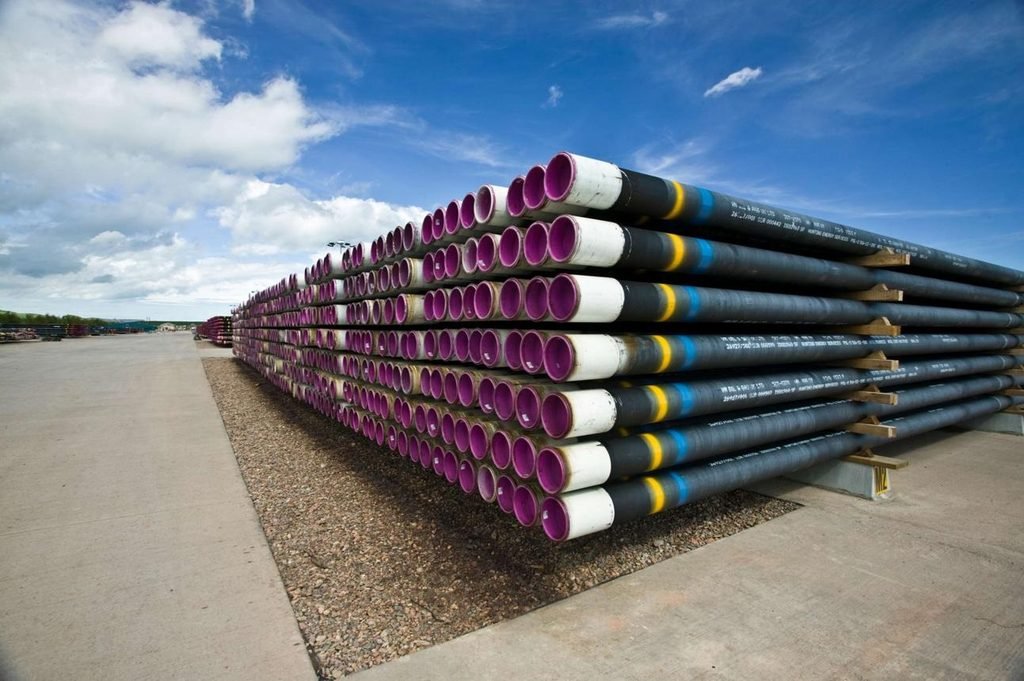
Oil casing and tubing are essential components of oil and gas well construction and production.
Casing is installed in the wellbore to isolate geological formations, maintain wellbore stability and provide structural support. Production tubing is installed inside the casing to transport oil, natural gas and other fluids from the reservoir to the surface.
Both products operate under demanding downhole conditions.
As well depth increases, casing and tubing are exposed to greater suspended loads, changing pressure conditions and potentially higher temperatures. These conditions influence the required steel grade, wall thickness, connection type and mechanical performance.
Three major factors must be evaluated during OCTG selection.
1.1 Well Depth
Well depth affects:
- Total tubular string length.
- Suspended pipe weight.
- Axial tensile loads.
- Hydrostatic pressure.
- Temperature distribution.
- The number and arrangement of casing strings.
An important distinction is the difference between measured depth (MD) and true vertical depth (TVD).
Measured depth represents the length measured along the wellbore, while true vertical depth represents the vertical distance from the reference point to the specified downhole location.
Hydrostatic pressure is primarily related to TVD, whereas the total length of the tubular string and its suspended weight are related to the actual string length.
Therefore, both MD and TVD are needed for reliable well design.
1.2 Well Pressure
Well pressure determines the pressure loads acting on casing and tubing.
Important pressure conditions include:
- Internal pressure.
- External pressure.
- Differential pressure.
- Formation pressure.
- Annular pressure.
- Production and shut-in pressure.
The casing must withstand the relevant combination of internal and external pressure without bursting or collapsing.
Tubing must also withstand production pressure, pressure testing, shut-in conditions and other operational loads.
1.3 Well Temperature
Downhole temperature affects material performance and tubular design.
Higher temperatures can influence:
- Yield strength.
- Elastic modulus.
- Thermal expansion.
- Connection sealing performance.
- Corrosion rates.
- Chemical compatibility.
- Thermal stresses.
In high-pressure high-temperature (HPHT) wells, temperature and pressure must be evaluated together rather than independently.
2. Understand the Difference Between Oil Casing and Production Tubing
Before selecting OCTG, it is important to distinguish between casing and tubing.
Although both are manufactured from steel pipes, they perform different functions.
2.1 Oil Well Casing
Casing is installed in the wellbore and generally remains in place throughout the life of the well.
Its main functions include:
- Supporting the wellbore.
- Isolating different geological formations.
- Preventing formation fluids from entering unwanted zones.
- Providing a pressure-containing barrier.
- Supporting subsequent drilling and completion operations.
Common casing strings include:
Conductor Casing
Provides initial wellbore support and protects shallow formations.
Surface Casing
Protects freshwater formations and provides support for wellhead and blowout preventer installation, as applicable.
Intermediate Casing
Isolates unstable formations, abnormal pressure zones and other challenging intervals.
Production Casing
Provides the main structural and pressure-containing conduit for well completion and production.
2.2 Production Tubing
Production tubing is installed inside the production casing and provides the flow path for produced fluids.
Its main functions include:
- Transporting oil and gas.
- Controlling production flow.
- Withstanding internal pressure.
- Supporting downhole completion equipment.
- Allowing intervention and workover operations.
Tubing is generally designed to be retrieved and replaced when required.
2.3 Casing vs Tubing: Main Differences
| Comparison | Casing | Production Tubing |
|---|---|---|
| Main Function | Wellbore support and zonal isolation | Production fluid transportation |
| Installation | Installed in the wellbore | Installed inside casing |
| Typical Loading | Collapse, burst and axial loads | Internal pressure, axial and thermal loads |
| Service Life | Generally remains in the well | Can be retrieved and replaced |
| Main Selection Factors | Formation pressure, collapse and burst conditions | Production pressure, fluid properties and temperature |
| Common Connections | BTC, LTC, STC and premium connections | EUE, NUE and premium connections |
The exact connection availability depends on pipe size, grade, product specification and manufacturer.
3. How Does Well Depth Affect Casing and Tubing Selection?
Well depth is an important design input because it affects the total tubular string length, axial loading and downhole pressure and temperature profiles.
However, deeper wells do not automatically require higher-strength casing.
The actual loading conditions must be evaluated.
3.1 Increased Axial Tensile Load
A long casing or tubing string has considerable suspended weight.
The lower sections of the string carry the weight of the tubulars hanging below them, while the upper sections may experience substantial axial tension.
The basic suspended weight can be estimated as:
W = w × L
Where:
- W = Total nominal pipe weight.
- w = Unit weight of the tubular.
- L = String length.
This is a simplified calculation that does not include buoyancy, fluid loading, drag, friction, dynamic effects or other operational loads.
In actual well design, the effective axial force must be evaluated under the relevant installation and operating conditions.
3.2 Hydrostatic Pressure Increases with Vertical Depth
Hydrostatic pressure is determined by fluid density and vertical depth.
The basic equation is:
P = ρgH
Where:
- P = Hydrostatic pressure.
- ρ = Fluid density.
- g = Gravitational acceleration.
- H = True vertical depth.
For oilfield calculations, a convenient approximation is:
P (MPa) = 0.00981 × SG × TVD (m)
Where SG is the fluid specific gravity relative to water.
For example, consider a well with:
- TVD = 3,000 m.
- Fluid specific gravity = 1.10.
The approximate hydrostatic pressure is:
P = 0.00981 × 1.10 × 3,000
P ≈ 32.37 MPa
This calculation represents the hydrostatic pressure of a continuous fluid column with the specified density.
It does not represent the actual formation pressure or the maximum casing design pressure. Actual well pressure depends on the formation pressure profile, fluid gradients, circulation conditions, well control scenarios and operating procedures.
3.3 Deeper Wells May Require More Careful Collapse and Burst Analysis
As the well becomes deeper, the casing may experience different pressure conditions during drilling, cementing, production and workover operations.
For example:
- Internal pressure may increase during pressure testing.
- External pressure may become critical when the casing interior is evacuated or partially depressurized.
- Annular pressure may change during production.
- Cementing operations may produce significant differential pressure.
- Thermal effects may alter the pressure and axial load distribution.
Casing selection must therefore consider the most demanding credible loading scenarios rather than relying on depth alone.
4. How Does Well Pressure Affect Casing Selection?
Pressure resistance is one of the most important parameters in OCTG design.
Casing must be capable of withstanding internal pressure, external pressure and combined loading conditions.
Three main mechanical properties are considered.
4.1 Burst Resistance
Burst resistance refers to the ability of the pipe to withstand internal pressure without rupture.
It is particularly important when the internal pressure is significantly higher than the external pressure.
Typical situations include:
- Pressure testing.
- Well control events.
- Gas injection.
- High-pressure production.
- Certain stimulation operations.
A simplified thin-wall relationship is:
P ≈ 2Yt / D
Where:
- P = Approximate pressure capacity.
- Y = Yield strength.
- t = Wall thickness.
- D = Outside diameter.
This expression illustrates the influence of material strength, wall thickness and pipe diameter.
It is not a substitute for the applicable API performance calculation. Actual burst capacity must account for the applicable design method, manufacturing tolerances and loading conditions.
4.2 Collapse Resistance
Collapse resistance is the ability of casing to withstand external pressure greater than internal pressure.
It is particularly important when:
- The casing interior is evacuated.
- The casing is exposed to high external formation pressure.
- Cementing creates an unfavorable pressure differential.
- The well experiences pressure depletion.
- The internal fluid column is reduced.
Collapse performance is influenced by:
- Outside diameter.
- Wall thickness.
- Diameter-to-thickness ratio.
- Steel grade.
- Yield strength.
- Pipe ovality.
- Wall thickness variation.
- Residual stress and manufacturing conditions.
For thin-wall casing, geometric instability can govern collapse performance. Therefore, selecting a higher steel grade does not always provide the expected improvement if the pipe geometry is unfavorable.
4.3 Axial Tensile Strength
Axial strength determines the tubular’s ability to withstand tensile loading.
Important loading sources include:
- Suspended pipe weight.
- Buoyancy effects.
- Drag and friction.
- Pressure-induced end loads.
- Thermal expansion and contraction.
- Installation and workover operations.
In deep wells, the upper portions of long casing and tubing strings can experience substantial axial loads.
The connection must also have sufficient tensile capacity. A pipe body with adequate strength does not guarantee that the entire string is safe if the connection is the limiting component.
5. How Does Well Temperature Affect OCTG Selection?
Temperature is an important consideration in deep wells, geothermal applications and HPHT operations.
The temperature profile may vary significantly along the wellbore.
5.1 Temperature and Steel Strength
The mechanical properties of steel can change with temperature.
At elevated temperatures, yield strength and elastic modulus may decrease, depending on the material and temperature range.
For this reason, the room-temperature minimum yield strength shown in an API 5CT grade designation should not automatically be used as the design strength at elevated downhole temperatures.
Temperature-dependent material properties must be considered in the applicable engineering design method.
5.2 Thermal Expansion
Steel expands when heated and contracts when cooled.
The approximate free thermal expansion can be expressed as:
ΔL = α × L × ΔT
Where:
- ΔL = Change in length.
- α = Coefficient of thermal expansion.
- L = Original tubular length.
- ΔT = Temperature change.
For example, using an illustrative thermal expansion coefficient of 12 × 10⁻⁶ /°C:
- Tubular length = 3,000 m.
- Temperature increase = 100°C.
The theoretical free expansion is:
ΔL = 12 × 10⁻⁶ × 3,000 × 100
ΔL = 3.6 m
This is a free-expansion estimate. In an actual well, packers, cement, connections, friction and boundary conditions restrict movement and generate thermal forces.
5.3 Temperature and Connection Sealing
High temperatures can influence the sealing performance of tubing and casing connections.
Factors to consider include:
- Connection design.
- Metal-to-metal sealing characteristics.
- Thread compound compatibility.
- Thermal cycling.
- Internal pressure.
- External pressure.
- Axial loading.
For HPHT wells, premium connections may be selected when conventional connections cannot meet the required sealing and mechanical performance.
The selected connection should have documented qualification for the intended service conditions.
5.4 Temperature and Corrosion
Higher temperatures may accelerate certain corrosion reactions, depending on fluid chemistry.
Produced fluids may contain:
- Carbon dioxide (CO₂).
- Hydrogen sulfide (H₂S).
- Chlorides.
- Dissolved oxygen.
- Organic acids.
- Other corrosive components.
Material selection should therefore consider both temperature and the actual production-fluid composition.
6. Comparison of Common API 5CT Casing Grades
API 5CT includes several casing and tubing grades with different strength levels and material requirements.
The following table presents commonly used grades and their minimum yield strength values.
| API 5CT Grade | Minimum Yield Strength | Typical Application Considerations |
|---|---|---|
| H40 | 40 ksi (276 MPa) | Lower-strength applications |
| J55 | 55 ksi (379 MPa) | Conventional oil and gas wells |
| K55 | 55 ksi (379 MPa) | Applications requiring K55 product specification |
| N80 | 80 ksi (552 MPa) | Higher-strength conventional well applications |
| L80 | 80 ksi (552 MPa) | Specified service environments, including applicable sour-service applications |
| P110 | 110 ksi (758 MPa) | Higher-strength and demanding loading conditions |
| Q125 | 125 ksi (862 MPa) | Selected high-strength applications |
These are minimum specified yield strength values, not complete material acceptance criteria.
Maximum yield strength, tensile strength, hardness, chemical composition and heat treatment requirements must be checked against the applicable API 5CT edition and grade type.
6.1 J55 and K55
J55 and K55 are commonly used in conventional oil and gas wells.
They are suitable for applications where the required mechanical strength and operating conditions can be met without moving to higher-strength grades.
Although their minimum yield strength is the same, their tensile strength and other product requirements differ.
They should not be treated as interchangeable simply because both carry a 55 ksi designation.
6.2 N80
N80 has a minimum yield strength of 80 ksi.
It is used in applications requiring higher strength than J55 and K55.
N80 is available in different product forms, including N80 Type 1 and N80Q, subject to the applicable specification.
The heat treatment and product condition must be confirmed before procurement.
6.3 L80
L80 is a controlled-yield-strength grade commonly used in demanding production environments.
Different L80 types include:
- L80 Type 1.
- L80 9Cr.
- L80 13Cr.
These types have different material characteristics and corrosion resistance considerations.
L80 is often considered for sour-service applications, but suitability must be confirmed against the actual H₂S partial pressure, pH, temperature, chloride concentration, hardness and stress conditions in accordance with ISO 15156.
The grade name alone does not guarantee suitability for every sour environment.
6.4 P110
P110 has a minimum yield strength of 110 ksi.
It is commonly used in applications requiring higher axial and pressure-related strength.
However, P110 is not automatically suitable for sour-service wells.
Its suitability depends on the specific environmental conditions, manufacturing qualification and applicable material restrictions.
6.5 Q125
Q125 has a minimum yield strength of 125 ksi.
It is designed for selected demanding applications requiring high mechanical strength.
High-strength steel requires careful consideration of fracture resistance, manufacturing quality, connection performance and environmental cracking susceptibility.
It should not be selected solely because the well is deep.
7. How to Select Casing Wall Thickness and Pipe Weight
Steel grade is only one part of OCTG selection.
Wall thickness and pipe weight are equally important because they directly affect collapse resistance, burst capacity and axial strength.
API 5CT casing and tubing products are available in different nominal sizes and weights.
For the same outside diameter:
- Greater wall thickness generally improves pressure resistance.
- Greater wall thickness generally improves collapse resistance.
- Greater wall thickness increases pipe weight.
- Greater pipe weight increases suspended load.
- Greater wall thickness reduces the internal flow diameter.
Therefore, selecting the thickest available pipe is not necessarily the most economical or technically suitable solution.
7.1 Pipe Weight
Nominal pipe weight is commonly expressed in pounds per foot (lb/ft) or kilograms per metre (kg/m).
It is important for:
- Running load calculations.
- Handling and transportation.
- Buoyancy calculations.
- Tubular string design.
- Rig capacity assessment.
7.2 Wall Thickness and Collapse Resistance
For a given outside diameter and material, increasing wall thickness generally improves collapse resistance.
However, API collapse calculations involve different failure regimes and are not based on a single simple formula.
The appropriate collapse performance must be calculated using the applicable API RP 5C3 methodology.
7.3 Internal Diameter and Production Capacity
Increasing wall thickness reduces the internal diameter of the pipe.
This can affect:
- Production flow area.
- Pressure loss.
- Fluid velocity.
- Pigging and intervention access.
- Completion equipment compatibility.
Casing and tubing selection must therefore balance mechanical strength with the required internal flow diameter.
8. How to Select Oil Casing Based on Well Conditions
The following table provides a practical engineering framework.
It is not a fixed grade-to-depth selection chart.
| Well Conditions | Main Design Concerns | Selection Considerations |
|---|---|---|
| Conventional shallow well | Moderate axial and pressure loads | J55 or K55 may be evaluated |
| Conventional medium-depth well | Increasing axial load and pressure | J55, K55 or N80 depending on calculations |
| Deep well | Higher suspended loads and demanding pressure conditions | N80, L80 or P110 may be evaluated |
| High-pressure well | Burst and connection sealing | Suitable grade, wall thickness and connection |
| High external-pressure well | Collapse resistance | Wall thickness, diameter-to-thickness ratio and collapse rating |
| High-temperature well | Strength degradation and thermal loading | Temperature-qualified material and connection |
| Sour-service well | H₂S-related cracking and corrosion | Qualified sour-service material and environmental assessment |
| HPHT well | Combined pressure, temperature and mechanical loading | Full tubular design with qualified materials and connections |
The table is intended as an initial screening guide.
The final selection must be based on actual load calculations and the governing design requirements.
9. How to Select Tubing for High-Pressure and High-Temperature Wells
Production tubing requires a separate design assessment from casing.
Tubing is directly exposed to production fluids and may experience substantial internal pressure, temperature changes and axial loading.
9.1 Production Pressure
The maximum expected tubing internal pressure should be established for production, shut-in, pressure testing and other relevant operating conditions.
The tubing body and connections must satisfy the required pressure rating.
9.2 Production Temperature
Tubing temperature depends on reservoir conditions, fluid properties, production rate and heat transfer along the wellbore.
Temperature changes can cause tubular expansion, contraction and changes in material performance.
9.3 Tubing Connections
Common tubing connection types include:
- NUE (Non-Upset End).
- EUE (External Upset End).
- Premium connections.
NUE and EUE connections have different geometries and mechanical characteristics.
Premium connections may be considered where higher sealing reliability, combined loading performance or specific HPHT requirements are needed.
Connection selection must account for tensile load, pressure sealing, temperature cycling and make-up requirements.
9.4 Production Fluid Compatibility
Tubing is directly exposed to produced fluids.
The material must be evaluated for CO₂ corrosion, H₂S-related cracking, chloride corrosion and other relevant damage mechanisms.
In corrosive environments, corrosion-resistant alloys or qualified low-alloy steel grades may be required.
10. OCTG Selection for Sour-Service and HPHT Wells
Sour-service and HPHT wells require additional material and connection considerations.
10.1 Sour-Service Wells
Hydrogen sulfide can contribute to several material degradation mechanisms, including:
- Sulfide stress cracking (SSC).
- Hydrogen-induced cracking (HIC).
- Stress-oriented hydrogen-induced cracking (SOHIC).
- Hydrogen-related cracking mechanisms.
Material selection should follow ISO 15156 / NACE MR0175.
The assessment should consider:
- H₂S partial pressure.
- In-situ pH.
- Chloride concentration.
- Temperature.
- Material hardness.
- Applied stress.
- Actual production-fluid chemistry.
A standard API 5CT grade designation does not by itself demonstrate sour-service suitability.
10.2 HPHT Wells
High-pressure high-temperature wells involve combined loading conditions.
Design considerations include:
- Elevated internal pressure.
- External pressure.
- Temperature-dependent strength.
- Thermal expansion.
- Connection sealing.
- Corrosion.
- Axial tension and compression.
In these applications, the tubular body and connection should be evaluated as an integrated system.
The selection should be based on qualified product performance and a complete well design rather than steel grade alone.
11. Common Mistakes When Selecting Oil Casing and Tubing
Several mistakes can result in unsuitable OCTG selection.
11.1 Selecting Steel Grade Based Only on Well Depth
Depth is not a direct measure of required steel grade.
Two wells with the same TVD may have significantly different formation pressures, temperatures and loading conditions.
11.2 Ignoring Collapse Resistance
A pipe with sufficient burst strength may still fail under external pressure.
Collapse resistance must be checked independently.
11.3 Selecting Higher Strength Without Considering Sour Service
Higher-strength steel is not automatically more resistant to H₂S-related cracking.
Material suitability must be assessed according to the actual sour environment.
11.4 Ignoring Connection Performance
The connection may become the limiting component of the tubular string.
Thread type, sealing mechanism, make-up torque and combined loading performance must be considered.
11.5 Using Room-Temperature Properties for HPHT Design
Material properties may change at elevated temperatures.
Temperature-dependent design properties must be used where required.
11.6 Overlooking Manufacturing Tolerances
Outside diameter, wall thickness, ovality and product condition affect calculated performance.
Actual product dimensions and applicable API tolerances should be included in the design assessment.
12. Frequently Asked Questions About Oil Casing and Tubing Selection
How does well depth affect casing selection?
Well depth influences tubular string length, suspended weight, hydrostatic pressure and temperature exposure. The actual steel grade and wall thickness must be determined from the combined design loads.
Which casing grade is suitable for deep wells?
N80, L80 and P110 may be evaluated for demanding deep-well applications. However, the appropriate grade depends on burst, collapse, axial loads, temperature and environmental conditions.
Is P110 better than N80?
P110 has a higher minimum yield strength than N80. However, a higher-strength grade is not automatically better for every well. Corrosion resistance, toughness, connection performance and design loads must also be considered.
What is the difference between casing and tubing?
Casing supports the wellbore and isolates geological formations. Tubing provides the flow path for produced oil and gas inside the casing.
How does well pressure affect casing wall thickness?
Higher internal or external pressure may require greater pressure resistance. This can be achieved through an appropriate combination of steel grade, wall thickness, outside diameter and connection design.
What is collapse resistance in oil casing?
Collapse resistance is the ability of casing to withstand external pressure greater than internal pressure without structural failure.
What is burst resistance in oil casing?
Burst resistance is the ability of casing to withstand internal pressure without rupture.
Which API 5CT grade is suitable for sour-service wells?
L80 grades are commonly evaluated for sour-service applications, but no grade should be assumed suitable without checking the environmental conditions and ISO 15156 requirements.
What is the best casing for HPHT wells?
There is no universal best grade. HPHT casing selection requires evaluation of temperature-dependent material strength, burst, collapse, axial loads, connection sealing and corrosion resistance.
What is the difference between BTC and premium connections?
BTC is a buttress-thread casing connection, while premium connections are proprietary or specially qualified connection designs that may provide enhanced sealing and mechanical performance for demanding applications.
What documents should buyers request when purchasing OCTG?
Typical documents include the material test certificate, chemical composition report, mechanical test results, dimensional inspection records, heat treatment information, connection inspection reports and applicable nondestructive testing records.
13. Conclusion
Selecting oil casing and tubing based on well depth, pressure and temperature requires a complete understanding of downhole operating conditions and tubular mechanical performance.
Well depth influences the tubular string length, axial loads and hydrostatic pressure. Well pressure determines the required burst and collapse resistance, while well temperature affects material strength, thermal expansion, corrosion and connection sealing.
API 5CT grades such as J55, K55, N80, L80, P110 and Q125 provide different mechanical strength levels and material characteristics. However, selecting a higher-strength grade does not automatically guarantee better performance.
The correct OCTG specification must balance steel grade, wall thickness, pipe weight, connection type, corrosion resistance and manufacturing quality.
For demanding deep-well, HPHT and sour-service applications, casing and tubing should be evaluated through a complete tubular string design using the applicable engineering standards.
Looking for API 5CT Oil Casing and Tubing for Your Drilling Project?
Whether your project requires J55, K55, N80, L80, P110 or Q125 casing and tubing, specify the required outside diameter, wall thickness, unit weight, steel grade, connection type, well conditions and applicable API specification.
Request a quotation with material test certificates, mechanical test reports, dimensional inspection records and connection documentation.