
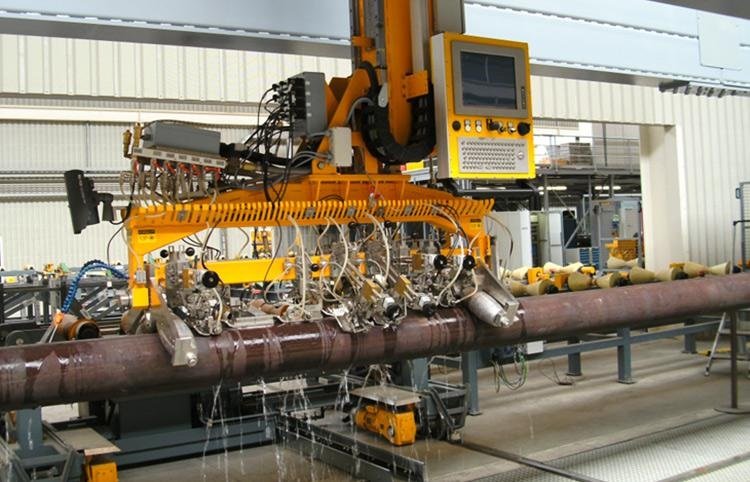
1. What Are Seamless Steel Tubes for Gas Cylinders?
Seamless steel tubes for gas cylinders are specially manufactured steel tubes used as the starting material for producing high-pressure gas cylinder shells.
Unlike ordinary structural or mechanical steel pipes, gas cylinder tubes must meet demanding requirements for strength, ductility, toughness, dimensional accuracy and internal quality.
They are commonly used in the production of cylinders for storing and transporting:
- Oxygen.
- Nitrogen.
- Argon.
- Hydrogen.
- Compressed natural gas (CNG).
- Other industrial and specialty gases.
During cylinder manufacturing, seamless steel tubes are formed into hollow cylindrical shells, typically through hot spinning or other approved forming processes, followed by heat treatment, machining and inspection.
The quality of the original tube has a direct influence on the consistency and reliability of the finished cylinder.
A suitable gas cylinder tube must provide:
- Consistent chemical composition.
- Stable mechanical properties.
- Good plastic deformation capability.
- Adequate impact toughness.
- Low levels of harmful inclusions.
- Uniform wall thickness.
- Reliable internal and external surface quality.
For this reason, material selection and manufacturing process control are essential when producing seamless steel tubes for gas cylinders.
2. Standards for Seamless Steel Tubes Used in Gas Cylinders
Gas cylinder tubes are manufactured according to dedicated product specifications and the requirements applicable to the finished cylinder.
Several standards are commonly referenced in international and domestic procurement.
2.1 GB/T 18248 – Seamless Steel Tubes for Gas Cylinders
GB/T 18248-2021 is China’s national standard for seamless steel tubes used in gas cylinders.
It specifies requirements relating to:
- Ordering information.
- Dimensions and tolerances.
- Chemical composition.
- Mechanical properties.
- Manufacturing requirements.
- Testing and inspection.
- Packaging and marking.
- Quality certification.
The standard also covers seamless steel tubes used for accumulator shells.
2.2 ISO 9809 Series
The ISO 9809 series establishes requirements for refillable seamless steel gas cylinders and tubes.
The three principal parts address different steel conditions and strength levels.
| Standard | Material Condition | Main Scope |
|---|---|---|
| ISO 9809-1:2019 | Quenched and tempered steel | Actual tensile strength below 1,100 MPa |
| ISO 9809-2:2019 | Quenched and tempered steel | Actual tensile strength equal to or above 1,100 MPa |
| ISO 9809-3:2019 | Normalized or normalized and tempered steel | Applicable normalized steel cylinders and tubes |
These standards cover requirements for the materials, design, construction, manufacturing processes, examination and testing of finished refillable seamless steel cylinders and tubes.
An important distinction is that ISO 9809 is primarily a finished-cylinder and cylinder-tube standard. It should not automatically be treated as a standalone raw tube purchasing specification without checking the applicable material and procurement requirements.
2.3 Other Relevant Standards
Depending on the market and application, buyers may also encounter:
- EN ISO 9809 series.
- EN 10297-1 for seamless circular steel tubes for mechanical and general engineering purposes.
- GB/T 18248-2021 for gas cylinder tubes manufactured to the Chinese standard.
- GB/T 28884-2024 for seamless steel tubes used in large-capacity gas cylinders.
The applicable standard should be specified clearly in the purchase order.
A material grade appearing in two different standards should not automatically be considered interchangeable. Chemical composition, mechanical properties, heat treatment and acceptance requirements must be compared.
3. Material Requirements for Gas Cylinder Steel Tubes
Material selection is one of the most important stages in gas cylinder tube production.
The steel must withstand internal pressure while maintaining sufficient toughness and ductility during cylinder forming and subsequent service.
Carbon-manganese steel and chromium-molybdenum alloy steel are two important material families used in this field.
3.1 Carbon-Manganese Steel
Carbon-manganese steel is commonly used for seamless gas cylinder tubes.
Its main alloying elements are carbon and manganese.
Typical characteristics include:
- Good strength after appropriate heat treatment.
- Suitable ductility.
- Good manufacturing processability.
- Relatively economical material cost.
- Established production experience.
Grades such as 37Mn and 34Mn2V are examples found in gas cylinder tube supply specifications.
The actual grade availability and chemical composition must be confirmed against the specified edition of GB/T 18248 or the relevant product specification.
3.2 Chromium-Molybdenum Alloy Steel
Chromium-molybdenum steel is used where higher strength and demanding mechanical properties are required.
Typical grades or designations encountered in gas cylinder tube procurement include:
- 30CrMo.
- 35CrMo.
- 34CrMo4.
Chromium improves hardenability and contributes to strength and wear resistance.
Molybdenum helps improve hardenability and tempering resistance and contributes to the stability of mechanical properties during heat treatment.
These materials can achieve high strength through appropriate quenching and tempering.
However, their performance depends heavily on steelmaking quality, heat treatment uniformity and the final cylinder manufacturing process.
3.3 Chemical Composition Control
Chemical composition affects the strength, hardenability, ductility and weldability of the steel.
The main elements requiring control include:
| Element | Main Function | Quality Consideration |
|---|---|---|
| Carbon (C) | Increases strength and hardenability | Excessive carbon may reduce ductility and complicate forming |
| Manganese (Mn) | Contributes to strength and hardenability | Must remain within the specified range |
| Silicon (Si) | Acts as a deoxidizer and contributes to strength | Controlled according to the material specification |
| Chromium (Cr) | Improves hardenability and corrosion resistance in suitable alloys | Important for Cr-Mo steel |
| Molybdenum (Mo) | Improves hardenability and tempering resistance | Important for alloy steel |
| Vanadium (V) | Contributes to grain refinement and precipitation strengthening | Used in selected microalloyed grades |
| Phosphorus (P) | Residual element | Excessive levels may reduce toughness |
| Sulfur (S) | Residual element | Excessive levels may impair ductility and cleanliness |
The exact chemical composition limits must follow the applicable material grade and standard.
For example, a typical GB/T 18248 product catalogue may list 37Mn, 34Mn2V and 30CrMo, but catalogue values from an older standard edition should not be used as acceptance limits for GB/T 18248-2021 without verification.
3.4 Steel Cleanliness and Non-Metallic Inclusions
Steel cleanliness is particularly important for pressure-bearing products.
Non-metallic inclusions such as oxides and sulfides may create local discontinuities in the steel matrix.
Large or elongated inclusions can reduce ductility and contribute to crack initiation under severe forming or service conditions.
Manufacturers should therefore control:
- Deoxidation.
- Refining and desulfurization.
- Inclusion modification.
- Casting conditions.
- Billet internal quality.
- Segregation.
Clean steelmaking helps improve the consistency of the finished seamless tube.
3.5 Mechanical Property Requirements
Mechanical properties determine whether the tube can withstand the forming process and meet the requirements of the finished cylinder.
Important properties include:
Tensile Strength (Rm)
Measures the maximum tensile stress the material can withstand before fracture.
Yield Strength (Re or Rp0.2)
Indicates the stress at which permanent deformation begins.
Elongation (A)
Reflects the material’s ability to undergo plastic deformation before fracture.
Impact Toughness
Evaluates the material’s ability to absorb impact energy at a specified temperature.
For gas cylinder applications, strength alone is not sufficient.
A steel with high tensile strength but inadequate ductility or impact toughness may not be suitable for the intended forming and service conditions.
Acceptance values must be determined from the applicable standard, steel grade, final heat treatment condition and cylinder design.
4. Manufacturing Process of Seamless Steel Tubes for Gas Cylinders
Seamless gas cylinder tubes are generally produced through hot-working processes followed by finishing and inspection.
The main manufacturing stages are described below.
4.1 Steelmaking and Billet Preparation
The production process begins with steelmaking.
Electric arc furnace or basic oxygen furnace routes may be used, depending on the manufacturer’s production system and applicable specification.
After refining, molten steel is cast into billets.
The billets are inspected for:
- Surface cracks.
- Internal discontinuities.
- Chemical composition.
- Segregation.
- Dimensional accuracy.
High-quality billets are essential because internal defects may remain in the finished tube if they are not detected or removed during production.
4.2 Billet Heating
The billets are heated in a controlled furnace to the appropriate hot-working temperature.
Uniform heating is necessary to ensure consistent deformation during piercing and rolling.
Uneven heating may result in:
- Unbalanced deformation.
- Wall thickness variation.
- Internal defects.
- Surface cracking.
- Dimensional instability.
Temperature and soaking time should be controlled according to the steel grade and manufacturing process.
4.3 Rotary Piercing
Rotary piercing converts the solid billet into a hollow shell.
The heated billet passes through rotating rolls while a piercing plug forms the internal cavity.
Important process parameters include:
- Billet temperature.
- Roll alignment.
- Plug geometry.
- Piercing speed.
- Feed angle.
- Deformation ratio.
Poor piercing conditions may cause eccentric wall thickness, internal folds or other defects.
4.4 Elongation and Rolling
After piercing, the hollow shell undergoes elongation and rolling.
The objective is to achieve the required:
- Outside diameter.
- Wall thickness.
- Length.
- Cross-sectional uniformity.
Mandrel mills, plug mills or other suitable rolling equipment may be used depending on the production route.
Rolling conditions must be controlled to avoid excessive deformation and wall thickness variation.
4.5 Sizing and Straightening
Sizing operations establish the final outside diameter and dimensional accuracy.
Straightening equipment corrects deviations in pipe straightness.
Dimensional control at this stage is important because gas cylinder manufacturing requires consistent tube geometry.
4.6 Cutting and Surface Finishing
The finished tubes are cut to the specified length.
Both internal and external surfaces are inspected and finished where required.
Surface defects such as cracks, laps, folds and deep scratches must be evaluated according to the applicable acceptance criteria.
5. Heat Treatment of Gas Cylinder Steel Tubes
Heat treatment is a critical process for achieving the required mechanical properties.
The selected process depends on the material grade and the final cylinder manufacturing route.
Common heat treatment conditions include:
- Normalizing.
- Quenching and tempering.
- Normalizing and tempering.
5.1 Normalizing
Normalizing involves heating steel to an appropriate temperature above its critical transformation range, followed by controlled cooling in air.
The process helps:
- Refine the grain structure.
- Improve structural uniformity.
- Reduce certain effects of previous hot-working operations.
- Establish suitable mechanical properties.
ISO 9809-3 covers normalized or normalized and tempered steel cylinders and tubes.
5.2 Quenching
Quenching involves heating steel to the specified austenitizing temperature and cooling it at a controlled rate using an appropriate quenching medium.
The objective is to develop a hardened microstructure.
For suitable carbon and alloy steels, quenching can significantly increase strength and hardness.
However, excessive hardness and residual stress may reduce toughness and increase cracking risk.
5.3 Tempering
Tempering is performed after quenching.
The steel is reheated to a specified temperature below the critical transformation range and then cooled under controlled conditions.
Tempering helps:
- Reduce brittleness.
- Improve toughness.
- Relieve internal stresses.
- Adjust strength and hardness.
- Stabilize the microstructure.
5.4 Quenching and Tempering (Q&T)
Quenching and tempering combine two processes to obtain a balance between strength and toughness.
This is an important heat treatment route for many high-strength seamless steel gas cylinders.
The actual temperature, holding time and cooling conditions must be established through the applicable standard and qualified manufacturing procedure.
It is not appropriate to apply one universal heat treatment temperature to all gas cylinder steel grades.
5.5 Heat Treatment Traceability
Manufacturers should maintain records of:
- Furnace identification.
- Heating temperature.
- Holding time.
- Quenching medium.
- Cooling conditions.
- Tempering temperature.
- Production batch.
- Heat treatment inspection results.
These records help verify that the finished product has undergone the specified heat treatment process.
6. Key Quality Requirements for Gas Cylinder Steel Tubes
Gas cylinder tubes must satisfy several dimensional, surface and internal quality requirements.
6.1 Dimensional Accuracy
Important dimensions include:
- Outside diameter.
- Wall thickness.
- Length.
- Ovality.
- Straightness.
- End geometry.
Excessive dimensional variation may affect the subsequent cylinder forming process.
6.2 Wall Thickness Uniformity
Wall thickness uniformity is essential for achieving consistent deformation and pressure resistance.
Severe eccentricity may cause uneven material flow during cylinder forming.
It may also produce localized thin areas in the finished cylinder shell.
6.3 Internal and External Surface Quality
Common defects that require control include:
- Cracks.
- Laps.
- Folds.
- Scabs.
- Deep scratches.
- Scale-related damage.
- Other harmful surface discontinuities.
Surface defects can become potential crack initiation sites during forming or pressure service.
6.4 Internal Metallurgical Quality
Internal quality should be controlled through suitable steelmaking, billet inspection and nondestructive examination.
Potential concerns include:
- Non-metallic inclusions.
- Internal cracks.
- Porosity.
- Segregation.
- Internal folds.
The inspection method and acceptance criteria should be specified according to the applicable standard.
7. Inspection and Testing of Seamless Steel Tubes for Gas Cylinders
Inspection verifies that the finished tube meets the specified material and dimensional requirements.
Typical inspection activities include the following.
7.1 Chemical Composition Analysis
Chemical analysis verifies the contents of the specified alloying and residual elements.
Optical emission spectroscopy is commonly used for routine steel composition analysis.
Results are compared with the limits specified in the relevant material standard.
7.2 Tensile Testing
Tensile testing determines:
- Yield strength.
- Tensile strength.
- Elongation.
The results help verify whether the material has achieved the required mechanical properties after heat treatment.
7.3 Impact Testing
Charpy V-notch impact testing may be required depending on the applicable standard and project specification.
The test evaluates the energy absorbed during fracture at a specified temperature.
It is particularly relevant where low-temperature toughness is required.
7.4 Ultrasonic Testing (UT)
Ultrasonic testing uses high-frequency sound waves to detect internal discontinuities.
It may be used to identify:
- Internal cracks.
- Laminations.
- Other relevant internal defects.
Suitable ultrasonic thickness measurement procedures can also be used to verify wall thickness.
7.5 Eddy Current Testing (ECT)
Eddy current testing uses electromagnetic induction to detect certain surface and near-surface discontinuities.
Its applicability depends on the material, product geometry, inspection system and specified acceptance criteria.
7.6 Dimensional Inspection
Dimensional inspection checks outside diameter, wall thickness, length, ovality and straightness.
Measurement instruments must be suitable for the required accuracy and maintained under a documented calibration system.
7.7 Hydrostatic Testing
Hydrostatic testing is commonly associated with finished gas cylinder inspection.
It verifies pressure integrity by subjecting the completed cylinder to the specified test pressure.
The test is conducted according to the applicable cylinder manufacturing and inspection standard.
It is important to distinguish between raw tube inspection and finished cylinder testing.
A tube supplier should not claim that a raw steel tube has passed the final gas cylinder hydrostatic test unless that test was actually performed under an applicable procedure.
8. Common Manufacturing Defects in Gas Cylinder Steel Tubes
Several defects can affect the suitability of steel tubes for cylinder manufacturing.
| Defect | Possible Cause | Potential Effect |
|---|---|---|
| Uneven Wall Thickness | Piercing or rolling misalignment | Uneven forming and local stress |
| Internal Cracks | Billet defects or excessive deformation | Reduced structural integrity |
| Surface Laps | Improper rolling conditions | Potential crack initiation |
| Excessive Ovality | Uneven deformation or sizing problems | Forming difficulties |
| Non-Metallic Inclusions | Insufficient steel cleanliness | Reduced ductility and toughness |
| Poor Straightness | Unstable rolling or straightening | Difficult handling and processing |
| Improper Heat Treatment | Incorrect temperature or cooling | Inconsistent mechanical properties |
Preventing these defects requires process control from billet production through final inspection.
9. How to Select the Right Seamless Steel Tubes for Gas Cylinders
Selecting suitable gas cylinder steel tubes requires more than choosing a high-strength material grade.
Buyers should consider the following factors.
9.1 Applicable Standard
Confirm whether the project requires GB/T 18248-2021, ISO 9809-related requirements or another applicable material specification.
9.2 Steel Grade
Select the grade according to the finished cylinder design, required strength, ductility, toughness and manufacturing route.
9.3 Chemical Composition
Review the MTC to verify that all specified alloying and residual elements comply with the material standard.
9.4 Mechanical Properties
Confirm tensile strength, yield strength, elongation and impact toughness where specified.
9.5 Heat Treatment Condition
Check whether the material is supplied in hot-worked, normalized, quenched and tempered or another specified condition.
9.6 Dimensional Requirements
Confirm outside diameter, wall thickness, length, tolerances and straightness.
9.7 Inspection and Documentation
Request the relevant inspection reports and material traceability documents.
These may include:
- Mill Test Certificate (MTC).
- Chemical analysis report.
- Mechanical test report.
- Heat treatment records.
- Ultrasonic testing report.
- Dimensional inspection report.
- Surface inspection records.
The specific documents should be agreed before production.
10. Frequently Asked Questions About Gas Cylinder Steel Tubes
What materials are used for seamless gas cylinder tubes?
Carbon-manganese steel and chromium-molybdenum alloy steel are commonly used material families. The actual grade depends on the applicable cylinder standard, design and service requirements.
What are the common steel grades for gas cylinder tubes?
Examples found in gas cylinder tube specifications include 37Mn, 34Mn2V, 30CrMo, 35CrMo and 34CrMo4. Grade acceptance must be checked against the relevant standard edition.
What is GB/T 18248?
GB/T 18248-2021 is China’s national standard for seamless steel tubes used in gas cylinders. It specifies requirements for dimensions, material properties, manufacturing, testing, inspection and certification.
What is the difference between ISO 9809-1 and ISO 9809-2?
Both cover quenched and tempered seamless steel gas cylinders and tubes. ISO 9809-1 applies to actual tensile strengths below 1,100 MPa, while ISO 9809-2 applies to actual tensile strengths equal to or greater than 1,100 MPa.
What is ISO 9809-3?
ISO 9809-3 specifies requirements for normalized or normalized and tempered seamless steel cylinders and tubes.
Why is quenching and tempering important for gas cylinder steel?
It helps achieve the required combination of strength and toughness. Quenching increases strength, while tempering improves toughness and reduces brittleness and residual stress.
Are all gas cylinder tubes required to undergo heat treatment?
The required delivery and heat treatment condition depends on the applicable tube specification and the finished cylinder manufacturing route. Heat treatment requirements should not be assumed to be identical for every grade or product.
Why is wall thickness uniformity important?
Uniform wall thickness helps ensure consistent deformation during cylinder forming and reduces the risk of localized thin areas in the finished pressure vessel.
Is ultrasonic testing required for gas cylinder tubes?
The required inspection method and coverage depend on the applicable standard, product type and purchase order. Ultrasonic testing is an important method for examining internal quality and measuring wall thickness.
Can ordinary seamless steel pipes be used for gas cylinder manufacturing?
Not automatically. General-purpose seamless pipes may not meet the material cleanliness, chemical composition, mechanical property, dimensional and inspection requirements for gas cylinder production.
What documents should buyers request?
Typical documents include the MTC, chemical analysis, mechanical test results, heat treatment records, dimensional inspection results and applicable nondestructive testing reports.
11. Conclusion
Seamless steel tubes for gas cylinders require carefully controlled material composition, manufacturing processes and mechanical properties.
Carbon-manganese steel and chromium-molybdenum alloy steel are commonly used material families, while the appropriate grade and heat treatment condition depend on the finished cylinder design and applicable standards.
The manufacturing process generally includes steelmaking, billet preparation, heating, rotary piercing, rolling, sizing, straightening, heat treatment and final inspection.
Among these stages, billet quality, wall thickness uniformity and heat treatment consistency have a particularly important influence on the reliability of the finished tube.
For manufacturers and buyers, selecting a suitable seamless steel tube requires checking the applicable standard, steel grade, chemical composition, mechanical properties, dimensions, heat treatment condition and inspection documentation.
Looking for Seamless Steel Tubes for Gas Cylinder Manufacturing?
Whether your project requires carbon-manganese steel or chromium-molybdenum alloy steel tubes, specify the applicable standard, material grade, outside diameter, wall thickness, length, heat treatment condition and inspection requirements.
Request a quotation with material test certificates, chemical composition reports, mechanical test results and dimensional inspection records.