
1. What Is the Difference Between Stainless Steel and Carbon Steel?
Stainless steel and carbon steel are two widely used ferrous materials in industrial manufacturing, construction, energy production and pipeline systems. Both are primarily composed of iron and carbon, but their chemical compositions and metallurgical characteristics result in different performance.
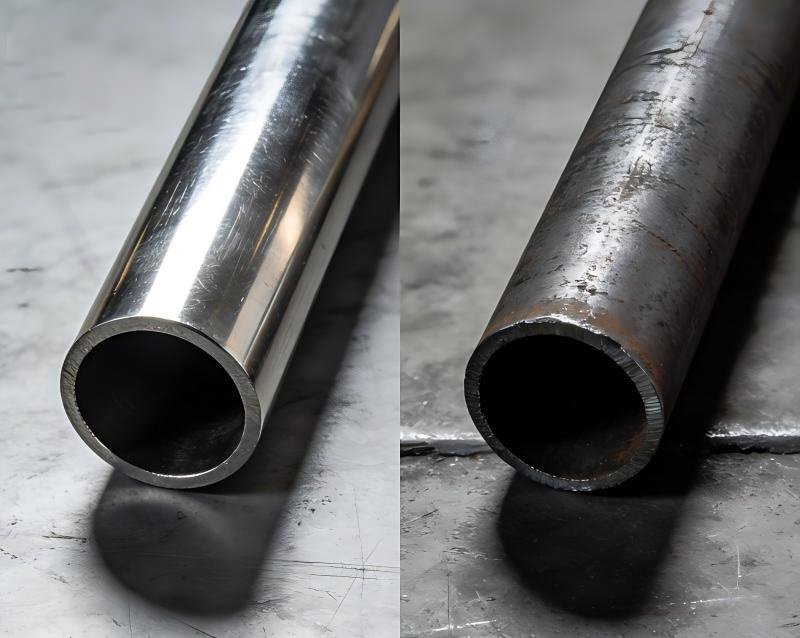
The main difference is chromium content. Stainless steel contains at least 10.5% chromium by mass, which enables the formation of a thin, protective passive oxide film on its surface. This film significantly improves resistance to corrosion and oxidation.
Carbon steel, in contrast, does not contain sufficient chromium to form the same protective passive layer. It is generally more susceptible to rust when exposed to moisture, oxygen and corrosive environments.
However, corrosion resistance is not the only factor that determines material selection. Carbon steel offers a wide range of mechanical properties, good manufacturability and relatively low material costs. Stainless steel provides different combinations of corrosion resistance, toughness, strength and heat resistance, depending on its grade.
The choice between stainless steel and carbon steel should therefore be based on the operating environment, mechanical requirements, fabrication conditions and total lifecycle cost.
2. Chemical Composition: Stainless Steel vs Carbon Steel
Chemical composition is the foundation of the differences between stainless steel and carbon steel.
2.1 Stainless Steel Composition
Stainless steel is an iron-based alloy containing a minimum of 10.5% chromium. Nickel, molybdenum, manganese, nitrogen and other alloying elements may also be added to obtain specific metallurgical and performance characteristics.
The main alloying elements include:
- Chromium (Cr): Forms the passive oxide layer responsible for corrosion resistance.
- Nickel (Ni): Stabilises the austenitic structure and improves ductility and toughness.
- Molybdenum (Mo): Improves resistance to pitting and crevice corrosion, particularly in chloride-containing environments.
- Carbon (C): Influences hardness and strength, but excessive carbon can reduce corrosion resistance in certain stainless steel grades.
- Manganese (Mn): Contributes to deoxidation and influences the metallurgical structure.
Common stainless steel grades include 304, 304L, 316, 316L, 321, 430 and duplex 2205.
2.2 Carbon Steel Composition
Carbon steel is primarily an iron-carbon alloy. Its properties are largely influenced by carbon content, with manganese, silicon, phosphorus and sulfur also controlled according to the applicable material specification.
Carbon steel is commonly divided into three categories according to carbon content:
Low-carbon steel: Generally contains up to approximately 0.25% carbon. It offers good ductility, formability and weldability.
Medium-carbon steel: Generally contains approximately 0.25–0.60% carbon. It provides higher strength and hardness and is commonly used for mechanical components.
High-carbon steel: Generally contains approximately 0.60–1.0% carbon in common commercial classifications. It offers high hardness and wear resistance but generally has lower ductility and more demanding welding requirements.
These ranges are broad classifications rather than universal specification limits. The actual chemical composition must be checked against the relevant material standard.
2.3 Chemical Composition Comparison
| Element | Stainless Steel 304 | Stainless Steel 316 | Carbon Steel |
|---|---|---|---|
| Iron | Balance | Balance | Balance |
| Chromium | 18–20% | 16–18% | No minimum required |
| Nickel | 8–10.5% | 10–14% | Generally no intentional addition |
| Molybdenum | Not intentionally added | 2–3% | Generally no intentional addition |
| Carbon | Max. 0.08% | Max. 0.08% | Varies by grade |
| Manganese | Max. 2% | Max. 2% | Varies by grade |
Note: The stainless steel composition ranges are typical ASTM A240 limits for the listed grades. Carbon steel composition varies substantially according to the applicable product standard and grade. Always verify the relevant specification and Mill Test Certificate (MTC).
The high chromium content is the main reason stainless steel behaves differently from conventional carbon steel in corrosive environments.
3. Mechanical Properties: Which Material Is Stronger?
A common misconception is that stainless steel is always stronger than carbon steel. In practice, mechanical properties depend on the grade, heat treatment, product form and manufacturing condition.
3.1 Strength and Hardness
Carbon steel is available in a wide range of grades, including structural steels and high-strength alloyed carbon steels.
For example, structural grades such as S355 provide a specified minimum yield strength of 355 MPa under applicable product conditions.
Austenitic stainless steel grades such as 304 and 316 typically have a minimum 0.2% proof strength of approximately 205 MPa in common annealed product specifications.
However, duplex stainless steel 2205 generally offers a significantly higher yield strength than conventional austenitic grades.
Therefore, material selection should compare actual specified mechanical properties rather than assuming that one material family is always stronger.
3.2 Ductility and Toughness
Austenitic stainless steel generally offers excellent ductility and toughness, including at low temperatures.
Many carbon steel grades also provide good ductility, but their impact toughness depends on chemical composition, grain structure, heat treatment and operating temperature.
This distinction is important for applications involving low-temperature service, impact loading and pressure containment.
3.3 Work Hardening
Austenitic stainless steel generally exhibits considerable work hardening during cold deformation.
This characteristic is relevant to cold drawing, forming and machining operations. It can increase strength but may also increase forming forces and affect subsequent fabrication.
Carbon steel also undergoes work hardening, although the response varies with its carbon content and metallurgical condition.
3.4 Mechanical Property Comparison
| Property | Austenitic Stainless Steel 304 | Carbon Steel S355 |
|---|---|---|
| Minimum yield strength | Approx. 205 MPa | 355 MPa |
| Minimum tensile strength | Approx. 515 MPa | 470 MPa, depending on thickness and specification |
| Corrosion resistance | Good in many general environments | Generally requires protection |
| Ductility | Generally high | Good, depending on grade |
| Work hardening | Relatively high | Depends on grade and processing |
| Magnetic behaviour | Generally non-magnetic when annealed | Magnetic |
These are representative specification values, not a universal comparison of all stainless and carbon steels. Product standards, thickness ranges and delivery conditions must be considered.
4. Corrosion Resistance: Stainless Steel vs Carbon Steel
Corrosion resistance is one of the most important differences between the two materials.
4.1 Why Is Stainless Steel More Corrosion Resistant?
Chromium reacts with oxygen to form an extremely thin, adherent passive oxide film on the stainless steel surface.
This film acts as a barrier between the underlying metal and the surrounding environment. If the surface is scratched or damaged, the passive film can reform when sufficient oxygen is available.
The ability to maintain this protective layer is the basis of stainless steel’s corrosion resistance.
However, stainless steel is not completely corrosion-proof.
Different grades have different resistance to:
- General corrosion
- Pitting corrosion
- Crevice corrosion
- Intergranular corrosion
- Stress corrosion cracking
For example, 316 stainless steel contains molybdenum, which generally improves pitting and crevice corrosion resistance compared with 304 in chloride-containing environments.
Duplex 2205 may be selected for more demanding chloride environments, depending on temperature, chloride concentration and other service conditions.
4.2 Why Does Carbon Steel Rust?
Carbon steel is susceptible to corrosion when iron reacts with oxygen and moisture.
Unlike the passive film on stainless steel, the rust layer formed on ordinary carbon steel is generally porous and does not provide reliable long-term protection.
Corrosion can continue beneath the rust layer, resulting in material loss, wall thinning and eventually structural or pressure-boundary failure.
Common protective methods include:
- Painting and protective coatings
- Hot-dip galvanising
- Internal lining
- Cathodic protection
- Corrosion inhibitors
The appropriate protection method depends on the operating environment and expected service life.
4.3 Corrosion Resistance Comparison
| Environment | Stainless Steel | Carbon Steel |
|---|---|---|
| Dry indoor environment | Generally excellent | Generally suitable |
| Freshwater | Grade-dependent corrosion resistance | Requires corrosion control |
| Marine atmosphere | Grade-dependent; 316 often preferred over 304 | Requires effective protection |
| Seawater immersion | Standard 304 and 316 may be unsuitable | Requires specialised protection |
| Chemical processing | Depends on chemical composition and concentration | Requires careful corrosion assessment |
| High-temperature oxidation | Grade-dependent | Generally more limited without protection |
A key point is that selecting stainless steel does not automatically eliminate corrosion risks. Chloride concentration, temperature, oxygen availability, surface condition and stress all influence corrosion performance.
5. Welding and Fabrication: Which Material Is Easier to Work With?
Both stainless steel and carbon steel can be welded, formed and machined, but their processing requirements differ.
5.1 Carbon Steel Welding
Low-carbon steel generally offers good weldability and can be joined using common industrial welding processes, including:
- Shielded Metal Arc Welding (SMAW)
- Gas Metal Arc Welding (GMAW)
- Gas Tungsten Arc Welding (GTAW)
- Submerged Arc Welding (SAW)
For many low-carbon steel grades, welding procedures are relatively straightforward.
However, higher-carbon and higher-strength carbon steels may require preheating, controlled heat input and post-weld heat treatment to reduce the risk of cracking.
5.2 Stainless Steel Welding
Stainless steel welding requires careful control of heat input, shielding gas, filler metal selection and surface cleanliness.
Austenitic stainless steel generally has lower thermal conductivity and higher thermal expansion than carbon steel.
These differences can increase distortion and residual stress during welding.
Additional considerations include:
- Sensitisation in susceptible grades
- Heat-affected zone corrosion
- Weld oxidation
- Ferrite content in weld metal
- Intergranular corrosion
- Chloride contamination
Low-carbon grades such as 304L and 316L are frequently selected for welded applications because their reduced carbon content helps minimise sensitisation risks.
5.3 Machining and Forming
Carbon steel is generally easier to machine than many austenitic stainless steel grades, particularly when suitable machining grades and cutting conditions are used.
Austenitic stainless steel can generate more heat at the cutting zone and may work-harden during machining.
Proper cutting speeds, feed rates, tooling and lubrication are therefore important.
For cold drawing and tube manufacturing, both materials require process parameters suited to their composition and mechanical condition.
6. Cost Comparison: Stainless Steel vs Carbon Steel
Carbon steel generally has a lower initial material cost than stainless steel.
Stainless steel contains alloying elements such as chromium, nickel and molybdenum, which increase production costs and make its market price more sensitive to alloy surcharges and raw material prices.
However, the purchase price is only one part of the total cost.
6.1 Initial Material Cost
Carbon steel is widely available and generally offers an economical solution for large-scale construction, structural fabrication and general industrial piping.
Stainless steel usually involves a higher initial investment, particularly for molybdenum-bearing grades and duplex materials.
6.2 Maintenance and Replacement Costs
Carbon steel may require regular inspection, coating maintenance, corrosion allowance or replacement in corrosive environments.
Stainless steel can reduce some of these costs when the correct grade is selected.
However, stainless steel may still require cleaning, inspection and corrosion management in aggressive service conditions.
6.3 Lifecycle Cost
A proper material selection should consider:
- Initial purchase price
- Fabrication and installation costs
- Protective coating requirements
- Inspection and maintenance costs
- Downtime
- Expected service life
- Replacement costs
For example, carbon steel may be the most economical option for a dry industrial structure, while 316L or duplex stainless steel may provide better long-term value in certain corrosive process environments.
The correct choice depends on the actual service conditions rather than material price alone.
7. Applications of Stainless Steel and Carbon Steel
Both materials are used extensively in industrial manufacturing, but their applications differ according to performance requirements.
7.1 Stainless Steel Applications
Common stainless steel applications include:
Chemical and Petrochemical Industry
Stainless steel piping, tanks and process equipment are used where resistance to specific chemicals and corrosive media is required.
Food and Beverage Industry
Grades such as 304 and 316L are widely used for hygienic equipment, processing lines and storage systems.
Marine Engineering
Suitable stainless steel grades are used in marine equipment, seawater systems and offshore components.
Pharmaceutical Industry
Stainless steel is used in process vessels, piping systems and equipment requiring cleanable surfaces and corrosion resistance.
Power Generation
Selected stainless steel and heat-resistant alloy grades are used in heat exchangers, boilers and high-temperature equipment.
7.2 Carbon Steel Applications
Carbon steel is commonly used in:
Oil and Gas Pipelines
Grades such as API 5L are widely used in onshore and offshore pipeline systems.
Structural Engineering
Carbon steel grades such as ASTM A36 and EN S355 are used in buildings, bridges and industrial structures.
Pressure Piping
ASTM A106 carbon steel seamless pipes are commonly used for high-temperature service.
Boiler and Power Plant Systems
Carbon steel and low-alloy steel pipes are used in boilers, steam systems and related equipment according to design conditions.
Mechanical Manufacturing
Carbon steel is used for shafts, machine components, frames and fabricated parts.
8. Stainless Steel Pipe vs Carbon Steel Pipe: Which Should You Choose?
For industrial buyers, the comparison between stainless steel and carbon steel is often a question of selecting the correct pipe material for the intended service.
The following standards are frequently referenced in industrial piping procurement:
| Pipe material | Common specification | Typical application |
|---|---|---|
| Carbon steel seamless pipe | ASTM A106 | High-temperature pressure piping |
| Carbon steel pipe | ASTM A53 | General mechanical and pressure applications |
| Carbon steel line pipe | API 5L | Oil and gas transportation |
| Stainless steel pipe | ASTM A312 | Austenitic stainless steel piping |
| Stainless steel tubing | ASTM A269 | General-service stainless steel tubing |
| Stainless steel boiler and heat exchanger tubes | ASTM A213 | Boiler, superheater and heat exchanger service |
The standards above cover different product forms and service requirements. They should not be treated as directly interchangeable.
When Should You Choose Carbon Steel Pipes?
Carbon steel pipes are generally suitable when:
- The operating environment is not highly corrosive.
- Initial material cost is an important consideration.
- Protective coatings or corrosion control systems are available.
- The application requires conventional industrial piping or structural materials.
- The selected grade meets the required pressure and temperature design conditions.
When Should You Choose Stainless Steel Pipes?
Stainless steel pipes are generally suitable when:
- Corrosion resistance is a primary requirement.
- The process medium contains corrosive substances.
- Cleanability and surface condition are important.
- The application requires suitable low-temperature toughness.
- The maintenance and replacement costs of carbon steel would be excessive.
What Information Should Buyers Confirm?
Before placing an order, buyers should confirm:
- Material grade and chemical composition.
- Applicable ASTM, ASME, API or EN standard.
- Outside diameter and wall thickness.
- Manufacturing method, such as seamless or welded.
- Required heat treatment and delivery condition.
- Mechanical property requirements.
- Corrosion protection and inspection requirements.
- Material Test Certificate and traceability requirements.
These details help ensure that the supplied steel pipe meets the actual project specification.
9. Frequently Asked Questions
Is stainless steel stronger than carbon steel?
Not necessarily. Strength depends on the specific grade and delivery condition. Some carbon steel grades have higher yield strength than annealed 304 stainless steel, while duplex stainless steel grades such as 2205 generally provide higher yield strength than conventional austenitic stainless steel.
Which is more corrosion resistant, stainless steel or carbon steel?
Stainless steel generally offers significantly better corrosion resistance because of its chromium-rich passive film. However, the level of protection depends on the grade and service environment. Carbon steel typically requires coatings or other corrosion protection.
Why is stainless steel more expensive than carbon steel?
Stainless steel contains additional alloying elements, particularly chromium and often nickel or molybdenum. These elements increase material and production costs.
Can carbon steel and stainless steel be used together?
Yes, but the connection requires careful consideration. In the presence of an electrolyte, electrical contact between dissimilar metals can cause galvanic corrosion. The risk depends on the material combination, exposed surface areas, electrolyte and environmental conditions.
Does stainless steel rust?
Yes. Stainless steel can corrode under certain conditions, including exposure to aggressive chlorides, crevice environments and unsuitable chemical media. Proper grade selection, surface condition and maintenance are important.
Which material is better for oil and gas pipelines?
Carbon steel is widely used for oil and gas pipelines because of its strength, availability and cost-effectiveness. Stainless steel and corrosion-resistant alloys may be selected where the transported medium or operating environment requires improved corrosion resistance.
Is 316 stainless steel better than carbon steel?
316 generally provides better corrosion resistance than conventional carbon steel in many environments. However, carbon steel may be more economical and mechanically suitable for applications where corrosion can be adequately controlled.
10. Conclusion
Stainless steel and carbon steel each offer advantages for different industrial applications.
Stainless steel is generally selected for its corrosion resistance, durability and suitability for demanding environments. Carbon steel remains widely used because of its mechanical performance, availability, fabrication characteristics and lower initial material cost.
Neither material is universally superior. The correct selection depends on the operating environment, mechanical requirements, fabrication process, applicable standards and expected service life.
For steel pipe procurement, buyers should evaluate the material grade, manufacturing method, dimensions, delivery condition and inspection requirements before making a final decision.
Need stainless steel or carbon steel pipes for your project?
Provide the required material grade, pipe dimensions, applicable standard and operating conditions to determine the most suitable product for your application.