
When choosing steel pipes for an industrial or construction project, buyers need to balance strength, weldability, cost, and service conditions. Low carbon steel pipe is a popular choice because it offers a practical combination of mechanical performance, ease of fabrication, and broad availability.
It is used in water distribution, structural engineering, general industrial piping, and many other applications where the specified material properties meet the project requirements.
However, low carbon steel pipe is not suitable for every environment. Its corrosion resistance is limited without appropriate protection, and its pressure and temperature capabilities depend on the actual grade, dimensions, manufacturing process, and applicable design code.
So, what makes low carbon steel pipe different from other steel pipes? What are its main advantages, and when should you choose it over stainless steel or higher-carbon steel?
This guide explains the properties, benefits, limitations, manufacturing methods, and common applications of low carbon steel pipe, helping you make a more informed purchasing decision.
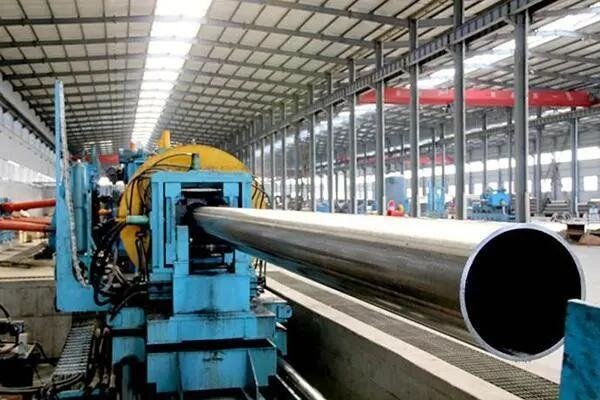
1. What Is Low Carbon Steel Pipe?
Low carbon steel pipe is manufactured from steel containing a relatively low proportion of carbon. The term generally refers to steels with carbon contents around 0.05% to 0.25% by weight, although definitions and limits vary by grade and standard.
Carbon is an important element in steel because it influences strength, hardness, ductility, and heat-treatment response. Compared with higher-carbon steels, low carbon steels are generally easier to form, machine, and weld using suitable procedures.
These characteristics make low carbon steel a practical material for pipes that need to be manufactured efficiently and installed across a wide range of applications.
Low carbon steel pipes can be produced using different manufacturing methods, including electric resistance welding (ERW), submerged arc welding (SAW), and seamless pipe production. The appropriate method depends on the intended application, required dimensions, material specification, and manufacturing capabilities.
It is important to distinguish the material category from the pipe product standard. Low carbon steel describes a broad group of materials; it does not automatically identify a particular pipe grade or guarantee a specific pressure rating.
What Is Low Carbon Steel Made Of?
Low carbon steel primarily consists of iron and carbon, with manganese and other elements present in controlled amounts depending on the grade.
Its composition is designed to provide the required mechanical properties, manufacturability, and performance for the intended use.
For buyers, the most important information is not simply whether a pipe is described as low carbon steel. It is the exact steel grade, chemical composition, mechanical properties, manufacturing specification, and inspection requirements.
2. Key Properties of Low Carbon Steel Pipe
The performance of low carbon steel pipe comes from a combination of material characteristics and manufacturing quality.
Good Weldability
One of the main advantages of low carbon steel is its generally good weldability. Its relatively low carbon content helps reduce hardening and cracking risks under suitable welding conditions.
This makes it useful for piping systems and structures that require welding, cutting, forming, or fabrication.
However, weldability is not determined by carbon content alone. Steel composition, carbon equivalent, wall thickness, restraint, welding procedure, and preheating requirements may all affect the risk of cracking.
For pressure-containing pipes, welding must follow the applicable code and qualified procedures.
Ductility and Formability
Low carbon steel generally offers good ductility, meaning it can undergo a degree of plastic deformation before fracturing.
This makes it suitable for many forming operations, including bending, rolling, and shaping, provided the material grade and dimensions permit the required deformation.
For manufacturers, good formability can support efficient production. For buyers, it can simplify certain fabrication and installation tasks.
Mechanical Strength
Low carbon steel can provide sufficient strength for many structural and industrial applications.
Its actual yield strength and tensile strength depend on the grade, chemical composition, manufacturing route, heat treatment, and product specification.
It is therefore incorrect to assume that all low carbon steel pipes have the same strength or pressure capacity. A pipe used for a structural support may have different requirements from one used in a pressurized fluid system.
Machinability
Many low carbon steels are relatively easy to machine compared with harder, higher-carbon grades. This can be beneficial when pipes require cutting, drilling, threading, or other fabrication operations.
Machining performance still depends on the steel grade, hardness, tooling, and production conditions.
Corrosion Resistance
Low carbon steel generally does not have the inherent corrosion resistance of stainless steel. In the presence of water, oxygen, salts, or corrosive chemicals, it may develop rust or undergo more aggressive corrosion.
Depending on the environment, protective measures may include painting, galvanizing, external coatings, internal linings, corrosion inhibitors, or other engineered protection systems.
The key point: Low carbon steel offers useful mechanical and fabrication properties, but corrosion protection and pressure suitability must be evaluated separately.
3. Advantages of Low Carbon Steel Pipe
Why do so many industrial and construction projects use low carbon steel pipe?
The answer usually comes down to a practical combination of cost, availability, and fabrication performance.
Cost-Effective Material Choice
Low carbon steel is widely used because it can provide the required properties for many applications without the additional alloying costs associated with some stainless steels and other specialized materials.
For projects involving large quantities of pipe, material cost can significantly affect the overall budget.
However, the cheapest pipe is not always the most economical option. Buyers should also consider fabrication, coating, transportation, maintenance, and expected service life.
Easy to Fabricate and Install
Low carbon steel is commonly used in applications involving welding, cutting, bending, and mechanical assembly.
Its fabrication characteristics can help simplify production and installation when the correct grade and procedures are selected.
For projects with complex piping layouts or extensive steel fabrication, this can be an important practical advantage.
Wide Range of Available Products
Low carbon steel pipes are available in different diameters, wall thicknesses, lengths, and manufacturing forms.
Depending on the required specification, buyers may choose welded or seamless products and select suitable grades for structural, mechanical, or pressure-containing service.
Availability varies by market and manufacturer, so the exact combination of dimensions, grade, and standard should be confirmed before ordering.
Recyclability
Steel is a recyclable material, and low carbon steel pipes can often be recovered and recycled at the end of their service life.
The environmental performance of a pipe, however, depends on more than recyclability alone. Manufacturing energy, transport, protective coatings, maintenance, and service life also contribute to its overall environmental impact.
4. Common Applications of Low Carbon Steel Pipe
Low carbon steel pipe is used across several industries, but suitability depends on the required grade, product standard, operating conditions, and inspection requirements.
Water Supply and General Fluid Transportation
Low carbon steel pipes can be used in water transmission and industrial fluid systems where the material specification, corrosion protection, and hydraulic requirements are appropriate.
For buried or submerged installations, the external environment and the properties of the conveyed fluid should be assessed carefully.
Where potable water is involved, all materials, coatings, linings, and joining components must meet the applicable requirements for drinking-water contact.
Construction and Structural Engineering
Low carbon steel pipe is widely used in structural applications, including support columns, frameworks, guardrails, and other fabricated structures.
Its formability and weldability make it suitable for many construction projects.
Structural applications still require the correct structural grade, dimensions, connection design, and compliance with the relevant building or engineering code.
Industrial Piping Systems
In industrial facilities, low carbon steel pipes may be used for water, air, and other compatible fluids, provided the material and product specification meet the system requirements.
For pressurized systems, the design temperature, operating pressure, corrosion allowance, wall thickness, and applicable piping code must be considered.
Oil and Gas Applications
Certain low carbon steel grades are used in oil and gas pipelines and related equipment. The appropriate product must meet the relevant line-pipe or oil country tubular goods specification.
Not every low carbon steel pipe is suitable for oil and gas service. Requirements may include material toughness, strength, weld quality, corrosion resistance, sour-service performance, and traceable inspection records.
Agricultural and Irrigation Systems
Low carbon steel pipes may also be used in irrigation infrastructure, water conveyance, and agricultural equipment.
The selection depends on water chemistry, installation conditions, required durability, and the availability of appropriate corrosion protection.
5. Low Carbon Steel Pipe vs. Stainless Steel Pipe
One of the most common material-selection questions is whether low carbon steel or stainless steel is the better choice.
Neither material is universally superior. The decision depends on the environment, mechanical requirements, fabrication needs, and total cost.
| Comparison factor | Low carbon steel pipe | Stainless steel pipe |
|---|---|---|
| Main composition | Iron with relatively low carbon and controlled alloying elements | Iron-based alloy containing sufficient chromium to provide stainless characteristics |
| Material cost | Often lower for comparable basic applications | Often higher, depending on grade and market conditions |
| Weldability | Generally good with suitable procedures | Generally good, but procedures depend on the stainless grade |
| Corrosion resistance | Limited without suitable protection | Generally better in many environments, depending on the grade |
| Strength | Depends on the specified grade and product condition | Varies considerably by grade and product condition |
| Fabrication | Commonly used for cutting, forming, and welding | Fabrication requirements vary; some grades require additional process control |
| Maintenance | May require coatings, linings, or corrosion management | May reduce corrosion-related maintenance in suitable environments |
| Typical applications | Structural work, general industrial piping, and suitable fluid systems | Corrosive service, hygienic systems, and applications requiring specific corrosion resistance |
When Should You Choose Low Carbon Steel?
Low carbon steel may be a suitable option when the service environment is compatible with the material, corrosion protection can be managed economically, and the required mechanical properties can be met.
It is often worth evaluating for large-volume projects where material cost and fabrication efficiency are important.
When Should You Choose Stainless Steel?
Stainless steel may be more suitable when the pipe will be exposed to corrosive chemicals, demanding hygienic requirements, or environments where the selected stainless grade offers a meaningful advantage in corrosion resistance.
However, stainless steel is not immune to corrosion. Chlorides, acids, temperature, deposits, and crevice conditions can still cause damage, depending on the grade and service conditions.
The correct comparison should consider the complete operating environment rather than material price alone.
6. Low Carbon Steel Pipe vs. High Carbon Steel Pipe
The carbon content also helps distinguish low carbon steel from higher-carbon steels.
Higher carbon content generally increases the potential hardness and strength achievable through suitable processing, but it can reduce ductility and make welding more demanding.
Low carbon steel is therefore commonly selected when fabrication, formability, and weldability are important.
Higher-carbon steels may be used in applications that require particular hardness, wear resistance, or mechanical properties, but they are not automatically better for pipe manufacturing.
For piping applications, the choice must be based on the applicable product standard and service requirements. A higher carbon content alone does not establish suitability for higher pressure or more demanding service.
7. How Are Low Carbon Steel Pipes Manufactured?
The manufacturing process influences dimensional accuracy, mechanical properties, weld quality, and final product performance.
ERW Pipe Manufacturing
Electric resistance welded (ERW) pipes are generally produced by forming steel strip into a tubular shape and electrically heating the adjoining edges before pressing them together to form a longitudinal weld.
ERW is widely used for suitable small- and medium-diameter pipe products, depending on the manufacturing line and specification.
Quality controls may include weld inspection, dimensional checks, mechanical testing, and other tests required by the applicable standard.
Submerged Arc Welded Pipe Manufacturing
Submerged arc welded (SAW) pipes are manufactured using a welding process in which the arc and molten weld pool are covered by granular flux.
Two common product types are:
- LSAW: Longitudinal submerged arc welded pipe, typically formed from steel plate.
- SSAW: Spiral submerged arc welded pipe, formed from steel coil with a helical weld seam.
These products are commonly considered for large-diameter applications where their manufacturing capabilities and product specifications are suitable.
Seamless Pipe Manufacturing
Seamless steel pipes are produced without a longitudinal welded seam, generally through processes involving hot forming and, where required, subsequent sizing and finishing.
Seamless pipes may be selected for applications requiring specific dimensions, mechanical properties, or product specifications.
However, seamless construction does not automatically make a pipe stronger or more suitable than a welded pipe in every application. Selection should follow the relevant design code and product requirements.
8. What Standards Apply to Low Carbon Steel Pipe?
There is no single standard that covers every product described as low carbon steel pipe.
The applicable specification depends on whether the pipe is intended for structural use, pressure service, line-pipe applications, or another purpose.
Examples of commonly used standards include:
- ASTM A53/A53M: Covers specified black and hot-dipped zinc-coated welded and seamless steel pipe.
- ASTM A106/A106M: Covers seamless carbon steel pipe for high-temperature service within its specified scope.
- API Specification 5L: Covers line pipe used in the petroleum and natural gas industries.
- ASTM A500/A500M: Covers specified cold-formed welded and seamless carbon steel structural tubing.
These standards are not interchangeable. Their scopes, grades, testing requirements, dimensions, and acceptance criteria differ.
Before placing an order, confirm the exact standard and edition, grade, manufacturing method, dimensions, delivery condition, inspection scope, and any additional project requirements.
The supplier should verify that the proposed product meets the specification for the intended application.
9. How to Choose the Right Low Carbon Steel Pipe
For purchasing teams, choosing a pipe involves more than identifying the material category.
The following factors can help narrow down the options.
Confirm the Intended Application
Establish whether the pipe will be used for structural support, water transmission, industrial fluid handling, or another purpose.
The application determines which standards and mechanical properties are relevant.
Specify the Required Dimensions
Confirm the outside diameter, wall thickness, length, dimensional tolerances, and end preparation.
For pressure-containing systems, the required wall thickness must be established through the applicable design calculation rather than selected solely from a supplier’s standard product range.
Evaluate the Operating Environment
Review operating pressure, temperature, fluid composition, corrosion risk, installation conditions, and expected service life.
Where corrosive exposure is expected, identify the required coating, lining, corrosion allowance, or other protection measures.
Check Quality and Testing Requirements
Depending on the product standard and application, relevant requirements may include:
- Chemical composition
- Tensile and yield strength
- Weld inspection for welded products
- Dimensional inspection
- Hydrostatic testing where specified
- Impact testing where required
- Material traceability and inspection documentation
The required tests should be defined in the purchase specification.
Compare Total Cost
Consider the initial pipe price alongside coating, fabrication, transportation, installation, maintenance, and expected service life.
A suitable low carbon steel pipe can be a cost-effective choice when its properties match the application. Where corrosion or temperature demands are more severe, another material may provide better long-term value.
10. Frequently Asked Questions About Low Carbon Steel Pipe
What is the typical carbon content of low carbon steel?
Low carbon steel is often described as containing approximately 0.05% to 0.25% carbon by weight, although the range depends on the classification and specific grade. Always refer to the applicable material specification for the actual composition.
Is low carbon steel pipe strong?
It can provide adequate strength for many structural and industrial applications. Actual strength depends on the grade, manufacturing process, product condition, and relevant specification.
Is low carbon steel pipe corrosion-resistant?
It generally has limited corrosion resistance compared with appropriately selected stainless steel. Protective coatings, linings, corrosion inhibitors, or other measures may be required depending on the service environment.
Is low carbon steel pipe easy to weld?
Generally, yes. Its relatively low carbon content makes many grades suitable for welding with appropriate procedures. However, weldability depends on the complete chemical composition, wall thickness, joint design, and welding conditions.
Can low carbon steel pipe be used for high-pressure applications?
Potentially, if the exact pipe grade, dimensions, manufacturing quality, and inspection requirements satisfy the applicable design code and service conditions. The term “low carbon steel” alone does not establish a pressure rating.
Is low carbon steel pipe cheaper than stainless steel pipe?
It is often less expensive for comparable basic applications, but actual costs vary by grade, dimensions, production method, market conditions, and quantity. Lifecycle costs should also account for corrosion protection and maintenance.
How can low carbon steel pipe be protected against rust?
Common approaches include painting, galvanizing, external coatings, internal linings, and appropriate corrosion-management measures. The right option depends on the exposure environment, operating conditions, and required service life.
Conclusion: Is Low Carbon Steel Pipe Right for Your Project?
Low carbon steel pipe remains a practical choice for many construction, structural, and industrial applications because of its generally good weldability, formability, availability, and cost-effectiveness.
Its limitations should also be understood. Corrosion resistance is often limited without protection, and mechanical performance varies with the specific grade, dimensions, manufacturing method, and applicable standard.
The best approach is to begin with the project requirements and then select a pipe that meets the required material properties, dimensions, and quality criteria.
Looking for Low Carbon Steel Pipe for Your Project?
Whether you need pipe for structural applications, industrial fluid transportation, water systems, or other suitable uses, provide your required dimensions, material grade, applicable standard, quantity, and operating conditions.
Our team can help review your requirements and identify suitable products for your application.
Contact us to discuss your requirements and request a quotation.