
Choosing between LSAW and SSAW steel pipes is not simply a matter of comparing prices. The right choice depends on your project requirements, including pipe diameter, wall thickness, operating pressure, applicable standards, delivery schedule, and total procurement cost.
Both LSAW (Longitudinal Submerged Arc Welded) and SSAW (Spiral Submerged Arc Welded) steel pipes are widely used in water transmission, oil and gas pipelines, infrastructure, and industrial construction. However, their manufacturing processes and performance characteristics differ in ways that can directly affect project costs and long-term reliability.
So, which type of steel pipe is better for your application? This guide explains the key differences between LSAW and SSAW steel pipes, their advantages and limitations, typical applications, and the factors you should consider before placing an order.
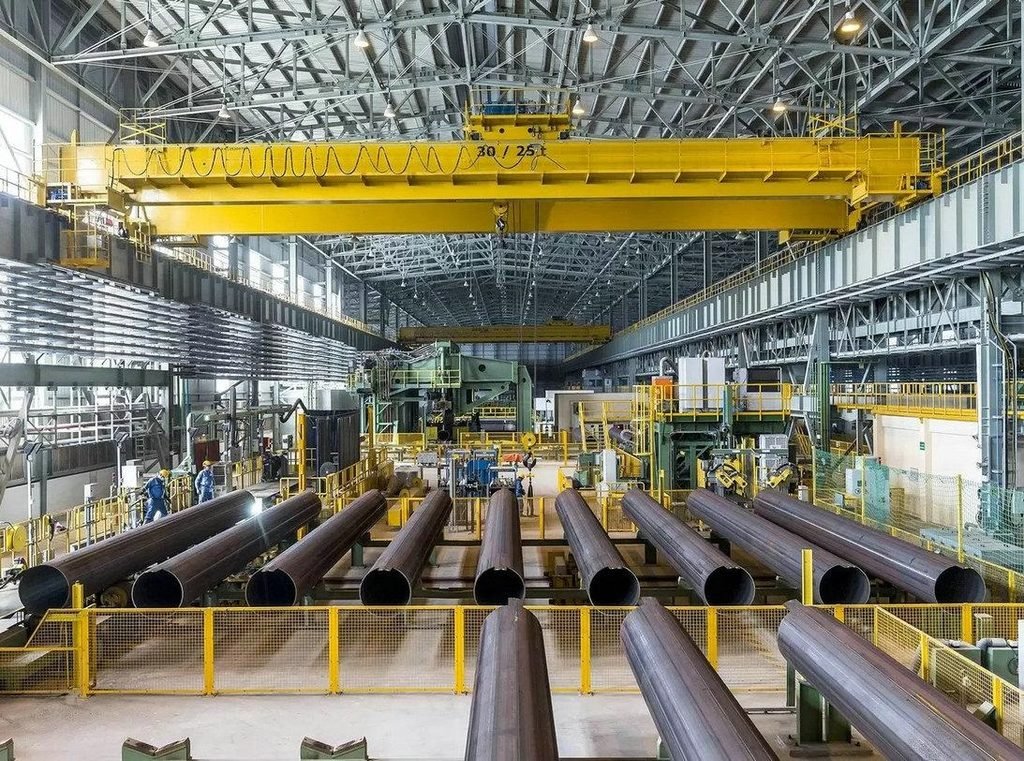
1. What Are LSAW and SSAW Steel Pipes?
Before comparing the two, it helps to understand how each type of steel pipe is manufactured.
What Is LSAW Steel Pipe?
LSAW stands for Longitudinal Submerged Arc Welded steel pipe. It is manufactured from individual steel plates that are formed into a cylindrical shape and welded along a straight seam running parallel to the pipe axis.
Common forming methods include JCOE and UOE. Depending on the manufacturing process and product specification, the longitudinal seam is welded using submerged arc welding, often from both the inside and outside of the pipe.
Because LSAW production uses steel plates, manufacturers can select plate thicknesses and grades suited to demanding engineering requirements. LSAW pipes are commonly considered for large-diameter pipelines, thick-wall applications, and projects requiring precise dimensional control.
Typical applications include:
- Oil and natural gas transmission pipelines
- High-pressure pipeline systems where the specification permits LSAW
- Offshore and other demanding pipeline projects
- Industrial fluid transportation
- Large structural components and foundation applications
What Is SSAW Steel Pipe?
SSAW stands for Spiral Submerged Arc Welded steel pipe. It is manufactured from hot-rolled steel coil that is continuously formed into a cylindrical shape at an angle. The resulting weld seam follows a spiral path around the pipe.
Unlike LSAW production, which uses individual steel plates, SSAW production uses a continuous steel strip. By adjusting the forming angle and other production parameters, manufacturers can produce different pipe diameters from a given range of coil widths.
This flexibility makes SSAW an attractive option for projects that require large-diameter pipes and competitive production costs.
Typical applications include:
- Municipal water supply and water transmission
- Drainage and wastewater systems
- Foundation piles and structural engineering
- Irrigation and infrastructure projects
- Industrial pipelines that permit spiral-welded construction
The key difference is straightforward: LSAW uses steel plates and a straight longitudinal weld, while SSAW uses steel coils and a spiral weld. This difference influences manufacturing flexibility, dimensional requirements, and suitability for particular service conditions.
[Image placement: Side-by-side comparison of LSAW and SSAW steel pipes, clearly showing the straight longitudinal seam and spiral seam.]
Suggested image ALT text: LSAW vs SSAW steel pipe with longitudinal and spiral weld seams.
2. LSAW vs SSAW Steel Pipe: Key Differences at a Glance
If you are comparing quotations from multiple steel pipe suppliers, the following table provides a useful starting point.
| Comparison factor | LSAW steel pipe | SSAW steel pipe |
|---|---|---|
| Full name | Longitudinal Submerged Arc Welded | Spiral Submerged Arc Welded |
| Raw material | Individual steel plates | Hot-rolled steel coils |
| Weld seam | Straight longitudinal seam | Spiral or helical seam |
| Forming process | Plate forming, welding, and subsequent processing | Continuous coil forming and spiral welding |
| Diameter flexibility | Depends on plate dimensions and production equipment | Flexible through adjustments to coil width and forming angle |
| Wall thickness | Well suited to many heavy-wall requirements | Depends on coil availability, equipment, and product specification |
| Production approach | Typically plate-by-plate | Typically continuous forming |
| Typical cost considerations | Plate cost, forming, welding, and processing | Coil utilization, continuous production, and forming efficiency |
| Common applications | Demanding pipeline specifications and heavy structural applications | Water transmission, piling, drainage, and infrastructure |
| Main selection factor | Pressure, wall thickness, and project requirements | Diameter flexibility, cost, and specification compatibility |
Important: Neither manufacturing method guarantees quality by itself. Steel grade, welding procedures, dimensional tolerances, inspection coverage, and compliance with the specified standard must all be evaluated.
3. Manufacturing Process: How Are LSAW and SSAW Pipes Made?
Understanding the manufacturing process can help buyers assess what they are paying for and what quality controls to expect.
LSAW Steel Pipe Manufacturing Process
LSAW pipe production generally involves the following stages:
- Steel plate inspection: The incoming plate is checked against the required material grade, dimensions, and quality documentation.
- Plate preparation: Plate edges are prepared for forming and welding.
- Pipe forming: The plate is progressively shaped into a cylindrical form using a process such as JCOE or UOE.
- Longitudinal welding: The seam is welded using submerged arc welding according to the qualified welding procedure.
- Dimensional correction: Mechanical expansion or other specified processing may be used to improve dimensional accuracy.
- Inspection and testing: Depending on the order requirements, this may include ultrasonic testing, radiographic testing, dimensional inspection, and hydrostatic testing.
- Finishing and delivery: Pipes are cut to length, bevelled, marked, and coated when required.
The plate-based process provides flexibility in selecting wall thickness and material properties. However, production involves multiple forming and processing stages, so the final cost depends on more than the raw material price.
SSAW Steel Pipe Manufacturing Process
SSAW pipe production follows a different route:
- Steel coil inspection: The coil is checked for grade, thickness, width, and surface condition.
- Uncoiling and edge preparation: The strip is unwound, levelled as required, and prepared for forming.
- Spiral forming: The strip is shaped into a pipe through continuous forming equipment.
- Spiral welding: The helical seam is welded using submerged arc welding.
- Cutting to length: The continuously formed pipe is cut to the required dimensions.
- Inspection and testing: Weld inspection, dimensional checks, and other tests are performed according to the applicable specification.
- Finishing and delivery: End preparation, coating, marking, and packaging are completed as required.
The continuous forming process makes SSAW production particularly useful when diameter flexibility and manufacturing efficiency are important.
[Image placement: LSAW pipe manufacturing line and SSAW spiral forming and welding line.]
Suggested image ALT text: LSAW and SSAW steel pipe manufacturing processes and welding equipment.
4. LSAW vs SSAW: Which Offers Better Strength and Pressure Performance?
For many pipeline buyers, this is the most important question.
The answer depends on the operating conditions and the requirements specified for the finished pipe. Weld orientation, wall thickness, material grade, manufacturing quality, and inspection all influence whether a pipe is suitable for a particular service.
Weld Seam Orientation
LSAW pipes have a straight weld seam running parallel to the pipe axis. SSAW pipes have a helical weld seam running at an angle to the axis.
Under internal pressure, a pipe experiences both circumferential (hoop) stress and longitudinal stress. These stresses interact differently with the two weld orientations.
For this reason, weld geometry should be considered when evaluating pipe suitability, particularly for pressure-critical pipeline systems.
However, it would be misleading to conclude that every LSAW pipe is stronger than every SSAW pipe simply because of the seam direction. Actual performance must be assessed against the pipe dimensions, material properties, weld qualification, testing requirements, and applicable design code.
Wall Thickness and Operating Pressure
LSAW manufacturing is well suited to many heavy-wall pipe requirements because the producer can select individual steel plates with the required thickness.
SSAW can also be manufactured in different wall thicknesses, but its practical range depends on available coil dimensions, production equipment, material availability, and the governing specification.
For high-pressure oil and gas transmission, sour service, or other demanding applications, confirm that the proposed pipe manufacturing method is permitted by the project specification. Do not assume that an alternative process is acceptable simply because the diameter and wall thickness match.
Weld Quality and Inspection
Both LSAW and SSAW pipes can achieve the required quality when manufactured under appropriate controls and inspected in accordance with the relevant standard.
When comparing suppliers, ask about:
- Welding procedure qualification and process control
- Weld inspection methods and required coverage
- Ultrasonic testing (UT) and radiographic testing (RT), where specified
- Hydrostatic testing requirements
- Material traceability and inspection records
- Acceptance criteria and repair procedures
Buyer takeaway: For pressure-critical service, choose the pipe that meets the engineering specification and can be supported by complete, traceable quality documentation. Manufacturing method alone is not enough to establish suitability.
5. LSAW vs SSAW: Which Is More Cost-Effective?
Price is often the deciding factor when purchasing large quantities of steel pipes. However, the lowest unit price does not always translate into the lowest overall project cost.
Why LSAW Pipes May Cost More
LSAW production uses individual steel plates and typically involves plate forming, longitudinal welding, dimensional correction, and other processing steps.
The final price may be influenced by:
- Steel plate grade and thickness
- Pipe diameter and length
- Forming and welding requirements
- Dimensional tolerances
- Non-destructive testing and other inspection requirements
- End preparation, coatings, and packaging
- Production capacity and delivery schedule
For demanding applications, the additional cost may be justified by the project’s required dimensions, material properties, and compliance requirements.
Why SSAW Pipes Can Be More Economical
SSAW production uses continuous steel coil and allows manufacturers to adjust the forming angle to produce different diameters within the equipment’s operating range.
Potential cost advantages include:
- Efficient use of coil-based production
- Flexible diameter manufacturing
- Competitive production costs for suitable large-diameter applications
- Efficient supply for infrastructure projects with substantial pipe quantities
Actual savings depend on the required steel grade, wall thickness, coil availability, inspection scope, and production schedule.
Compare Total Procurement Cost, Not Just Price per Ton
Before selecting a supplier, compare quotations on the same technical basis.
For example, two quotations may appear similar but differ in wall thickness, steel grade, coating system, weld inspection coverage, or delivery terms. Those differences can make the comparison misleading.
A meaningful comparison should include:
- The same outside diameter and wall thickness
- The same steel grade and applicable standard
- Equivalent inspection and testing requirements
- The same coating and end-preparation requirements
- Comparable delivery terms and lead times
- Any additional costs for transport, inspection, or project-specific documentation
If your project requires large-diameter water pipes and the specification permits SSAW, it is worth requesting an SSAW quotation alongside other compliant options. If the project mandates LSAW, the comparison should focus on qualified LSAW suppliers rather than substituting a different process solely to reduce the price.
6. Typical Applications: When Should You Choose LSAW or SSAW?
The best starting point is the actual service condition, not a general claim that one pipe type is always superior.
When to Consider LSAW Steel Pipe
LSAW may be a suitable choice when:
- The project specification explicitly requires longitudinal submerged arc welded pipe.
- The pipeline requires a particular combination of large diameter and heavy wall thickness.
- The application involves demanding pressure, temperature, or environmental conditions and the specified design permits LSAW.
- The project requires particular material grades, dimensional tolerances, or inspection documentation.
- The pipe forms part of a critical pipeline system with strict qualification and traceability requirements.
Typical projects may include oil and gas transmission, selected offshore applications, industrial pipelines, and heavy structural engineering.
When to Consider SSAW Steel Pipe
SSAW may be a suitable choice when:
- The project involves municipal water transmission or other permitted fluid transportation.
- Large pipe diameters and competitive procurement costs are important.
- The required dimensions fall within the manufacturer’s qualified production range.
- Continuous coil-based production offers practical manufacturing advantages.
- The applicable design code and project specification permit spiral-welded pipe.
Typical projects may include water supply networks, drainage systems, irrigation infrastructure, foundation piles, and structural applications.
A Practical Selection Guide
| Your project requirement | What to evaluate first |
|---|---|
| High-pressure oil or gas pipeline | Design code, permitted manufacturing process, grade, wall thickness, and inspection requirements |
| Large-diameter water transmission | Hydraulic design, pressure rating, corrosion protection, installation conditions, and total cost |
| Foundation piles | Structural loads, soil conditions, required dimensions, and connection details |
| Heavy-wall pipe | Available plate or coil thickness, manufacturing capability, tolerances, and testing |
| Cost-sensitive infrastructure | Compare compliant quotations, delivery schedules, coating systems, and lifecycle costs |
| Offshore or demanding environments | Project-specific qualification, material toughness, corrosion requirements, and full quality documentation |
The key is to select the pipe that satisfies the engineering requirements without paying for specifications your project does not need.
7. What Should You Check Before Buying LSAW or SSAW Steel Pipes?
Even when you have selected the correct manufacturing method, supplier evaluation remains essential. A competitive quotation is useful only if the proposed product matches your project requirements.
1. Confirm the Applicable Standard
Commonly referenced standards include API 5L for line pipe, ISO 3183 for petroleum and natural gas industries, and AWWA C200 for steel water pipe.
These standards are not interchangeable in every application. Confirm the exact standard, edition, product requirements, and any additional project specifications before placing an order.
2. Confirm the Steel Grade
The required grade should match the design conditions and applicable standard. For pipeline applications, confirm the specified grade and any additional requirements relating to toughness, chemical composition, or service environment.
Do not compare quotations solely on nominal grade labels without checking the complete specification.
3. Check Diameter and Wall Thickness
Verify the outside diameter, nominal wall thickness, length, dimensional tolerances, and end preparation.
Also confirm whether the manufacturer can produce the requested combination of dimensions within its qualified manufacturing range.
4. Review Inspection and Testing Requirements
Ask the supplier to identify the inspections and tests included in the quotation.
Depending on the order, these may include:
- Chemical composition and mechanical testing
- Non-destructive examination of welds
- Hydrostatic testing
- Dimensional inspection
- Visual inspection and surface examination
- Third-party inspection, if required by the contract
Clarify the required test coverage and acceptance criteria instead of relying on vague statements such as “100% quality inspection.”
5. Request Material and Quality Documentation
Depending on the project, documentation may include:
- Mill Test Certificates (MTCs)
- Material heat numbers and traceability records
- Inspection and test reports
- Non-destructive testing records
- Hydrostatic test records
- Coating inspection reports
- Third-party inspection documentation
Confirm which documents will be supplied with the shipment and whether the contract requires independent inspection or specific certification.
6. Evaluate Delivery and Corrosion Protection
Lead time, production capacity, packaging, transportation, and coating requirements can significantly affect the final project cost.
For buried, submerged, or otherwise corrosive service, specify the required external and internal protection systems, surface preparation, coating thickness, and inspection criteria.
A reliable supplier should be able to explain how its proposed manufacturing route, inspection plan, and delivery schedule align with your order.
8. Frequently Asked Questions About LSAW and SSAW Steel Pipes
Is LSAW better than SSAW?
Not in every situation. LSAW may be more appropriate for certain demanding pipeline specifications and heavy-wall requirements, while SSAW can be an economical and technically suitable choice for permitted water transmission, infrastructure, and structural applications. The project specification determines which options are acceptable.
Which is cheaper, LSAW or SSAW?
SSAW can offer cost advantages in suitable large-diameter applications because of its coil-based, continuous production process. However, actual prices depend on material grade, wall thickness, dimensions, testing, coating, order quantity, and delivery requirements. Compare quotations with equivalent technical specifications.
Can SSAW steel pipe be used for oil and gas pipelines?
Potentially, yes, if the applicable standard, design code, project specification, and service conditions permit it. Acceptance should be confirmed for the specific pipeline rather than assumed from the product type alone.
Which pipe has a longer service life?
Neither manufacturing method automatically guarantees a longer service life. Longevity depends on design, steel quality, weld integrity, corrosion protection, operating conditions, installation, and maintenance.
What is the main difference between LSAW and SSAW?
The primary difference is the manufacturing process and weld orientation. LSAW is formed from steel plate with a straight longitudinal seam, while SSAW is formed from steel coil with a spiral seam. This affects production flexibility and the range of applications for which each pipe may be suitable.
What information should I provide when requesting a quotation?
To receive an accurate quotation, provide:
- Pipe type: LSAW or SSAW, if already specified
- Outside diameter and wall thickness
- Steel grade and applicable standard
- Required pipe length and quantity
- Operating pressure and service conditions, where relevant
- Coating and end-preparation requirements
- Inspection, testing, and documentation requirements
- Delivery destination and requested delivery schedule
The more complete the inquiry, the easier it is for a manufacturer to evaluate technical feasibility and prepare a comparable quotation.
9. Final Verdict: Which Steel Pipe Should You Choose?
The decision between LSAW and SSAW steel pipes should begin with your project specification and then move to cost, manufacturing capability, quality assurance, and delivery.
Consider LSAW when your project requires a qualified longitudinal-welded pipe solution for demanding service conditions, specific heavy-wall dimensions, or other requirements defined by the engineering specification.
Consider SSAW when your project requires large-diameter pipe, manufacturing flexibility, and competitive cost, provided that spiral-welded pipe meets the relevant technical and contractual requirements.
Before making a final decision, compare the complete specifications rather than focusing on price alone. A pipe that meets the design requirements, arrives on schedule, and includes the necessary quality documentation can help reduce procurement risks and avoid costly changes during construction.
Looking for the Right LSAW or SSAW Steel Pipe for Your Project?
Whether you are sourcing steel pipes for water transmission, oil and gas transportation, infrastructure, or structural applications, the right solution starts with understanding your technical requirements.
Share your required diameter, wall thickness, steel grade, applicable standard, quantity, and intended application with your supplier. This information will help determine which manufacturing method is suitable and whether the proposed product meets your project requirements.
Contact our team to discuss your steel pipe requirements and request a quotation tailored to your project.