
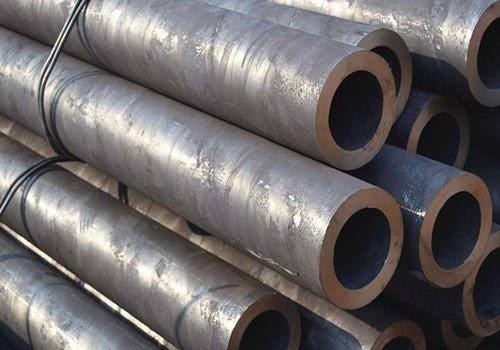
Low-temperature pipe selection starts with a question that a tensile test alone cannot answer: will the steel retain adequate toughness when the system gets cold?
A pipe may have sufficient strength to contain pressure yet remain vulnerable to brittle fracture under particular temperature, stress, and flaw conditions. ASTM A333 addresses this concern through grade-specific material requirements for low-temperature service and other applications requiring notch toughness.
For buyers, the grade designation is only the beginning. Impact test results, delivery condition, dimensions, and traceability determine whether the supplied pipe matches the job.
What Is ASTM A333 Steel Pipe?
ASTM A333/A333M covers seamless and welded carbon and alloy steel pipe for low-temperature service and applications requiring notch toughness. It includes several grades with different compositions and mechanical requirements.
The specification is often associated with low-temperature carbon steel pipe, or LTCS pipe. However, not every A333 grade is ordinary carbon steel. Some contain substantial nickel.
“A333 pipe” is therefore an incomplete purchasing description. The order must identify the grade.
ASTM A333 Grades and Mechanical Properties
The following comparison covers four grades buyers are likely to encounter.
| Grade | Material description | Minimum yield strength | Minimum tensile strength | Tabulated impact test temperature |
|---|---|---|---|---|
| Grade 1 | Carbon steel | 205 MPa | 380 MPa | −45°C |
| Grade 3 | Approximately 3.5% nickel steel | 240 MPa | 450 MPa | −100°C |
| Grade 6 | Carbon-manganese steel | 240 MPa | 415 MPa | −45°C |
| Grade 8 | Approximately 9% nickel steel | 515 MPa | 690 MPa | −195°C |
Values reflect the SI requirements in ASTM A333/A333M-24. Impact specimen provisions and any required temperature adjustments must also be considered.
These impact test temperatures are not automatic minimum operating temperatures. The permitted service conditions depend on the governing design code, material thickness, stresses, fabrication, and project requirements.
Grade numbers also do not form a simple quality ranking. A higher number does not mean a pipe is universally better.
ASTM A333 Grade 6: What Buyers Should Know
Grade 6 is a carbon-manganese option with specified low-temperature impact performance. It differs substantially from the nickel-alloyed Grades 3 and 8.
Its minimum tensile strength is 415 MPa, not a maximum or guaranteed actual test result. The supplied material’s measured properties should appear on the material test certificate.
When reviewing a Grade 6 offer, focus on three questions:
- Does the material satisfy the specified delivery condition?
- Do the impact results meet the required temperature and acceptance criteria?
- Do the certificate and pipe markings identify the same material?
A stock description such as “A333 Grade 6, suitable for cold service” does not answer all three.
Why Impact Toughness Matters
Strength measures resistance to deformation or failure under load. Toughness concerns the material’s ability to absorb energy and resist fracture.
Ferritic steels can show a transition from more ductile behavior to more brittle behavior as temperature falls. The transition is influenced by composition, microstructure, and other factors. A room-temperature tensile result cannot establish low-temperature notch toughness.
The Charpy V-notch impact test uses a pendulum to break a notched specimen and measure absorbed energy. Results must be read together with the test temperature and specimen dimensions.
For procurement, a statement saying “impact tested” is insufficient. The report should identify:
- Test temperature.
- Specimen size and orientation.
- Individual results and the reported average, where applicable.
- Applicable acceptance criteria.
- Heat or test-lot identification.
Thin-Wall Pipe Needs Particular Attention
Small pipe or thin walls may not accommodate full-size impact specimens.
Sub-size specimens require the applicable evaluation rules. Their results cannot be compared directly with full-size results by assuming a simple proportional relationship. Temperature adjustments may also apply under the relevant requirements.
Check this before placing the order, especially where a project specification gives a fixed impact-energy requirement without identifying specimen size.
Seamless vs. Welded ASTM A333 Pipe
A333 permits seamless and specified welded products. For the common grades discussed here, the manufacturing weld is made without added filler metal; Grade 11 has separate provisions.
This distinction matters when comparing offers. Large-diameter plate-fabricated submerged arc welded pipe should not be accepted as A333 Grade 6 merely because its plate chemistry or strength appears similar.
For any welded alternative, establish the exact product specification, manufacturing route, and required weld examination.
Seamless pipe also needs proper verification. The absence of a longitudinal seam does not establish its grade, heat-treatment history, or impact performance.
Where Is ASTM A333 Pipe Used?
A333 pipe is considered for systems where low metal temperatures and toughness requirements influence material selection.
Oil and Gas Processing
Potential applications include process lines exposed to cold fluids, refrigeration, or temperature reduction during depressurization.
The lowest metal temperature may occur during startup, shutdown, or an upset rather than normal operation. Material selection should account for the relevant design cases.
Refrigeration and Petrochemical Systems
Selected grades may be used in low-temperature process piping, subject to compatibility with the fluid, pressure, temperature, and governing code.
“Low-temperature steel” describes one aspect of performance. It does not establish resistance to every chemical or corrosion mechanism.
Cold-Climate Installations
Outdoor piping can face low ambient temperatures, particularly when equipment is idle or drained.
Insulation alone should not be treated as proof that the steel will remain above its design temperature limit. Evaluate the actual operating and shutdown conditions.
Cryogenic Facilities
An LNG facility contains many piping services at different temperatures. Saying that a pipe is “for an LNG project” does not identify the required material.
Grade 6 should not be selected for direct LNG-temperature service simply because it belongs to A333. Each line requires its own material assessment.
ASTM A333 Grade 6 vs. ASTM A106 Grade B
These grades are frequently compared because their commonly specified minimum room-temperature yield and tensile strengths are similar.
That similarity does not make them interchangeable.
A106 is a seamless carbon steel pipe specification associated with high-temperature service. A333 selection focuses on applications requiring low-temperature notch toughness.
For a proposed substitution, review the complete requirements rather than matching two strength figures. Manufacturing condition, chemistry, testing, certification, and code acceptance all need consideration.
Likewise, an extra impact test on an A106 pipe does not by itself establish complete A333 compliance.
Wall Thickness, Schedule, and Pressure Rating
ASTM A333 is a material specification, not a pressure rating.
Pressure capability depends on diameter, wall thickness, allowable stress at temperature, manufacturing allowances, corrosion allowance, and the applicable design rules.
A schedule designation identifies a dimensional series. It does not mean that every pipe of that schedule has the same pressure capacity.
Before ordering, confirm:
- Nominal pipe size and actual outside diameter.
- Schedule or specified wall thickness.
- Applicable dimensional tolerances.
- Required minimum thickness after allowances.
- Length and end preparation.
Heavy-wall requirements also deserve an early mill review. Do not assume that every advertised diameter, thickness, and grade combination is readily available with the required toughness.
Welding and Fabrication Considerations
The finished piping system must retain suitable properties after fabrication.
Welding procedures need to address the base material, consumables, heat input, preheat where applicable, and any required post-weld heat treatment. Where specified, procedure qualification must demonstrate the necessary impact performance.
A compliant pipe certificate covers the supplied pipe. It does not qualify the field weld.
Tell the supplier about planned bending, forming, or additional heat treatment before ordering. These operations may affect the material condition or require further verification.
What to Check on the Material Test Certificate
A useful certificate review connects the paperwork to the physical pipe.
| Check | What to confirm |
|---|---|
| Specification | ASTM designation, edition, and ordered grade |
| Identification | Heat number, dimensions, and traceability |
| Chemistry | Compliance with the specified grade |
| Delivery condition | Agreement with the order and manufacturing requirements |
| Mechanical results | Required tensile, yield, and elongation results |
| Impact results | Temperature, specimen details, results, and acceptance |
| Examination and testing | Required methods, results, and any purchaser additions |
Where both ASTM and ASME certification are required, state that requirement before purchase. Do not assume an ASTM-only certificate automatically satisfies an order for ASME SA-333.
How to Order ASTM A333 Steel Pipe
Specify the grade, manufacturing route, size, wall thickness, quantity, length, end finish, required material condition, and certification.
Include the project’s impact requirements and any additional inspection provisions. Identify coating separately: temporary mill varnish is not a complete corrosion-protection system.
For stocked material, review the available certificate before accepting the offer. For mill production, resolve technical deviations before manufacturing starts.
The right A333 pipe is the grade and delivery condition that meet the line’s actual design requirements, supported by test results that can be traced to the supplied material. A clear order and a careful certificate review are more useful than a general promise of “low-temperature quality.”