
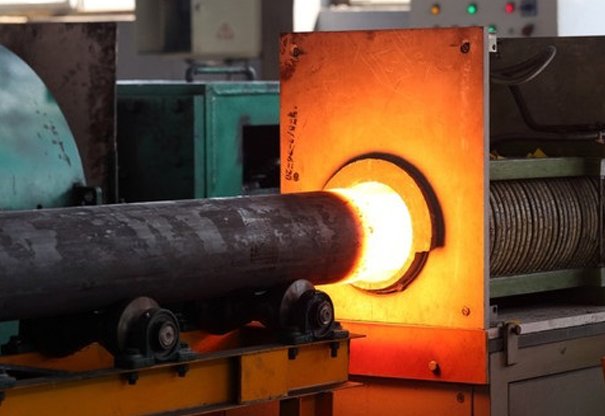
A steel pipe can meet the required diameter and wall thickness yet still be unsuitable for the job. Its strength, hardness, toughness, and response to bending or welding also matter—and heat treatment helps determine those properties.
Steel pipe heat treatment is the controlled heating, holding, and cooling of pipe to obtain a specified material condition. Depending on the steel grade and process, it can soften cold-worked material, refine the microstructure, increase strength, or reduce residual stress.
For buyers, the important question is not simply whether the pipe has been heat-treated. It is whether the treatment matches the material standard, fabrication requirements, and intended service.
Why Do Steel Pipes Need Heat Treatment?
Pipe manufacturing changes the steel. Hot forming, cold drawing, welding, and straightening can affect its microstructure and introduce residual stresses.
Heat treatment helps establish the properties required in the finished product. Its purpose may include:
- Restoring ductility after cold working.
- Achieving specified strength and hardness.
- Improving toughness through an appropriate microstructure.
- Reducing residual stresses from manufacturing or welding.
- Restoring the required metallurgical condition in stainless steel.
These objectives are different. A treatment intended to soften a tube for further forming is not the same as one used to produce high-strength pipe.
Heat treatment does not always make steel harder or stronger. Some processes deliberately reduce hardness to improve fabrication.
Main Types of Steel Pipe Heat Treatment
| Process | Main purpose | Typical purchasing relevance |
|---|---|---|
| Annealing | Soften material and restore ductility | Tubes requiring further forming or machining |
| Normalizing | Establish a more uniform, suitable microstructure | Specified carbon and low-alloy steel products |
| Quenching and tempering | Develop a controlled combination of strength and toughness | Selected high-strength and alloy steel pipes |
| Stress relieving | Reduce residual stresses | Certain fabricated, welded, or cold-worked products |
| Solution annealing | Restore the required condition in applicable stainless steels | Stainless steel pipe and tubing |
The applicable product standard determines which treatments are permitted or required. These processes are not interchangeable.
Annealing: Softening Steel for Further Processing
Annealing involves a controlled thermal cycle intended to produce the required softer or more workable condition.
For carbon steel, full annealing generally involves heating into the appropriate transformation range, holding, and cooling slowly. Other annealing treatments use different temperatures and cooling practices.
Cold drawing increases strength and hardness through work hardening but reduces available ductility. An appropriate annealing treatment can restore the tube’s ability to undergo further deformation.
This matters when tubing will be bent, expanded, flared, or otherwise formed. However, the word “annealed” alone does not guarantee that a tube can withstand a particular operation. Grade, dimensions, tooling, and specified fabrication tests still matter.
Normalizing: Controlling the Microstructure
Normalizing typically heats suitable carbon or low-alloy steel above its transformation range, followed by cooling in air.
It can refine an unsuitable coarse structure and produce more consistent properties. For the same steel, normalizing often produces higher strength and hardness than full annealing.
The result depends on composition, wall thickness, and cooling conditions. Normalizing is therefore a defined manufacturing treatment, not a general upgrade that can be added to any pipe order.
Quenching and Tempering: Strength with Controlled Toughness
Quenching and tempering, commonly abbreviated Q&T, is a two-stage treatment.
First, the steel is heated to an appropriate austenitizing temperature and cooled rapidly. It is then reheated to a controlled tempering temperature to adjust hardness, strength, and toughness.
Quenching alone can leave suitable hardenable steels excessively hard and brittle. Tempering develops a more useful final condition.
Q&T is used for selected demanding pipe applications. Tenaris identifies it as a common treatment for medium- to high-strength grades in demanding seamless line-pipe service.
For buyers, the final test results matter more than the abbreviation. Confirm that yield strength, tensile strength, hardness, and any required impact properties meet the order.
Stress Relieving and Post-Weld Heat Treatment
Stress relieving reduces residual stresses through controlled heating, holding, and cooling. It is generally performed below the transformation range for the steel concerned.
Post-weld heat treatment, or PWHT, may reduce welding residual stresses and alter hardness or microstructure where required. Its suitability depends on the material, weld procedure, thickness, and governing fabrication code.
Mill heat treatment and fabrication PWHT serve different stages of production. A normalized pipe may still need PWHT after installation welding. Equally, PWHT cannot automatically replace the pipe’s specified delivery treatment.
Additional heating can also affect previously established properties. For Q&T steels, PWHT temperature must be carefully controlled relative to the original tempering treatment.
Solution Annealing for Stainless Steel Pipe
Stainless steel requires a different approach from carbon steel.
For common austenitic grades such as 304L and 316L, solution annealing heats the material sufficiently to dissolve relevant precipitates, followed by suitable rapid cooling. It can restore ductility after cold working and help recover the required metallurgical condition.
Duplex stainless steel also needs grade-specific control. Heat treatment must preserve the appropriate phase balance and avoid harmful phases that can reduce toughness and corrosion resistance. Carbon steel stress-relief practices should not be transferred directly to duplex pipe.
A bright finish is not proof of correct heat treatment. Bright annealing describes processing under a controlled atmosphere that limits surface oxidation; the required material properties still need verification.
How the Heat Treatment Cycle Is Controlled
A suitable cycle involves more than reaching a furnace setpoint.
Heating: The pipe must reach the required temperature without unacceptable temperature differences.
Holding: Sufficient time is needed for the relevant section to reach the specified condition. Furnace air temperature and actual pipe temperature are not necessarily identical.
Cooling: Cooling rate influences the resulting microstructure. Furnace cooling, air cooling, and quenching produce different results.
Wall thickness, furnace loading, equipment capability, and cooling arrangements all affect the outcome. A procedure suitable for thin-wall tubing cannot simply be copied for heavy-wall pipe.
This is why a single “steel pipe heat treatment temperature” is rarely useful. The correct cycle depends on the grade, dimensions, required condition, and applicable specification.
Do All Steel Pipes Require Separate Heat Treatment?
No. Requirements vary by product standard, grade, and manufacturing route.
Some products may be supplied in an acceptable hot-finished condition. Others require treatment after cold working, treatment of a weld zone, or heat treatment of the entire pipe.
The distinction is particularly important for welded pipe: weld-seam heat treatment is not necessarily full-body heat treatment.
When an offer states only “heat-treated,” ask the supplier to identify the process, treated area, and final delivery condition.
How Heat Treatment Affects Pipe Price
Heat treatment adds furnace time, energy use, handling, and production scheduling. It may also require additional straightening, surface cleaning, inspection, or testing.
However, a higher price does not automatically mean a better pipe. Unnecessary treatment can add cost or change properties that were already suitable.
Compare quotations against the same requirements:
- Material standard and grade.
- Manufacturing route.
- Final delivery condition.
- Required mechanical properties.
- Impact and hardness testing, where applicable.
- Heat-treatment documentation.
Two pipes with identical dimensions may be different products if their delivery conditions differ.
What Buyers Should Check Before Accepting Delivery
Review the material test certificate against the purchase order. Confirm the grade, dimensions, heat number, delivery condition, and required test results.
Where the specification requires detailed heat-treatment records, obtain traceable information covering the relevant batch or furnace charge, treatment cycle, and cooling method.
Check that test results represent the condition in which the pipe is supplied. Any subsequent treatment that could change properties needs to be addressed under the applicable requirements.
Surface appearance cannot establish whether pipe was annealed, normalized, or quenched and tempered. Acceptance should rest on traceable manufacturing records and the specified verification tests.
What to Specify When Ordering Heat-Treated Steel Pipe
A useful inquiry identifies the service conditions and required product standard before requesting a treatment.
Include the grade, size, wall thickness, delivery condition, and applicable testing requirements. State any planned bending, welding, machining, or additional heating that could affect material selection.
Avoid instructions such as “heat-treated for better quality.” Specify the required condition and measurable properties. That gives the mill a clear production target—and gives the buyer a sound basis for inspection and acceptance.