
In oil and gas production, petrochemical processing and chemical transportation systems, pipelines are often exposed to highly corrosive environments, high pressure, high temperature and complex operating conditions.
Traditional carbon steel pipes provide excellent mechanical strength and cost advantages, but they may suffer from corrosion when transporting fluids containing CO₂, H₂S, chlorides or other corrosive components.
Bimetallic composite pipes provide a solution by combining two different metals into one pipe structure: a strong carbon steel or low-alloy steel base pipe for mechanical strength and a corrosion-resistant alloy layer for protection against aggressive media.
By combining the advantages of different materials, bimetallic composite pipes achieve a balance between corrosion resistance, mechanical performance and overall project cost. They are increasingly used in oil and gas gathering systems, chemical plants, offshore pipelines and other demanding industrial applications.
What Is Bimetallic Composite Pipe?
A bimetallic composite pipe is a pipe made by combining two different metallic materials through a bonding process.
The typical structure consists of:
| Layer | Material | Main Function |
|---|---|---|
| Outer Base Pipe | Carbon steel or low alloy steel | Provides strength, pressure resistance and structural support |
| Inner Cladding Layer | Stainless steel, nickel alloy or other corrosion-resistant alloy | Provides corrosion and erosion resistance |
The design principle is simple:
The outer layer provides strength, while the inner layer protects against corrosion.
This allows engineers to avoid using expensive corrosion-resistant alloys for the entire pipe wall while still achieving the required corrosion performance.
Common inner materials include:
- Stainless steel 304/304L
- Stainless steel 316/316L
- Duplex stainless steel
- Nickel-based alloys such as Inconel
The base pipe is usually manufactured from:
- Carbon steel
- Low alloy steel
Depending on the bonding method, bimetallic composite pipes can generally be divided into:
- Metallurgically bonded clad pipes
- Mechanically lined pipes
Metallurgical bonding creates a strong interface between the two metals, while mechanically lined pipes use physical expansion or fitting methods to combine the layers.
Why Are Bimetallic Composite Pipes Used in Oil & Gas Industry?
Oil and gas pipelines often face severe corrosion challenges.
Typical corrosive factors include:
- Hydrogen sulfide (H₂S)
- Carbon dioxide (CO₂)
- Chloride-containing water
- High temperature fluids
- High-pressure environments
Carbon steel pipes are widely used because of their strength and affordability, but corrosion protection becomes essential in harsh environments.
Bimetallic composite pipes solve this problem by adding a corrosion-resistant internal layer while maintaining a strong carbon steel structure.
Key Advantages of Bimetallic Composite Pipes
1. Excellent Corrosion Resistance
The biggest advantage of bimetallic composite pipe is its corrosion resistance.
The inner alloy layer directly contacts the transported medium and protects the carbon steel base pipe from corrosion.
It provides improved resistance against:
- Acid gas corrosion
- CO₂ corrosion
- Hydrogen sulfide corrosion
- Chloride corrosion
- Chemical attack
This makes bimetallic composite pipes suitable for:
- Sour gas fields
- Offshore oil fields
- Chemical processing systems
- High-corrosion gathering pipelines
Research on high-corrosion oil and gas fields has identified corrosion resistance as one of the main technical advantages of bimetallic composite pipes.
2. High Mechanical Strength
Although corrosion-resistant alloys provide excellent chemical stability, many expensive alloys do not offer the same cost-effective structural performance as carbon steel.
In a bimetallic composite pipe:
- The outer carbon steel layer carries mechanical loads.
- The inner alloy layer provides corrosion protection.
This structure allows the pipe to maintain:
- High pressure resistance
- Good impact resistance
- Structural stability
The combination of different materials allows engineers to optimize both mechanical performance and corrosion protection.
3. Lower Material Cost Compared with Solid Alloy Pipes
A fully corrosion-resistant alloy pipe can be extremely expensive, especially when large diameters and long pipeline distances are involved.
Bimetallic composite pipes reduce cost by using corrosion-resistant material only where it is needed.
Comparison:
| Pipe Type | Corrosion Resistance | Material Cost |
|---|---|---|
| Carbon Steel Pipe | Low | Low |
| Stainless Steel / Nickel Alloy Pipe | Excellent | Very High |
| Bimetallic Composite Pipe | Excellent | Moderate |
For large oil and gas projects, this combination can significantly reduce material investment while maintaining required performance.
Studies comparing corrosion protection solutions have highlighted the economic advantage of composite pipes compared with using fully corrosion-resistant alloys.
4. Extended Service Life
Pipeline replacement and maintenance can create significant costs in oil and chemical industries.
Bimetallic composite pipes help extend service life by reducing:
- Internal corrosion
- Leakage risks
- Unexpected shutdowns
- Maintenance frequency
For long-distance pipelines and offshore systems, improving reliability is often more important than minimizing initial material cost.
5. Suitable for High Temperature and High Pressure Applications
Many oil and chemical processes involve:
- High operating temperatures
- High pressure
- Corrosive fluids
Bimetallic composite pipes can be designed for these demanding conditions by selecting suitable combinations of:
- Base pipe material
- Cladding alloy
- Wall thickness
- Manufacturing method
Typical applications include:
- Refinery pipelines
- Chemical processing units
- Offshore production systems
- High-pressure gathering pipelines
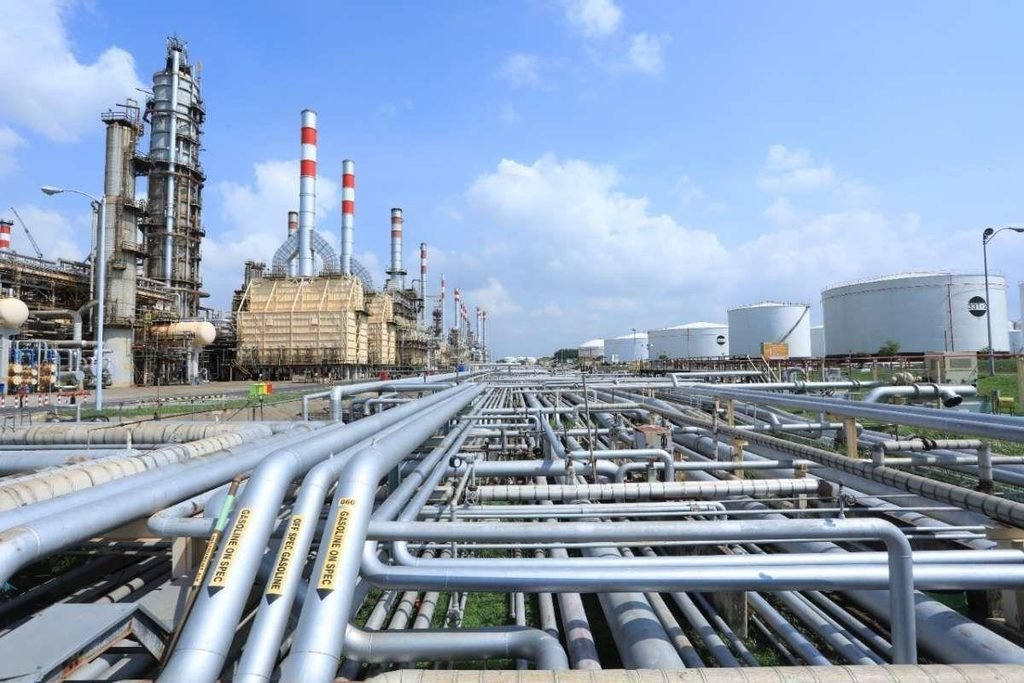
Common Manufacturing Processes of Bimetallic Composite Pipes
The production method depends on the pipe structure and required performance.
Metallurgical Cladding Process
In metallurgically bonded pipes, the inner corrosion-resistant layer is bonded to the base pipe through metallurgical methods.
Typical processes include:
- Hot rolling bonding
- Explosive bonding
- Welding overlay
- Co-extrusion
Advantages:
- Strong interface bonding
- Good long-term stability
- Suitable for demanding applications
Mechanical Lining Process
Mechanically lined pipes use a corrosion-resistant liner inserted into the base pipe.
The liner is expanded to achieve contact with the outer pipe.
Advantages:
- Flexible manufacturing
- Cost-effective for some applications
- Suitable for many gathering pipelines
Bimetallic Composite Pipe Applications
1. Oil and Gas Gathering Pipelines
Oil and gas fields often contain corrosive components such as:
- H₂S
- CO₂
- Formation water
Bimetallic composite pipes are widely used in:
- Well gathering systems
- Flow lines
- Gas transmission pipelines
2. Offshore Oil and Gas Pipelines
Offshore pipelines face additional challenges:
- Seawater corrosion
- High pressure
- Difficult maintenance conditions
The corrosion-resistant inner layer helps improve reliability in subsea environments.
Bimetallic composite pipes have been studied extensively for offshore oil and gas transportation because of their combination of strength and corrosion resistance.
3. Petrochemical Industry
Chemical plants often transport aggressive fluids that can attack ordinary carbon steel.
Applications include:
- Process pipelines
- Heat exchanger piping
- Chemical transportation systems
4. Refinery Systems
Refineries require materials capable of handling:
- High temperature
- Hydrogen-containing environments
- Corrosive process media
Bimetallic composite pipes provide a practical solution where both strength and corrosion resistance are required.
Bimetallic Composite Pipe vs Traditional Carbon Steel Pipe
| Feature | Carbon Steel Pipe | Bimetallic Composite Pipe |
|---|---|---|
| Mechanical Strength | Excellent | Excellent |
| Corrosion Resistance | Limited | Excellent |
| Material Cost | Lower | Moderate |
| Maintenance Requirement | Higher in corrosive environments | Lower |
| Sour Service Capability | Limited | Better |
| Long-Term Reliability | Depends on corrosion protection | Higher |
How to Select the Right Bimetallic Composite Pipe?
Selection should consider:
Operating Medium
Important factors include:
- Chemical composition
- H₂S content
- CO₂ content
- Chloride concentration
Operating Conditions
Including:
- Pressure
- Temperature
- Flow rate
- Service life requirement
Base Pipe Material
The outer pipe must provide sufficient:
- Strength
- Toughness
- Pressure resistance
Inner Alloy Selection
Common choices:
| Inner Layer Material | Typical Application |
|---|---|
| 316L Stainless Steel | General corrosion environments |
| Duplex Stainless Steel | Chloride environments |
| Nickel Alloy | Severe chemical and high-temperature conditions |
Quality Control of Bimetallic Composite Pipes
Because two materials are combined together, interface quality is critical.
Important inspections include:
- Chemical composition testing
- Mechanical testing
- Bond strength testing
- Ultrasonic testing
- Dimensional inspection
- Hydrostatic testing
The bonding interface must maintain sufficient strength during:
- Welding
- Installation
- Pressure operation
- Thermal cycling
Interface performance is considered one of the key factors affecting the reliability of bimetallic composite pipes.
Conclusion
Bimetallic composite pipes provide an effective solution for industries that require both high mechanical strength and excellent corrosion resistance.
By combining:
- Carbon steel strength
- Stainless steel or nickel alloy corrosion resistance
these pipes offer significant advantages in oil and gas, chemical processing and offshore engineering applications.
Compared with solid corrosion-resistant alloy pipes, bimetallic composite pipes provide a more balanced solution in terms of performance and cost.
For projects involving corrosive fluids, high pressure or long service life requirements, selecting the right composite structure and manufacturing process is essential for ensuring pipeline reliability.