
When choosing stainless steel pipe for an industrial project, the decision often comes down to two materials: Duplex 2205 and 316L stainless steel.
Both offer good corrosion resistance, but they are designed for different demands. 316L is a widely used austenitic stainless steel for general industrial service, food processing, and many chemical applications. Duplex 2205 combines austenitic and ferritic microstructures to deliver higher strength and improved resistance to several forms of corrosion, particularly in chloride-containing environments.
So, is 2205 worth the extra cost? Will 316L perform well enough for your application? And could choosing the wrong grade lead to premature pipe failure, unexpected maintenance, or unnecessary material expenses?
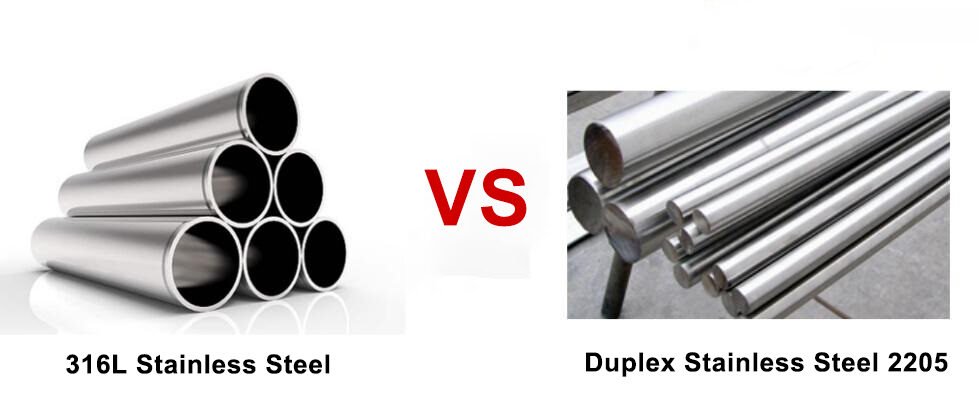
This guide compares 2205 and 316L stainless steel pipes in terms of corrosion resistance, mechanical strength, temperature limits, fabrication, cost, and common applications. By the end, you will have a clearer idea of which material deserves a place on your project specification.
1. What Is the Difference Between 2205 and 316L Stainless Steel?
The most important difference lies in their metallurgical structure and alloy composition.
What Is 316L Stainless Steel Pipe?
316L is a low-carbon austenitic stainless steel containing chromium, nickel, and molybdenum. The addition of molybdenum improves its resistance to pitting and crevice corrosion compared with standard 304 stainless steel in many environments.
The low carbon content helps reduce the risk of sensitization during welding, making 316L a popular choice for fabricated piping systems.
316L stainless steel pipe is commonly used in:
- Food and beverage processing
- Pharmaceutical and hygienic piping systems
- Chemical processing equipment
- Marine components and general industrial piping
- Water treatment and selected corrosive-fluid applications
Its biggest advantages are its broad industrial use, good formability, established fabrication practices, and availability in a wide range of product forms.
However, 316L is not immune to corrosion. In warm chloride-containing environments, it can suffer from pitting, crevice corrosion, and chloride stress corrosion cracking. If your piping system handles seawater, concentrated brines, or hot chloride solutions, the operating conditions deserve careful evaluation.
What Is Duplex 2205 Stainless Steel Pipe?
Duplex 2205 is a stainless steel grade with a mixed austenitic-ferritic microstructure, typically close to 50% of each phase in the properly solution-annealed condition.
Its alloy composition typically includes approximately 22% chromium, 3% molybdenum, and nitrogen, alongside nickel. This combination helps improve resistance to localized corrosion while delivering substantially higher strength than conventional austenitic grades such as 316L.
Duplex 2205 stainless steel pipe is commonly considered for:
- Oil and gas production and processing
- Desalination and selected seawater-related systems
- Chemical processing
- Offshore and marine engineering
- Heat exchangers and industrial fluid handling
- Piping exposed to chloride-containing process media
The key advantage is the combination of corrosion resistance and mechanical strength. For the right application, this can provide a more robust piping solution without requiring the same wall thickness that a lower-strength material might need under an equivalent design basis.
However, the final wall thickness must always be calculated under the applicable design code. Higher material strength does not automatically mean that a pipe can be made thinner in every application.
2. 2205 vs 316L Stainless Steel Pipe: Key Differences at a Glance
If you are comparing technical datasheets or supplier quotations, start with these main differences.
| Comparison factor | Duplex 2205 | 316L stainless steel |
|---|---|---|
| Metallurgical structure | Austenitic-ferritic duplex | Austenitic |
| Typical chromium content | Approximately 22% | Approximately 16–18% |
| Typical molybdenum content | Approximately 3% | Approximately 2–3% |
| Nitrogen addition | Yes, typically higher | Generally not intentionally alloyed at comparable levels |
| Yield strength | Commonly around 450 MPa minimum for relevant product specifications | Commonly around 170 MPa minimum for relevant product specifications |
| Chloride pitting resistance | Generally higher | Good in many environments, but more limited in aggressive chloride service |
| Chloride stress corrosion cracking | Higher resistance | More susceptible under certain temperature, chloride, and stress conditions |
| Formability and machining | Higher strength can make fabrication more demanding | Generally easier to form and machine |
| Welding | Requires appropriate duplex welding procedures and phase balance control | Well-established conventional austenitic stainless steel welding practices |
| Material cost | Often higher per unit weight | Often lower per unit weight |
| Typical selection priority | Higher strength and more demanding chloride service | General industrial use and established fabrication requirements |
The mechanical figures above are indicative minimum values commonly associated with relevant product standards, not universal guarantees for every pipe product. Actual requirements depend on the applicable specification, product form, dimensions, and delivery condition.
The practical conclusion is that 2205 is often worth considering when 316L approaches its corrosion or strength limits. For less demanding conditions, 316L may remain the more economical and convenient option.
3. Corrosion Resistance: Why Does 2205 Often Outperform 316L?
Corrosion is one of the main reasons engineers consider upgrading from 316L to Duplex 2205.
But not all corrosion behaves in the same way. General corrosion, pitting, crevice corrosion, and stress corrosion cracking each involve different mechanisms, so the two grades should be compared against the actual service environment.
Pitting and Crevice Corrosion
Pitting corrosion creates small, localized cavities in the metal surface. Crevice corrosion can develop in confined areas such as gasket interfaces, deposits, and narrow gaps where the local chemistry differs from the surrounding fluid.
Chloride ions can make both forms of corrosion particularly problematic for stainless steel.
2205 typically provides better resistance because its higher chromium, molybdenum, and nitrogen contents improve the stability of its passive film and its resistance to localized attack.
One useful comparison parameter is the Pitting Resistance Equivalent Number (PREN). A commonly used formula is:
PREN = %Cr + 3.3 × %Mo + 16 × %N
Depending on the exact composition, 2205 commonly has a PREN above 35, while conventional 316L is often in the mid-20s.
A higher PREN generally indicates better resistance to chloride-induced pitting, but it is not a direct prediction of service life. Surface condition, temperature, chloride concentration, deposits, crevices, and fabrication quality still matter.
Chloride Stress Corrosion Cracking
Chloride stress corrosion cracking (SCC) is a particular concern when a stainless steel component is exposed to chlorides, tensile stress, and a susceptible temperature range at the same time.
The problem is that cracking may develop even when the overall metal loss appears limited.
316L can be susceptible to chloride SCC under certain conditions. Duplex 2205 generally offers substantially better resistance, which makes it attractive for many chloride-bearing industrial environments.
That does not make 2205 immune to every form of stress corrosion cracking. Actual suitability depends on temperature, chloride concentration, stress, weld condition, and other chemicals in the process stream.
General Corrosion
For many environments, 2205 also provides better general corrosion resistance than 316L. However, corrosion resistance is not determined by alloy grade alone.
Strong acids, reducing environments, mixed chemical streams, and unusual process conditions can require a more highly alloyed stainless steel or another material entirely.
What this means for buyers: If your existing 316L piping has experienced pitting, crevice corrosion, or chloride-related cracking, upgrading to 2205 may be worth evaluating. First identify the actual failure mechanism; otherwise, a material change may not solve the underlying problem.
4. Strength and Pressure Rating: Does 2205 Allow a Thinner Pipe Wall?
Duplex 2205 is well known for its higher yield strength.
For commonly specified annealed products, the minimum yield strength associated with 2205 is often approximately 450 MPa, compared with approximately 170 MPa for 316L under relevant ASTM product specifications.
This difference can be significant in piping design.
How Higher Strength Can Help
Depending on the governing design code and the applicable design conditions, the higher allowable stress associated with 2205 may permit a thinner wall than 316L for certain pressure-containing components.
Potential benefits include:
- Lower pipe weight
- Reduced material use
- Easier handling and installation in some applications
- Potential savings in supports and associated structures
- Improved strength margin under the specified design conditions
However, these benefits should be demonstrated through an engineering calculation rather than assumed from yield strength alone.
Pressure design also depends on outside diameter, design pressure, design temperature, allowable stress, weld joint factors where applicable, corrosion allowance, manufacturing tolerances, and code-specific requirements.
Does Higher Strength Always Mean Lower Total Cost?
No.
A thinner 2205 pipe may reduce material weight, but it may also require different welding procedures, fabrication controls, fittings, consumables, or inspection arrangements.
For a project with modest pressure requirements and a non-aggressive environment, 316L may remain the more economical option. In a demanding application, 2205 may offer a better balance of strength, corrosion resistance, and lifecycle cost.
The correct comparison is between two fully engineered piping solutions, not simply between two grades of steel.
5. 2205 vs 316L: What About Temperature Limits?
Temperature is another important consideration, particularly for chemical processing and industrial pipelines.
316L has a broad range of established applications across low- and elevated-temperature service, subject to the applicable design code and material properties.
2205 has a more restrictive temperature window for certain applications. Prolonged exposure to elevated temperatures can promote undesirable phase changes in duplex stainless steel, potentially reducing toughness and corrosion resistance.
Many standard 2205 recommendations therefore call for careful evaluation when operating temperatures approach or exceed approximately 300°C, with the precise limit depending on the grade, exposure duration, and applicable specification. Some manufacturers impose lower limits for particular products or service conditions.
Low-temperature service also requires confirmation of the specified impact toughness and applicable design requirements.
Before ordering, confirm:
- Minimum and maximum design temperatures
- Normal operating temperature and possible temperature excursions
- Exposure duration at elevated temperatures
- Required impact toughness
- Applicable pressure vessel or piping design code
If your process operates at sustained high temperatures, do not select 2205 based on its corrosion resistance alone. A different alloy may be more appropriate.
6. Welding, Fabrication, and Installation: Which Is Easier to Work With?
The purchase price is only one part of the project budget. Fabrication and installation can also influence the final decision.
Fabricating 316L Stainless Steel Pipe
316L benefits from extensive industrial experience and well-established fabrication procedures.
It generally offers good formability and is widely used for welded piping, fittings, and complex assemblies. Suitable filler metals, welding procedures, and fabrication services are readily available in many industrial markets.
This can simplify procurement and fabrication planning, particularly for projects involving many fittings, small-bore pipework, or complex assemblies.
Fabricating Duplex 2205 Pipe
2205 can be welded successfully, but it requires more specific process control.
The duplex microstructure must be maintained through suitable heat input, interpass temperature control, filler-metal selection, and any required heat treatment or post-weld procedures. Incorrect welding conditions can upset the phase balance or promote undesirable microstructures, affecting toughness and corrosion resistance.
Its higher strength can also make forming and machining more demanding.
For procurement, confirm that the manufacturer or fabricator has relevant duplex welding experience and qualified procedures for the exact product and service requirements.
Buyer takeaway: If your project is fabrication-intensive, include welding consumables, procedure qualification, inspection, machining, and installation requirements in the cost comparison. A lower pipe price does not necessarily mean a lower installed cost.
7. Which Applications Are Better Suited to 2205 or 316L?
The right choice depends on the actual process conditions rather than the industry name alone.
When to Consider Duplex 2205
2205 deserves serious consideration when your project involves:
- Chloride-containing process fluids with elevated corrosion risk
- Oil and gas production or processing
- Desalination equipment and selected seawater-related applications
- Chemical process piping where 316L has insufficient corrosion resistance
- Pressure-containing components where higher strength may provide a design advantage
- Industrial environments where corrosion-related shutdowns or replacement would be costly
The material should still be checked against the full chemical composition of the fluid, temperature, pressure, stress conditions, and project specifications.
When to Consider 316L Stainless Steel
316L may be the better choice when:
- The operating environment is within its established corrosion-resistance range.
- The system handles food, beverages, or pharmaceutical products under suitable hygienic design requirements.
- Extensive forming, machining, or fabrication is needed.
- The project already has a qualified 316L design and no identified reason to upgrade.
- Material cost and broad supply availability are important considerations.
For hygienic systems, material grade alone does not determine suitability. Surface finish, cleanability, crevice avoidance, weld quality, and applicable sanitary standards are also essential.
Quick Selection Guide
| Project condition | Material to evaluate first | Key consideration |
|---|---|---|
| General industrial water service | 316L | Water chemistry, chlorides, and temperature |
| Hot chloride-bearing process fluid | 2205, subject to assessment | SCC and localized corrosion risk |
| Seawater exposure | 2205 or a more highly alloyed material | 2205 is not suitable for every seawater condition |
| Food and beverage processing | 316L | Hygienic design and cleaning requirements |
| Oil and gas process piping | 2205 or 316L, as specified | Pressure, fluid chemistry, H₂S, and design code |
| Higher pressure with weight constraints | 2205, subject to calculation | Code-based wall thickness and allowable stress |
| Sustained high-temperature operation | Evaluate both carefully | Temperature limits and long-term metallurgical stability |
8. Is 2205 Worth the Extra Cost?
This is often the deciding question for purchasing teams.
2205 commonly costs more per kilogram than 316L, although the price difference varies with alloy surcharges, product dimensions, manufacturing route, market conditions, and order quantity.
A comparison based only on price per kilogram can therefore be misleading.
Look Beyond the Initial Purchase Price
For a fair comparison, consider:
- Material cost per required length of pipe
- Calculated wall thickness and pipe weight
- Fittings, flanges, and compatible components
- Welding consumables and fabrication labor
- Inspection and testing requirements
- Installation and support requirements
- Expected maintenance and replacement costs
- Potential downtime and production losses
In a mild service environment, paying more for 2205 may not deliver enough benefit to justify the premium.
In a corrosive environment where 316L is prone to premature failure, the higher initial cost of 2205 may be offset by fewer repairs, less downtime, and a longer service interval.
The important point is not that 2205 always saves money. It is that the best economic choice depends on the actual failure risk and the total cost of ownership over the planned service life.
9. What Should You Check Before Ordering Stainless Steel Pipe?
Once you have narrowed the choice to 2205 or 316L, the next step is to confirm the technical requirements with your supplier.
Confirm the Exact Grade and Standard
For 2205, common designations include UNS S32205 and S31803. These designations are related but are not automatically interchangeable in every specification.
For 316L, UNS S31603 is a commonly used designation.
Confirm the precise grade, product form, applicable ASTM or ASME specification, and any additional project requirements. For example, ASTM A790 covers seamless and welded ferritic/austenitic stainless steel pipe, while ASTM A312 covers specified austenitic stainless steel pipe grades, including 316L.
The correct product standard depends on the product and application.
Verify Pipe Dimensions and Design Conditions
Provide the supplier with the required outside diameter, wall thickness, length, quantity, design pressure, design temperature, and intended service.
Where relevant, include chloride concentration, pH, other chemical constituents, and whether the pipe will be exposed to seawater, deposits, or cleaning chemicals.
These details help determine whether the proposed grade is suitable.
Ask for Material and Inspection Documentation
Depending on the contract, request the appropriate material test certificates, chemical composition and mechanical test results, dimensional inspection records, and required non-destructive testing documentation.
For duplex products, confirm that manufacturing and welding controls meet the relevant specification.
If third-party inspection is required, define its scope before production begins.
Confirm Fabrication and Delivery Requirements
Also clarify:
- Seamless or welded construction, where applicable
- Pipe ends and bevel requirements
- Required surface finish
- Pickling, passivation, or other finishing requirements
- Packaging and transport arrangements
- Delivery schedule and documentation package
A complete purchase specification reduces the risk of receiving a technically compliant grade in a product configuration that does not meet the project requirements.
10. Frequently Asked Questions
Is 2205 stronger than 316L?
Yes. Under commonly used product specifications, Duplex 2205 has substantially higher minimum yield strength than 316L. The exact values depend on the applicable standard and product form.
Is 2205 more corrosion-resistant than 316L?
In many environments, yes, particularly for chloride-induced pitting, crevice corrosion, and chloride stress corrosion cracking. However, corrosion resistance depends on the actual chemical environment, temperature, surface condition, and fabrication quality.
Is 2205 stainless steel more expensive than 316L?
It often has a higher price per unit weight. However, higher strength may allow a different design, and improved corrosion resistance may reduce maintenance costs in demanding service. Compare the total engineered solution rather than material price alone.
Can 2205 replace 316L directly?
Not automatically. A material substitution should be reviewed against the design code, pressure and temperature calculations, corrosion requirements, fabrication procedures, and project approval process.
Is 2205 suitable for seawater?
It can be suitable for some seawater-related applications, but it is not universally resistant to all seawater conditions. Temperature, flow, oxygenation, crevices, deposits, and biofouling can affect performance. More aggressive conditions may require a higher-alloy duplex or super duplex grade, or another suitable material.
Which is better for welding: 2205 or 316L?
316L is generally easier to fabricate using conventional austenitic stainless steel practices. 2205 can be welded successfully, but requires appropriate duplex procedures to maintain the required microstructure and properties.
Does 2205 have a longer service life?
It may provide a longer service life where its higher corrosion resistance addresses the actual degradation mechanism. However, neither grade has a guaranteed service life without considering design, operating conditions, fabrication, installation, and maintenance.
Conclusion: Choose the Grade That Matches Your Operating Conditions
The choice between Duplex 2205 and 316L stainless steel pipe comes down to the balance between corrosion resistance, mechanical strength, fabrication requirements, and total cost.
Choose 316L when its corrosion resistance and mechanical properties are sufficient for the application, particularly where established fabrication practices and economical procurement are priorities.
Consider Duplex 2205 when higher strength, improved resistance to chloride-induced corrosion, or reduced corrosion-related maintenance can justify the additional material and fabrication considerations.
Before making the final decision, confirm the operating conditions, applicable standard, design calculations, and inspection requirements with your engineering team and pipe supplier.
Need Help Selecting 2205 or 316L Stainless Steel Pipe?
Every piping project has different requirements. Share your pipe dimensions, material grade, operating conditions, applicable standard, and quantity with our team.
We can help you review the product requirements and identify a suitable stainless steel pipe option for your application.
Contact us to discuss your project requirements and request a quotation.