
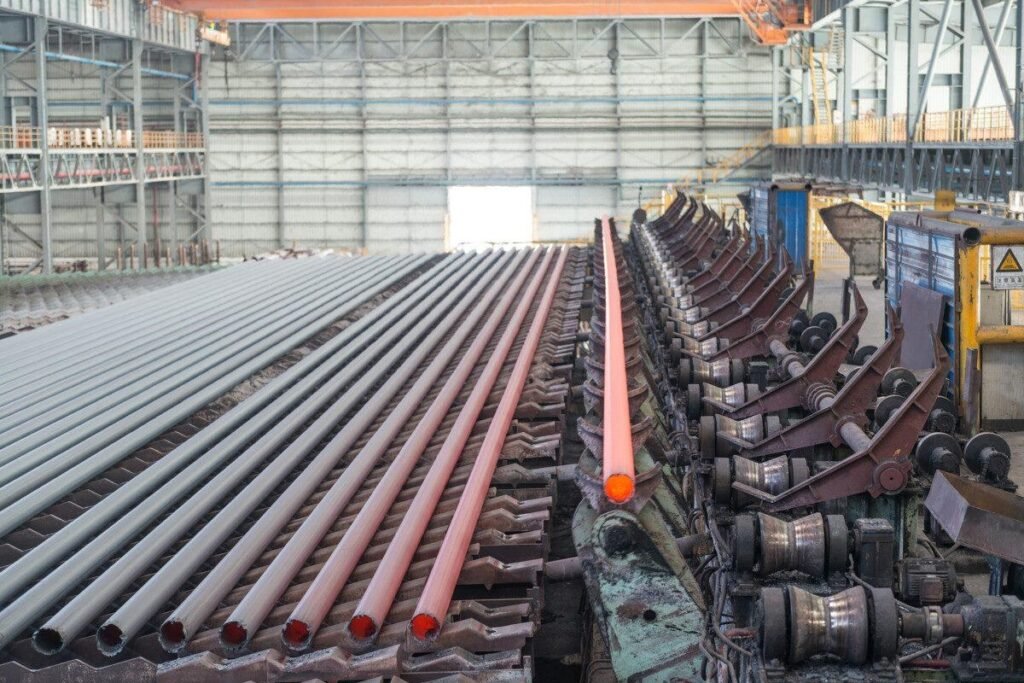
Alloy steel seamless pipes are widely used in industries where ordinary carbon steel cannot meet the requirements of high temperature, high pressure, corrosion resistance, and long-term mechanical stability.
Among the various alloying elements used in steel production, chromium (Cr) and molybdenum (Mo) play a particularly important role. The combination of these two elements creates chromium-molybdenum alloy steel, commonly known as Cr-Mo steel, which provides excellent performance in demanding applications such as power plants, refineries, petrochemical facilities, and pressure equipment.
The improvement brought by chromium and molybdenum is not simply an increase in strength. These elements work by changing the steel microstructure, improving hardenability, enhancing oxidation resistance, increasing creep strength, and maintaining mechanical properties during long-term high-temperature service.
What Is Chromium-Molybdenum Alloy Steel Pipe?
Chromium-molybdenum alloy steel seamless pipe is a type of alloy pipe containing controlled amounts of chromium and molybdenum.
Compared with carbon steel pipe, Cr-Mo seamless pipes provide better performance under extreme operating conditions.
Typical characteristics include:
- Higher high-temperature strength
- Better creep resistance
- Improved oxidation resistance
- Enhanced corrosion resistance
- Better hardenability
- Improved resistance to thermal stress
Common Cr-Mo seamless pipe specifications include:
- ASTM A335 P5
- ASTM A335 P9
- ASTM A335 P11
- ASTM A335 P22
- ASTM A335 P91
These grades are widely used for boilers, superheaters, reheaters, pressure vessels, and high-temperature process piping.
Why Are Alloying Elements Added to Steel?
Pure iron has limited engineering performance. By adding alloying elements, manufacturers can modify the steel’s internal structure and improve specific properties.
For carbon steel, strength mainly comes from carbon and processing methods. However, when equipment operates under higher temperatures and pressures, additional alloying elements are required.
Chromium and molybdenum are added because they provide complementary advantages:
- Chromium improves oxidation resistance and hardenability.
- Molybdenum improves high-temperature strength and creep resistance.
- Together, they help maintain stable mechanical properties during long-term service.
This combination makes Cr-Mo steel especially suitable for high-temperature pressure applications.
The Role of Chromium (Cr) in Alloy Steel Seamless Pipes
1. Improving Oxidation Resistance
One of the most important functions of chromium is improving resistance to oxidation.
At elevated temperatures, steel surfaces react with oxygen and form oxide layers. Ordinary carbon steel can rapidly lose performance because oxidation continues as temperature increases.
Chromium promotes the formation of a more stable oxide layer, reducing oxidation rates and helping protect the steel surface.
This property is especially valuable in:
- Steam pipelines
- Furnace components
- Boiler tubes
- Refinery equipment
- High-temperature process systems
Cr-Mo steels with chromium content are therefore commonly selected for applications where carbon steel would suffer accelerated oxidation.
2. Increasing Corrosion Resistance
Although chromium-molybdenum steel is not stainless steel, chromium can improve corrosion resistance compared with plain carbon steel.
Chromium contributes to the formation of protective surface films and improves resistance against certain corrosive environments.
However, the chromium content in Cr-Mo steels is generally much lower than stainless steels. Therefore, Cr-Mo pipe should not be considered a direct replacement for stainless steel in highly corrosive applications.
The main advantage of chromium in alloy steel pipes is maintaining strength and stability under high-temperature service rather than providing complete corrosion immunity.
3. Improving Hardenability
Chromium increases the hardenability of steel, meaning that the material can achieve desirable mechanical properties deeper into the pipe wall after heat treatment.
This is important for seamless pipes with larger wall thicknesses because uniform mechanical properties throughout the cross-section are required.
Improved hardenability contributes to:
- Higher strength after heat treatment
- Better wear resistance
- More stable mechanical performance
4. Enhancing Wear Resistance
Chromium can form hard carbide phases within steel.
These carbides improve resistance to wear and help maintain surface durability in demanding applications.
This makes chromium-containing alloy steels suitable for equipment exposed to:
- Mechanical stress
- High-temperature flow
- Repeated thermal cycling
The Role of Molybdenum (Mo) in Alloy Steel Seamless Pipes
1. Improving High-Temperature Strength
Molybdenum is one of the most important alloying elements for high-temperature steel.
Its primary advantage is maintaining strength when steel is exposed to elevated temperatures for long periods.
At high temperatures, many steels gradually soften and lose load-bearing capability. Molybdenum helps slow this process by improving resistance to thermal degradation.
This is why molybdenum-containing steels are widely used in:
- Boiler tubes
- Superheater tubes
- Steam pipelines
- Pressure vessels
- Refinery equipment
2. Increasing Creep Resistance
Creep is a slow deformation process that occurs when metals are exposed to constant stress at high temperatures for extended periods.
For power plants and petrochemical facilities, creep resistance is one of the most important material properties.
Molybdenum improves creep strength by:
- Stabilizing the microstructure
- Increasing resistance to grain movement
- Improving carbide stability
This allows Cr-Mo seamless pipes to maintain dimensional stability during thousands of hours of high-temperature operation.
3. Reducing Temper Embrittlement Risk
During heat treatment and long-term service, some steels may experience reduced toughness due to temper embrittlement.
Molybdenum can reduce susceptibility to certain forms of embrittlement and help maintain toughness.
This is particularly important for:
- Pressure equipment
- Thick-wall piping
- Refinery applications
4. Improving Resistance to Thermal Stress
Industrial equipment often experiences repeated heating and cooling cycles.
These temperature changes create thermal stresses that can lead to cracking or premature failure.
Molybdenum improves the ability of alloy steel to withstand these conditions by maintaining strength and structural stability.
Synergistic Effect of Chromium and Molybdenum
Chromium and molybdenum provide different advantages, but their combination creates better overall performance than either element alone.
Chromium mainly contributes:
- Oxidation resistance
- Hardenability
- Surface stability
Molybdenum mainly contributes:
- High-temperature strength
- Creep resistance
- Thermal stability
Together, Cr-Mo alloy steel provides:
- Strong resistance to high-temperature degradation
- Stable mechanical properties
- Better pressure-bearing capability
- Longer service life
This is why ASTM A335 Cr-Mo seamless pipes are widely used in critical energy and industrial applications.
Chromium-Molybdenum Steel Pipe Grades and Applications
| Grade | Main Alloy Characteristics | Typical Applications |
|---|---|---|
| ASTM A335 P5 | Higher chromium content | High-temperature refinery piping |
| ASTM A335 P9 | Cr-Mo alloy steel | Furnace and pressure applications |
| ASTM A335 P11 | Moderate Cr-Mo content | Boilers, heat exchangers, steam systems |
| ASTM A335 P22 | Higher temperature performance | Power plant superheaters and reheaters |
| ASTM A335 P91 | Advanced high-strength Cr-Mo-V steel | Ultra-supercritical power plants |
Cr-Mo Seamless Pipe vs Carbon Steel Pipe
| Property | Carbon Steel Pipe | Cr-Mo Alloy Steel Pipe |
|---|---|---|
| High-temperature strength | Limited | Excellent |
| Creep resistance | Low | High |
| Oxidation resistance | Moderate | Improved |
| Long-term thermal stability | Limited | Excellent |
| Material cost | Lower | Higher |
| Typical use | General piping | High-temperature pressure service |
Carbon steel remains a practical choice for many applications. However, when temperature and pressure increase, Cr-Mo alloy steel provides significant advantages.
Applications of Chromium-Molybdenum Seamless Pipes
Power Generation Industry
Power plants operate under extreme conditions involving high-pressure steam and elevated temperatures.
Cr-Mo seamless pipes are commonly used in:
- Boiler systems
- Superheaters
- Reheaters
- Main steam lines
- High-temperature pressure piping
Grades such as P22 and P91 are widely associated with advanced power generation systems.
Oil Refinery Industry
Refineries contain many high-temperature processing units.
Cr-Mo steel pipes are used in:
- Hydrogen processing units
- Furnace piping
- Reactor systems
- Heat exchangers
- High-temperature process lines
Their ability to maintain strength at elevated temperatures makes them suitable for continuous operation.
Petrochemical Industry
Chemical plants require materials that can withstand pressure, heat and aggressive operating conditions.
Cr-Mo pipes are commonly used for:
- Steam systems
- Pressure vessels
- Chemical process piping
- Heat recovery equipment
Boiler and Heat Exchanger Equipment
Boiler tubes must withstand:
- High temperature
- High pressure
- Thermal cycling
- Long operating periods
Chromium-molybdenum steel provides the necessary balance between strength and durability.
Manufacturing and Heat Treatment of Cr-Mo Seamless Pipes
The performance of alloy steel pipe depends not only on chemical composition but also on manufacturing processes.
Important production steps include:
- Steel melting and alloy control
- Billet preparation
- Hot piercing
- Rolling
- Heat treatment
- Surface inspection
- Non-destructive testing
Heat treatment is especially important for Cr-Mo pipes because it determines:
- Microstructure
- Strength
- Toughness
- Creep performance
Common heat treatment methods include:
- Normalizing
- Quenching and tempering
- Stress relieving
The correct heat treatment condition is usually specified according to ASTM, ASME or project requirements.
How to Select the Right Cr-Mo Alloy Steel Pipe?
Choosing a chromium-molybdenum seamless pipe requires consideration of several factors.
Operating Temperature
Higher temperatures generally require higher alloy grades.
For example:
- Moderate high-temperature service may use P11.
- More demanding power plant applications may require P22 or P91.
Pressure Requirements
Higher pressure systems require materials with sufficient yield strength and creep resistance.
Service Environment
Consider:
- Steam
- Hydrogen
- Sulfur-containing environments
- Chemical exposure
- Thermal cycling
Applicable Standards
Common standards include:
- ASTM A335
- ASME SA335
- EN 10216-2
Inspection Requirements
Critical applications may require:
- Chemical analysis
- Tensile testing
- Impact testing
- Ultrasonic testing
- Hydrostatic testing
- PMI inspection
Why Choose Chromium-Molybdenum Seamless Pipe?
The main advantage of Cr-Mo seamless pipe is its ability to maintain performance under conditions where ordinary steel fails.
Its advantages include:
- Excellent high-temperature strength
- Superior creep resistance
- Improved oxidation resistance
- Stable mechanical properties
- Long service life
- Reliability in critical applications
For industries such as power generation, oil refining and petrochemical processing, material selection directly affects equipment safety and operating efficiency.
Conclusion
Chromium and molybdenum are two key alloying elements that significantly improve the performance of seamless alloy steel pipes.
Chromium enhances oxidation resistance, hardenability and structural stability, while molybdenum provides superior high-temperature strength, creep resistance and thermal stability.
The combination of these elements creates Cr-Mo alloy steel pipes capable of handling extreme temperature and pressure conditions.
From ASTM A335 P11 and P22 boiler pipes to advanced P91 power plant piping, chromium-molybdenum seamless pipes remain an essential material solution for modern energy and industrial applications.
Selecting the correct Cr-Mo grade requires a complete evaluation of temperature, pressure, chemical environment, design requirements and applicable standards. When properly selected, these alloy steel pipes provide reliable performance and extended service life in the most demanding operating conditions.