
What Are Boiler Tubes?
Boiler tubes are critical components used in steam boilers, heat exchangers, and power generation equipment. They are designed to transfer heat efficiently while maintaining structural integrity under high temperature and high pressure conditions.
Unlike ordinary steel pipes, boiler tubes must meet strict requirements for mechanical strength, thermal stability, corrosion resistance, and long-term reliability. The selection of boiler tube material depends mainly on operating temperature, pressure conditions, chemical environment, and equipment design requirements.
Common boiler tube materials include carbon steel, low alloy steel, and alloy steel. Different grades are selected for specific working conditions to ensure safe and efficient operation.
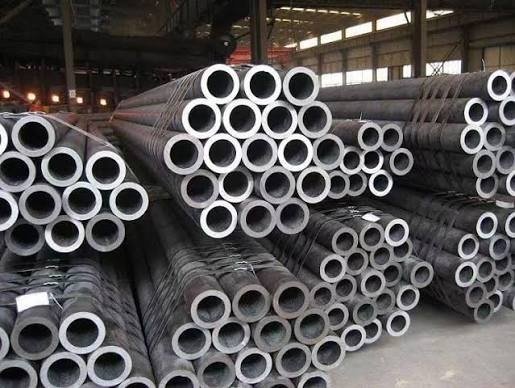
Common Boiler Tube Grades and Material Classification
1. Carbon Steel Boiler Tubes
Carbon steel boiler tubes are widely used in low and medium temperature boiler systems due to their good strength, weldability, and cost efficiency.
Common Grades:
ASTM A192 Seamless Carbon Steel Boiler Tubes
ASTM A192 is one of the most commonly used carbon steel boiler tube specifications. It is designed for high-pressure service applications, especially in water-tube boilers and heat exchanger systems.
Typical features:
- Good thermal conductivity
- Reliable mechanical strength
- Suitable for high-pressure boiler applications
- Excellent manufacturing consistency
Typical applications:
- Power plant boilers
- Industrial steam boilers
- Heat exchanger equipment
- Heating systems
ASTM A192 tubes are usually supplied as seamless tubes to ensure reliable performance under pressure.
ASTM A179 Seamless Low Carbon Steel Tubes
ASTM A179 is commonly used for heat exchangers, condensers, and low-pressure heating equipment.
Main characteristics:
- Good ductility
- Smooth surface finish
- Easy forming and processing
- Good heat transfer performance
Typical applications:
- Condensers
- Heat exchangers
- Cooling systems
- Low-pressure boiler equipment
2. Alloy Steel Boiler Tubes
When boiler systems operate at higher temperatures and pressures, alloy steel tubes are commonly selected.
The addition of alloying elements such as chromium and molybdenum improves:
- High-temperature strength
- Creep resistance
- Oxidation resistance
- Long-term durability
ASTM A213 Alloy Steel Boiler Tubes
ASTM A213 covers seamless ferritic and austenitic alloy steel tubes used in boilers, superheaters, and heat exchangers.
Common grades include:
- T5
- T9
- T11
- T22
- T91
ASTM A213 T11 and T22 Boiler Tubes
These grades are widely used in power generation and industrial boiler systems.
Advantages:
- Excellent high-temperature performance
- Strong resistance to thermal stress
- Suitable for superheater and reheater applications
Typical applications:
- Thermal power plants
- High-pressure boilers
- Steam pipelines
- Petrochemical facilities
ASTM A213 T91 Boiler Tubes
T91 is a high-strength alloy steel grade developed for advanced power plant applications.
Compared with traditional alloy steels, T91 provides:
- Higher creep strength
- Better thermal fatigue resistance
- Improved performance at elevated temperatures
Typical applications:
- Ultra-supercritical boilers
- High-temperature steam systems
- Modern power generation equipment
3. Stainless Steel Boiler Tubes
For applications requiring excellent corrosion resistance and oxidation resistance, stainless steel boiler tubes are preferred.
Common stainless steel grades include:
- TP304
- TP316
- TP321
- TP347
These materials are commonly used where boiler tubes are exposed to:
- Corrosive fluids
- High-temperature oxidation
- Chemical processing environments
Typical applications:
- Chemical plants
- Pharmaceutical equipment
- Food processing systems
- Advanced heat exchangers
How to Select the Right Boiler Tube Material?
Choosing the correct boiler tube grade requires a comprehensive evaluation of operating conditions.
1. Operating Temperature
Temperature is one of the most important factors affecting material selection.
For lower temperature applications:
- Carbon steel tubes such as ASTM A192 are commonly used.
For higher temperature applications:
- Alloy steel grades such as ASTM A213 T11, T22, and T91 are preferred.
Extreme temperature environments may require stainless steel or special alloy materials.
2. Working Pressure
Higher pressure systems require materials with stronger mechanical properties.
High-pressure boiler applications usually require:
- Seamless construction
- Higher tensile strength
- Better fatigue resistance
This is why seamless alloy boiler tubes are widely used in power plants and industrial boilers.
3. Corrosion Environment
Different operating environments create different corrosion risks.
For example:
- Steam environments require high-temperature stability.
- Chemical processing environments require corrosion-resistant materials.
- Marine environments may require stainless steel solutions.
Material selection should consider both internal media and external operating conditions.
Boiler Tube Application Scenarios
Power Generation Industry
Boiler tubes are essential components in thermal power plants.
They are used in:
- Water walls
- Superheaters
- Reheaters
- Economizers
Materials such as ASTM A213 T22 and T91 are widely applied in high-temperature sections.
Industrial Steam Boilers
Factories in industries such as chemical processing, manufacturing, and food production rely on industrial boilers for steam generation.
Common boiler tube materials include:
- ASTM A192 carbon steel tubes
- ASTM A179 heat exchanger tubes
- ASTM A213 alloy steel tubes
Petrochemical Industry
Petrochemical plants require boiler tubes that can withstand:
- High temperature
- High pressure
- Corrosive chemicals
Alloy steel and stainless steel boiler tubes are commonly used in:
- Heat recovery systems
- Steam generation units
- Refinery equipment
Boiler Tube Standards Commonly Used in Global Projects
| Standard | Material Type | Typical Application |
|---|---|---|
| ASTM A192 | Carbon Steel | High-pressure boiler tubes |
| ASTM A179 | Low Carbon Steel | Heat exchangers and condensers |
| ASTM A210 | Medium Carbon Steel | Boiler and superheater tubes |
| ASTM A213 | Alloy Steel / Stainless Steel | Boilers, superheaters, heat exchangers |
| EN 10216-2 | Alloy Steel | Pressure equipment applications |
Why Material Selection Matters for Boiler Tubes
The performance of boiler systems depends heavily on the quality and suitability of tube materials.
Selecting the correct boiler tube grade can improve:
- Equipment service life
- Energy efficiency
- Operational safety
- Maintenance reliability
Using unsuitable materials may lead to problems such as:
- Tube deformation
- Corrosion damage
- Cracking caused by thermal stress
- Unexpected equipment shutdowns
For this reason, engineers usually evaluate temperature, pressure, corrosion conditions, and applicable standards before selecting boiler tube materials.
Conclusion
Boiler tube grades vary significantly depending on material composition, operating conditions, and application requirements.
Carbon steel grades such as ASTM A192 are suitable for general boiler applications, while alloy steel grades including ASTM A213 T11, T22, and T91 provide better performance in high-temperature and high-pressure environments. Stainless steel boiler tubes offer additional corrosion resistance for demanding industrial applications.
Understanding boiler tube materials and their application scenarios helps engineers and purchasers select the right piping solution for reliable and long-term boiler operation.