
Galvanized steel pipes are widely used in construction, water supply, fire protection, mechanical systems and industrial applications because the zinc coating provides additional corrosion protection.
When selecting galvanized steel pipes, buyers often encounter two different options:
- Galvanized seamless steel pipe
- Galvanized welded steel pipe
Although both products have a zinc protective layer on the surface, their manufacturing processes, mechanical properties, pressure performance, cost and application areas are different.
The main difference is that galvanized seamless pipe is manufactured from seamless steel pipe without a weld seam, while galvanized welded pipe is produced from welded steel pipe and then galvanized.
Understanding these differences helps engineers and buyers select the right pipe according to working pressure, environment and project requirements.
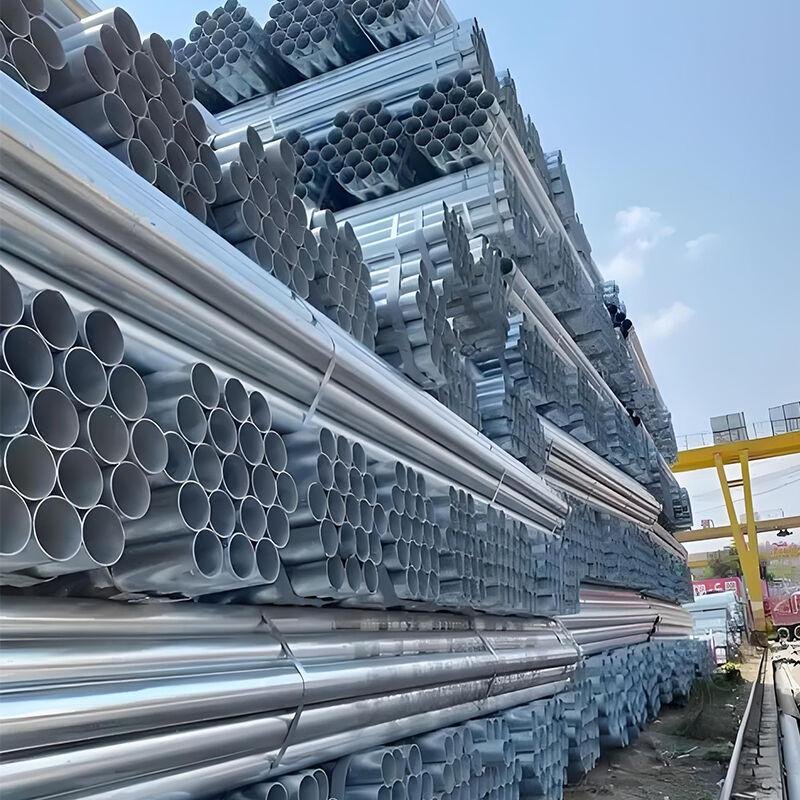
What Is Galvanized Steel Pipe?
Galvanized steel pipe is a carbon steel pipe coated with a layer of zinc to improve corrosion resistance.
The zinc coating protects the steel through two mechanisms:
- Acting as a physical barrier against moisture and oxygen
- Providing sacrificial protection when the coating is damaged
Hot-dip galvanizing is one of the most common galvanizing methods, where steel products are immersed in molten zinc to form a protective zinc coating.
Galvanized pipes are commonly used in:
- Water supply systems
- Fire sprinkler systems
- Construction structures
- Outdoor facilities
- Mechanical applications
However, the base pipe manufacturing method still determines many of the pipe’s mechanical characteristics.
What Is Galvanized Seamless Pipe?
Galvanized seamless pipe is produced by first manufacturing a seamless steel pipe and then applying a zinc coating.
The seamless pipe itself is manufactured from a solid steel billet through processes such as:
Steel billet → Heating → Piercing → Rolling → Sizing → Galvanizing
Because the pipe body has no welded joint, the structure is continuous throughout the pipe wall.
Advantages of Galvanized Seamless Pipe
Higher Pressure Resistance
Without a weld seam, seamless pipes generally provide better structural integrity and are commonly selected for applications involving higher pressure requirements.
They are often used in:
- High-pressure hydraulic systems
- Industrial pipelines
- Mechanical equipment
- Oil and gas-related applications
Better Performance Under Severe Conditions
The absence of a welded area eliminates potential differences between the weld zone and base metal.
This can provide advantages in:
- High-pressure service
- Temperature changes
- Mechanical stress conditions
More Uniform Pipe Structure
Seamless manufacturing creates a continuous steel structure, which can provide consistent mechanical performance throughout the pipe body.
What Is Galvanized Welded Pipe?
Galvanized welded pipe is manufactured by forming steel strip or steel plate into a cylindrical shape and welding the longitudinal seam.
The typical production process is:
Steel coil → Forming → Welding → Weld inspection → Galvanizing
Common welded pipe manufacturing methods include:
- ERW (Electric Resistance Welding)
- High-frequency welded pipe
Advantages of Galvanized Welded Pipe
Lower Production Cost
Compared with seamless pipe manufacturing, welded pipe production is generally more efficient.
This makes galvanized welded pipe a cost-effective choice for many standard applications.
Wide Range of Sizes
Welded pipes can be produced in a wide range of:
- Diameters
- Wall thicknesses
- Lengths
This flexibility makes them popular in construction and general industrial projects.
Good Dimensional Accuracy
Modern welding technology allows manufacturers to achieve accurate control of:
- Outside diameter
- Wall thickness
- Pipe length
Galvanized Seamless Pipe vs Galvanized Welded Pipe Comparison
| Feature | Galvanized Seamless Pipe | Galvanized Welded Pipe |
|---|---|---|
| Manufacturing | Made from seamless steel pipe | Made from welded steel pipe |
| Weld Seam | No weld seam | Contains longitudinal weld seam |
| Production Method | Billet piercing and rolling | Steel coil forming and welding |
| Strength | Higher structural integrity | Suitable for general applications |
| Pressure Capability | Better for higher pressure service | Suitable for low and medium pressure systems |
| Cost | Higher | More economical |
| Size Availability | Limited compared with welded pipe | Wide size range |
| Surface | Usually smoother | Weld area may be visible before coating |
| Typical Use | Industrial and demanding applications | Construction and general piping |
Difference in Manufacturing Process
The manufacturing method is the fundamental difference between the two products.
Galvanized Seamless Pipe Process
Step 1: Steel Billet Preparation
High-quality steel billets are selected according to required chemical composition.
Step 2: Hot Piercing
The heated billet is pierced to create a hollow pipe shell.
Step 3: Rolling and Sizing
The pipe is rolled to achieve:
- Required diameter
- Wall thickness
- Dimensional accuracy
Step 4: Galvanizing
The finished seamless pipe receives a zinc coating for corrosion protection.
Galvanized Welded Pipe Process
Step 1: Steel Coil Preparation
Steel coils are prepared according to pipe specifications.
Step 2: Pipe Forming
The steel strip is gradually formed into a cylindrical shape.
Step 3: Welding
The edges are joined through welding to create the pipe body.
Step 4: Galvanizing
The welded pipe is coated with zinc to improve corrosion resistance.
Corrosion Resistance Comparison
Both pipes benefit from galvanizing, but the actual corrosion performance depends on:
- Zinc coating thickness
- Surface preparation
- Working environment
- Pipe quality
Galvanized Seamless Pipe
Advantages:
- No weld seam corrosion risk
- Better performance in demanding environments
- Suitable for applications requiring higher reliability
Galvanized Welded Pipe
Advantages:
- Good corrosion protection for normal environments
- Lower cost solution
- Widely used in construction and utility systems
In normal atmospheric conditions, properly galvanized welded pipe can provide reliable service. The choice depends on project requirements rather than the coating alone.
Strength and Pressure Performance
Strength is one of the most important differences between galvanized seamless and welded pipes.
Galvanized Seamless Pipe
Because there is no welded joint, seamless pipe is often preferred for:
- High-pressure applications
- Hydraulic systems
- Critical industrial equipment
Galvanized Welded Pipe
Modern welded pipes have reliable weld quality when manufactured according to proper standards.
They are commonly used for:
- Water pipes
- Fire protection systems
- Structural applications
- General construction
The final pressure capability depends on:
- Material grade
- Wall thickness
- Pipe size
- Applicable standard
- Inspection requirements
Common Applications
Applications of Galvanized Seamless Pipe
Galvanized seamless pipes are commonly used in:
- Industrial equipment
- High-pressure piping systems
- Mechanical structures
- Hydraulic systems
- Specialized engineering projects
Applications of Galvanized Welded Pipe
Galvanized welded pipes are widely used in:
- Building water systems
- Fire sprinkler systems
- HVAC systems
- Fencing and handrails
- Structural supports
Which One Should You Choose?
The correct choice depends on the project requirements.
Choose Galvanized Seamless Pipe When:
- Higher pressure resistance is required
- The application involves mechanical stress
- Long-term reliability is important
- The working environment is demanding
Choose Galvanized Welded Pipe When:
- Cost efficiency is important
- The application involves normal pressure conditions
- Large quantities are required
- The project is related to construction or general utilities
Common Standards for Galvanized Steel Pipe
Common specifications include:
| Standard | Application |
|---|---|
| ASTM A53 | Welded and seamless galvanized carbon steel pipe |
| ASTM A106 | Seamless carbon steel pipe for high-temperature service |
| API 5L | Line pipe applications |
| ASTM A123 | Zinc coating requirements for galvanized steel products |
ASTM A53 covers both welded and seamless black and hot-dipped galvanized steel pipe for pressure and mechanical applications.
How to Choose a Reliable Galvanized Pipe Supplier?
Before purchasing galvanized steel pipe, buyers should confirm:
Material Documents
Including:
- Mill Test Certificate (MTC)
- Chemical composition
- Mechanical test results
Galvanizing Quality
Check:
- Zinc coating thickness
- Surface condition
- Adhesion quality
Pipe Inspection
Important inspection items include:
- Diameter measurement
- Wall thickness measurement
- Hydrostatic testing
- Weld inspection for welded pipe
Export Experience
A professional supplier should understand:
- ASTM standards
- API requirements
- Packaging requirements
- International shipping conditions
Conclusion
Galvanized seamless pipe and galvanized welded pipe both provide corrosion protection through zinc coating, but their performance characteristics are different.
Galvanized seamless pipe offers higher structural integrity and is suitable for demanding applications where pressure resistance and reliability are important.
Galvanized welded pipe provides a more economical solution with excellent versatility for construction, water systems and general industrial applications.
The best choice depends on the actual working environment, pressure requirements, budget and project specifications.
Selecting the correct pipe type at the beginning of a project helps improve system reliability and reduce long-term maintenance costs.