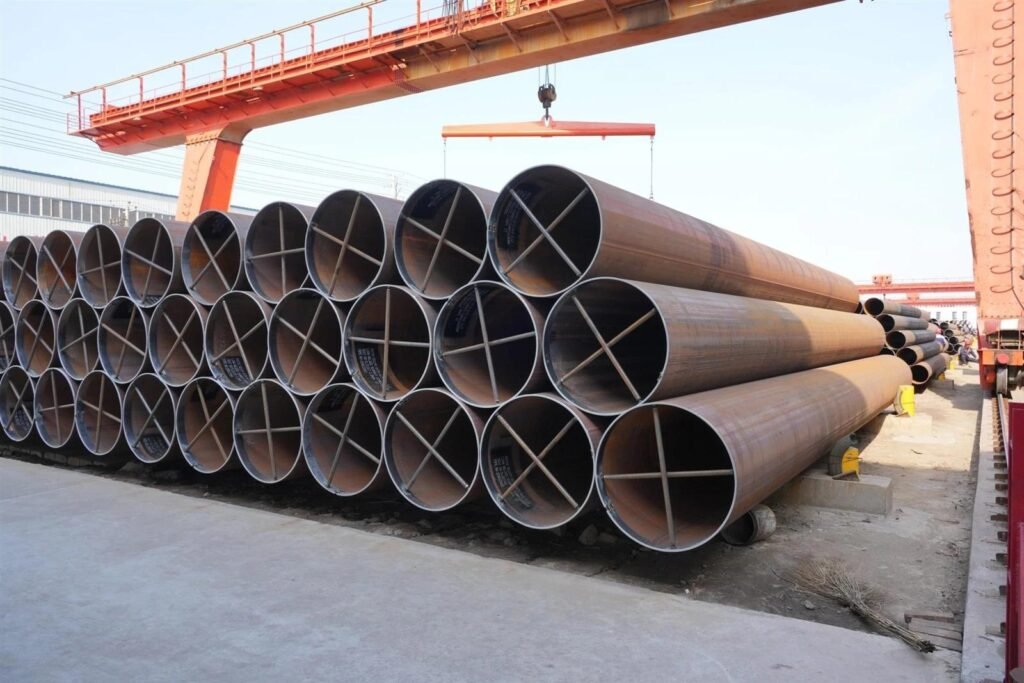
Two pipes can have the same nominal outside diameter and the same nominal wall thickness on paper and still have noticeably different actual inside diameters.
For ordinary piping systems, that difference may have little practical impact.
For heavy-wall piping, high-pressure systems, offshore components and precisely machined connections, it can become an important engineering and procurement issue.
Understanding the relationship between outside diameter, inside diameter and wall thickness therefore helps buyers avoid one of the most common mistakes in special pipe procurement: treating nominal dimensions as guaranteed finished dimensions.
OD, ID and Wall Thickness Are Connected
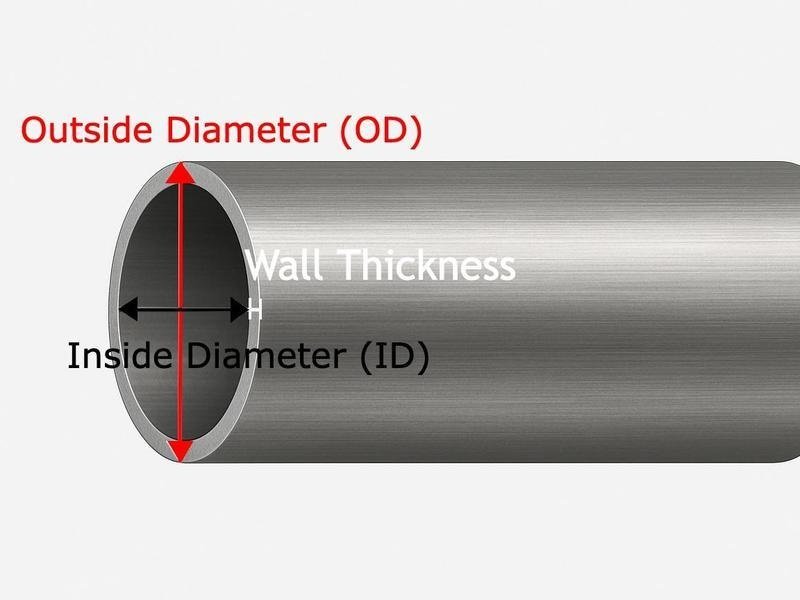
For a perfectly concentric pipe:
ID = OD − 2 × Wall Thickness.
In real manufacturing, however, dimensional tolerances apply.
The actual outside diameter can vary within the permitted range. Wall thickness can also vary around the circumference and along the length of the pipe.
As a result, the actual inside diameter is not necessarily identical to the theoretical ID calculated from nominal dimensions.
This distinction becomes progressively more important as wall thickness increases.
What Does OD-Controlled Pipe Mean?
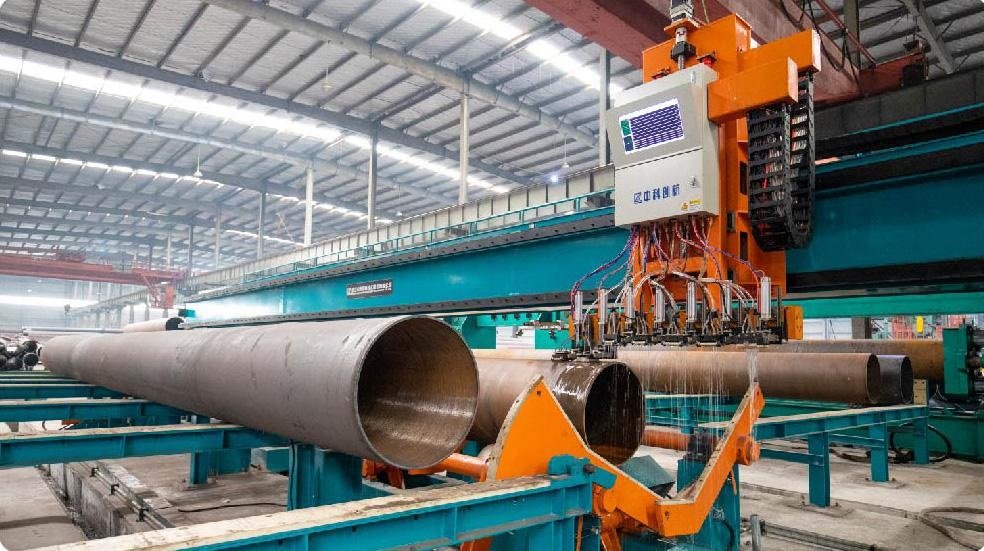
In ordinary piping terminology, conventional seamless pipes are generally purchased using outside diameter or nominal pipe size together with nominal wall thickness or schedule.
ASTM A106, for example, covers seamless carbon steel pipe with nominal, or average, wall thickness.
This production philosophy is extremely practical because piping systems are normally designed around standardized outside dimensions.
Flanges, fittings, valves, supports and other piping components depend heavily on standardized pipe OD.
For the majority of process piping applications, controlling the outside dimensions while allowing wall thickness within the applicable specification is entirely appropriate.
The problem arises only when someone assumes this automatically guarantees an exact bore.
It does not.
What Does ID-Controlled Pipe Mean?
“ID-controlled” is commonly used in special piping procurement to describe a product where the inside diameter is treated as a critical dimension.
Rather than simply accepting the ID resulting from the OD and wall-thickness tolerances of conventional pipe manufacture, the internal surface may be bored or machined to achieve a more tightly controlled dimension.
This manufacturing approach is frequently associated with forged and machined hollow products.
Projectmaterials identifies this distinction as one of the main reasons forged tubular products are considered for demanding heavy-wall applications.
However, buyers should remember that “ID-controlled pipe” is a procurement description, not a substitute for an actual dimensional specification.
The purchase order should still state the required ID and allowable tolerance.
Why Does Inside Diameter Matter?
For a normal process line, a small difference in actual bore may not justify additional manufacturing cost.
For critical piping, however, it can affect several parts of the project.
Welding Fit-Up
When two heavy-wall components with significantly different IDs are welded together, the internal mismatch may require additional preparation.
Depending on the applicable code and engineering specification, the ends may need internal tapering, counterboring or other machining.
If this work was not anticipated during procurement, it can create delays at the fabrication shop or construction site.
Flow Transition
A sudden change in bore creates a geometric transition inside the piping system.
Whether that transition is acceptable depends on system design, fluid velocity, service conditions and engineering criteria.
In critical services, designers may prefer smoother internal transitions.
Pigging Requirements
Pipelines intended for pigging or internal inspection may require closer control of the bore, transitions and internal restrictions.
A nominal pipe size by itself does not necessarily provide enough information to assess pigging suitability.
Machined Connections
Some special offshore, mechanical and pressure-system components are subsequently machined.
A predictable ID and sufficient machining allowance may therefore be part of the original material procurement requirement.
Why Heavy-Wall Pipe Requires More Attention
Suppose a purchaser specifies only:
OD 711 mm × WT 50 mm.
The theoretical ID is 611 mm.
That value is mathematically correct, but it should not automatically be treated as the guaranteed finished bore unless the purchase specification explicitly requires it.
Manufacturing tolerances can cause the actual wall thickness and resulting ID to differ.
Projectmaterials uses a similar heavy-wall example to illustrate how differences between theoretical and actual ID can affect fabrication and installation.
For this reason, procurement documents for critical heavy-wall products should clearly distinguish between nominal dimensions and dimensions that are actually guaranteed.
Nominal Wall vs Minimum Wall
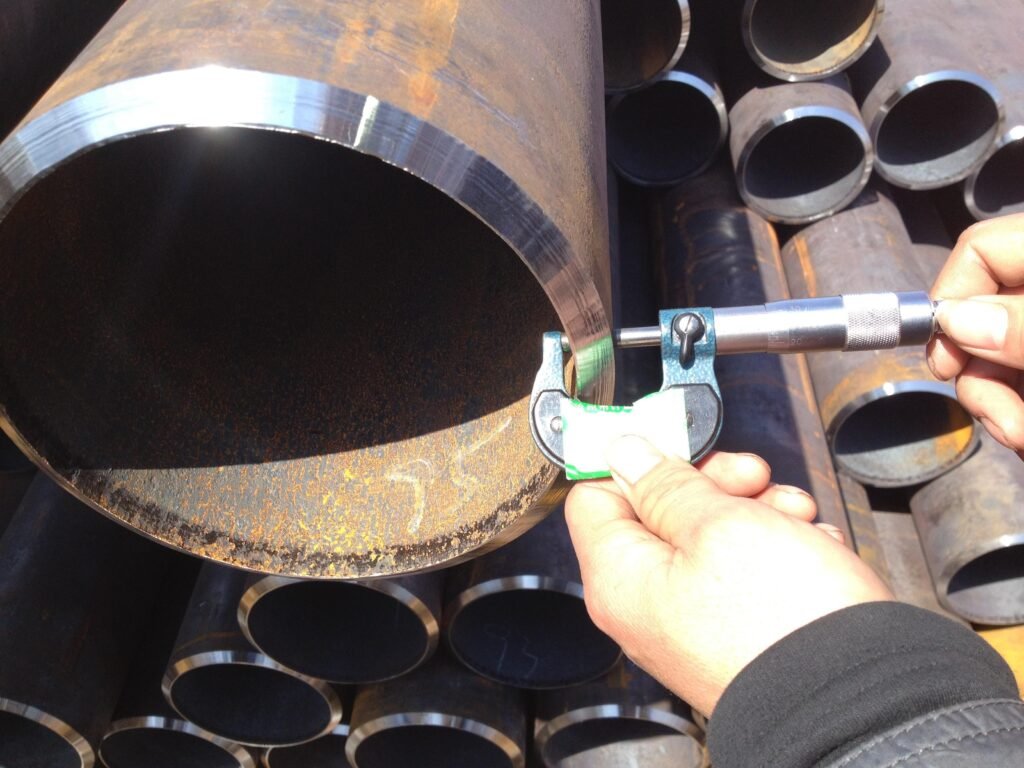
Another important distinction is “nominal wall” versus “minimum wall.”
These terms should never be assumed to mean the same thing.
Some material specifications are based on nominal or average wall thickness, while others may permit products to be ordered on a minimum-wall basis.
The current ASTM A335 specification, for example, covers both nominal-wall and minimum-wall seamless ferritic alloy-steel pipe for high-temperature service.
Therefore, a purchase order should identify exactly what is required.
If pressure design calculations depend on a guaranteed minimum thickness, that requirement should be transferred clearly from engineering documents into the material requisition and purchase order.
Do Not Specify a Tighter Tolerance Without a Reason
Tighter tolerance is not automatically better.
It normally means additional process control, sorting, machining, inspection or scrap risk.
All of those increase cost.
The engineering question should be:
What dimensional accuracy does the system actually require?
For standard process piping, normal product-standard tolerances may be sufficient.
For high-pressure steam lines, offshore components, special risers, mechanical connections or heavy-wall transition pieces, tighter OD, ID or wall-thickness control may be justified.
The best procurement specification is not the tightest possible specification. It is the specification that is tight enough for the application without creating unnecessary manufacturing cost.
Information to Put on a Heavy-Wall Pipe RFQ
Instead of writing only “20-inch heavy wall seamless pipe,” identify the governing standard and grade, OD or NPS, nominal or minimum wall requirement, required ID if applicable, OD tolerance, ID tolerance, wall-thickness tolerance, length and length tolerance, straightness, ovality, machining allowance, end preparation, heat treatment, NDE, impact testing and certification.
For specially machined products, surface roughness requirements may also need to be defined.
The manufacturer cannot reliably price a critical dimensional requirement that has not been included in the inquiry.
Practical Procurement Example
Consider two project requirements.
Project A requires several hundred metres of ASTM A106 Gr. B pipe in a commercially available schedule.
The OD and normal standard tolerances are acceptable.
A conventional seamless pipe is likely to be the logical solution.
Project B requires only several short lengths of very heavy-wall material with a tightly controlled bore for subsequent machining and connection to special equipment.
In this case, the engineering team should evaluate whether a forged hollow or forged-and-machined tubular product offers a better manufacturing route.
The answer is determined by the complete specification, not simply by the word “pipe.”
Conclusion
OD-controlled and ID-controlled should not be treated as competing quality levels.
They solve different engineering problems.
Standardized seamless pipe production is highly efficient because most piping systems are fundamentally built around standardized outside dimensions.
When bore dimensions become critical, especially in heavy-wall or specially machined applications, additional ID control may be required.
Before placing an order, decide which dimensions are nominal and which dimensions are actually critical.
If you are sourcing heavy-wall seamless pipe, alloy steel pipe or special tubular products, send Aspera Steel your OD, wall thickness, required ID, grade, quantity and applicable project specification.
A detailed RFQ allows the supply route to be evaluated before manufacturing rather than discovering dimensional problems during fabrication.